
Cretheus appears in Greek genealogical accounts as a son of Aeolus (son of Hellen) and as the founder and king of Iolcus. He is placed in the generation that precedes the heroes of the Argonautic cycle: his sons include Aeson (father of Jason), Pheres, and Amythaon. Classical summaries record him as a dynastic progenitor whose position in family trees explains the succession of kingship at Iolcus and links later heroes into the Aeolid house.
Surviving summaries and genealogical notices do not provide a physical description of Cretheus; he is represented in the sources by his social and familial roles (son, husband, father, king) rather than by visible features or iconography.
The provided sources ascribe to Cretheus no supernatural powers. His recorded actions are political and familial: founding and ruling Iolcus, marrying (notably to Tyro and in some accounts to Demodice/Biadice), and siring children who become important eponymous or dynastic figures. He is portrayed as a mortal king whose significance is genealogical and foundational rather than magical.
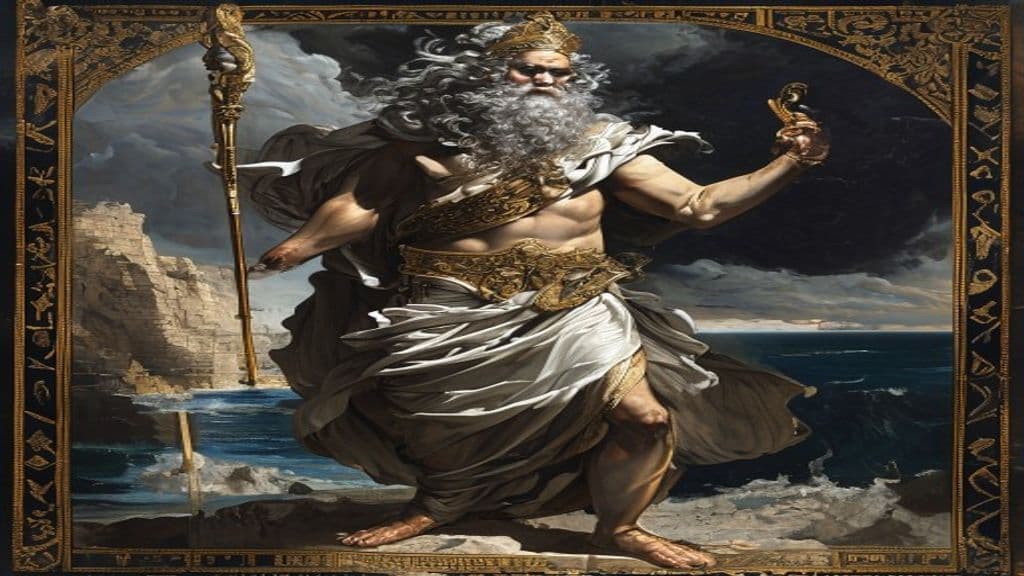
Aeolus
Aeolus is a name applied to multiple related figures in Greek myth: an eponymous son of Hellen (founder of the Aeolian people), a son of Poseidon who led colonial ventures to Tyrrhenian islands, and a son of Hippotes depicted in epic as a ruler or keeper of the winds. Ancient mythographers note confusion and overlap among these persons.
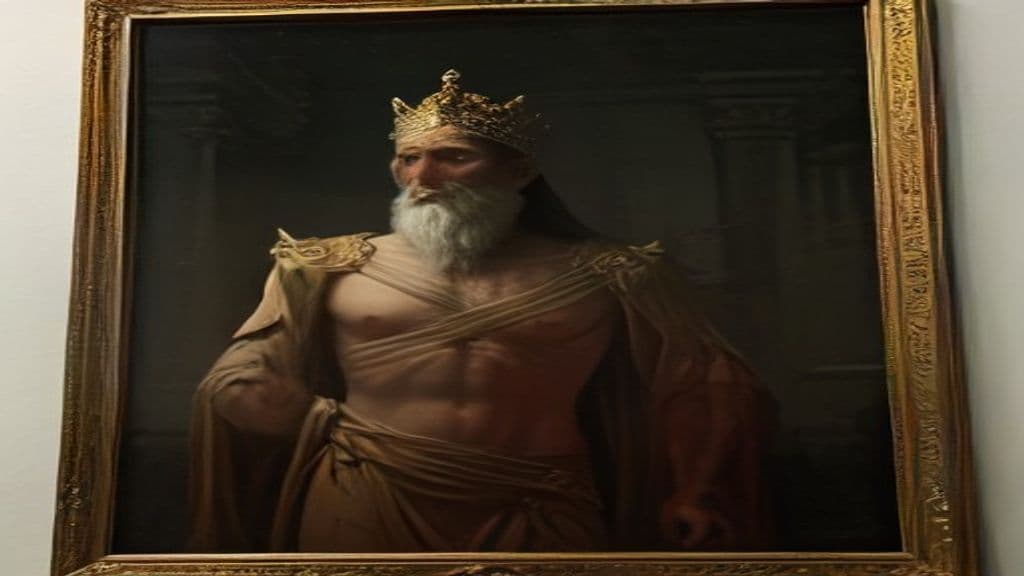
Aeson
Aeson (Ancient Greek: Αἴσων) is a legendary mortal king of Iolcus in Thessaly in Greek myth, best known as the father of the hero Jason. His fate—imprisonment by his half-brother Pelias and either suicide or a miraculous restoration performed by Medea—provides the dynastic and moral background for the Argonautic cycle.
Amphitryon
Amphitryon is a mortal nobleman of Greek mythic-historical tradition: son of Alcaeus of Tiryns, husband of Alcmene, and the acknowledged stepfather of Heracles. He appears in heroic-age narratives as a warrior, dynastic actor, and the human whose identity is impersonated by Zeus in literary treatments that explore paternity and identity.
Arethusa
Arethusa is a freshwater nymph of Greek myth who, pursued by the river-god Alpheus while serving as a chaste attendant of Artemis/Diana, transforms into a spring and emerges on the island of Ortygia (Syracuse). Her myth explains a subterranean link between distant waters and serves as a civic emblem of Syracuse.
Catreus
Catreus is a mortal figure in Greek myth, presented in mythographic sources as the eldest son of King Minos and Pasiphaë and a king of Crete whose life is shaped by an oracle predicting that one of his children would kill him; efforts to avoid that fate, and variants of the tale, link him etiologically to later heroic genealogies.
Chalbes
Chalbes is a named mortal attendant or herald in Greek mythic accounts of the Busiris episode; he is listed among those slain by Heracles when the hero resists an attempted human sacrifice at the Egyptian king's court.
Cycnus of Aetolia
Cycnus (Kyknos) of Aetolia is a mythic Aetolian prince, traditionally described as a son of Apollo by Hyrie/Thyrie and situated in Calydonian/ Aetolian narrative cycles. He appears in sources as a semi-divine youth, variously cast as a princely figure involved in erotic episodes (traditionally the beloved of Phylius in some retellings) and as a combatant referenced in heroic/martial catalogues and poetic metamorphosis traditions.
Daedalus
Daedalus (Greek Δαίδαλος) is a legendary master craftsman, architect, and inventor of Greek mythic tradition credited with complex constructions (the Labyrinth), ingenious devices (a wooden cow), and mechanical inventions (wings for flight). He functions as an archetypal artisan whose skill alters human affairs and whose pride produces moral and social consequences.
Epochus
Epochus (Greek: Ἔποχος) is an Arcadian prince of the heroic age, son of King Lycurgus, attested in genealogies and in Pausanias's report of a temple painting at Tegea that depicts him supporting his wounded brother Ancaeus during the Calydonian boar hunt. He is recorded to have fallen ill and died young; no supernatural attributes are ascribed to him in the cited sources.
Gorgythion
Gorgythion is a minor Trojan prince in Homer’s Iliad, a son of King Priam by Castianeira of Aisyme, remembered chiefly for a poetically rendered death-simile (the poppy image) in Book VIII. The personal name was later reused in modern biological taxonomy for a genus of Pyrginae skippers.
Harpalion
Harpalion is a personal name borne by several mortal men in Greek mythic tradition. Attestations identify individuals called Harpalion as ordinary human actors — a Lemnian wine-grower and two warriors who fought and died in the Trojan War — without any supernatural attributes in the cited sources.
Hesione
Hesione is a mortal Trojan princess in Greek myth who was exposed to a sea‑monster as an oracularly required sacrifice for her father Laomedon’s offense against the gods; rescued by Heracles, she is given in marriage to Telamon, ransoms her brother with her veil (after which he is called Priam), and in later tradition becomes a diplomatic pawn whose non‑return is cited among factors leading to Paris's taking of Helen.
Hippalcimus
Hippalcimus (Ancient Greek: Ἱππάλκιμον) is a mythological human figure from Greek tradition, attested in genealogical notices and in catalogues of the Argonauts. Sources record variant filiations and name-forms but do not attribute individual exploits or supernatural traits to him.
Mares of Diomedes
A herd of man-eating horses belonging to the Thracian chieftain Diomedes, famed as the eighth labour of Heracles. They are monstrous animals whose carnivorous habit and violence against guests make them a canonical threat in Greek heroic narrative.
Community Record
- [1]Cretheus — Wikipedia. Wikipedia, 'Cretheus' articlewiki
- [2]Wikidata: Cretheus. Wikidata entry for Cretheusother
- [3]The Library of Apollodorus — Argonautica summary (Archive LP0080). Apollodorus (summary passages), Archive LP0080literary
- [4]LP0031 Intro to the Argonauts (Archive). Archive LP0031, introductory materials referencing Argonautic genealogiesother
- [5]Pheres (son of Cretheus) — Wikipedia. Wikipedia article on Pheres, son of Cretheuswiki
- [6]Cretheus in Greek Legends and Myths. GreekLegendsAndMyths.com entry on Cretheusfolk