
The sources do not present a single mythic origin story for the crone; rather, they treat the crone as a cross-cultural character-type and archetype. Scholarly and popular accounts (e.g., Wikipedia) place the crone in lifecycle and cosmological frameworks such as the Maiden–Mother–Crone triad used in some neopagan and Jungian-influenced interpretations, while folktale studies present the crone as an enduring motif that embodies social attitudes toward older women and performs narrative functions such as testing protagonists (Archive: The Maiden King) or serving as repositories of household remedies and social cohesion (Wikipedia).
Descriptions in the sources are general and variable: the crone is identified primarily as an old woman, sometimes disagreeable, sinister, or uncanny and often associated with the hag figure. No standardized physical checklist is given across sources; specific examples vary by local tale (for instance, a Somerset 'woman of the mist' gathering sticks is cited as a local crone figure, and the Russian Baba Yaga is presented as a dangerous, liminal crone in The Maiden King archive).
Across the cited material the crone's capacities are thematic rather than uniformly specified as literal powers: she may be malicious, lure or punish wrongdoers, or act as a tester and guardian of liminal mysteries (e.g., Baba Yaga). She is also represented as a repository of remedies, household knowledge, and wisdom in some traditions (Cuban examples). Interpretive sources attribute visionary or prophetic sight to the crone—Clarissa Pinkola Estés is quoted describing the crone as 'the one who sees far'—and neopagan framings associate her with the dark moon and the ending phase of cycles (Wikipedia).
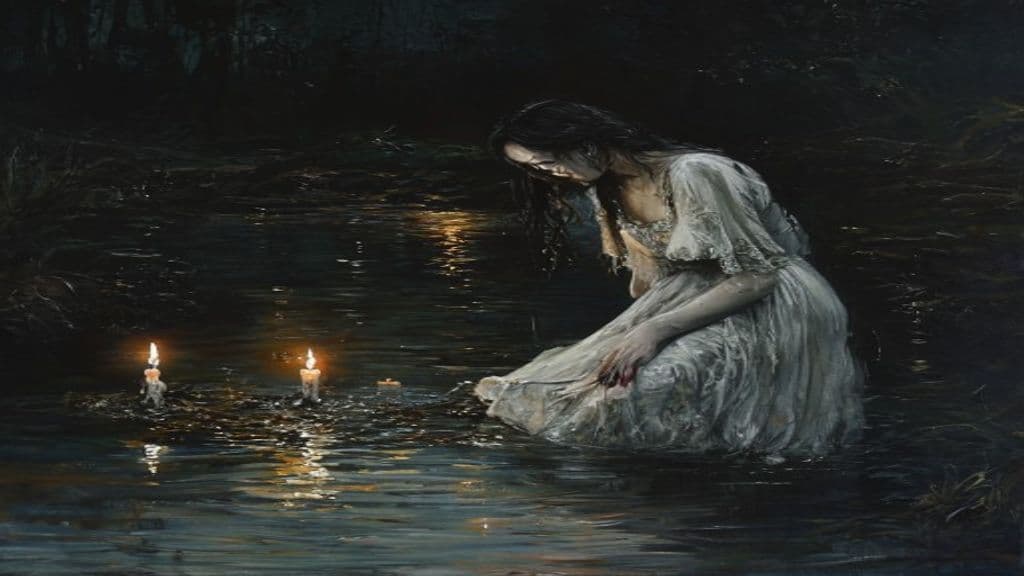
La Llorona
The Weeping Woman of Mexican folklore — the ghost of a mother who drowned her children and now wanders rivers and lakes, weeping for them and taking other children she finds at night.
La Llorona
The Weeping Woman of Mexican folklore — the ghost of a mother who drowned her children and now wanders rivers and lakes, weeping for them and taking other children she finds at night.
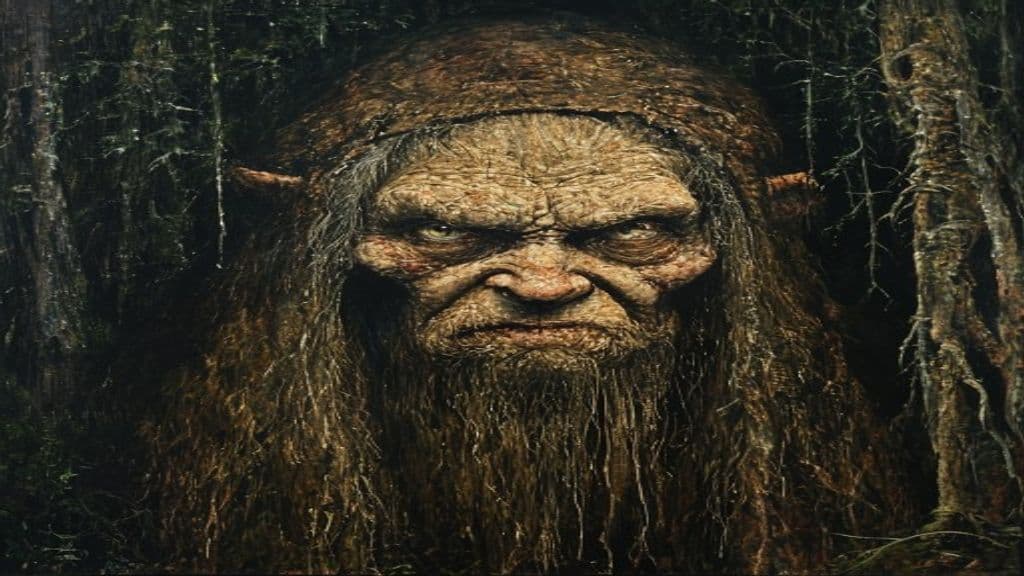
Baba Yaga
Baba Yaga is an ambivalent female figure of East Slavic folktale tradition, depicted variously as a fearsome, child-eating crone or as a helpful, maternal donor. She is associated with the deep forest, a hut described as standing on chicken legs, and the motific accoutrements of a mortar and pestle.
Bluebeard
Bluebeard (French: Barbe bleue) is a literary folktale character best known from Charles Perrault's 1697 version: a wealthy, powerful nobleman who marries repeatedly and secretly murders his wives, hiding their bodies in a locked chamber. He functions as a cultural archetype and cautionary exemplar about secrecy, patriarchal power, and the dangers facing women in marriage rather than as a supernatural being.
Cinderella
A widespread folktale protagonist and narrative archetype: a young woman who endures neglect or obscurity and is unexpectedly elevated to recognition and higher social status, typically by marriage. The motif appears in many cultures and historical periods and functions as a moral and social narrative about identity, tokens of recognition, and social mobility rather than as a supernatural being.
Rapunzel
Rapunzel is a European folktale heroine of the Aarne–Thompson type 310 'Maiden in the Tower', best known from the Brothers Grimm version. She is a human maiden whose confinement in a tower, extraordinary long hair, and eventual rescue and reunion constitute the central motifs of the tale transmitted in early-modern and 19th-century European literary and oral traditions.
Crom (fictional deity)
Crom is the name used for a deity figure in modern fiction, most notably cited as a fictional deity in the Conan the Barbarian setting. The provided sources do not supply a detailed cosmology, attributes, or rituals for this deity; the name also appears in other contexts (Irish names and place-names) that are listed separately in source material.
Crom Cruach
Crom Cruach is a pre-Christian cult figure in medieval Irish sources, presented as a central idol venerated on Magh Slécht and described in Christian-era narratives as surrounded by twelve subsidiary figures and associated with propitiatory offerings for agricultural bounty; hagiographies recount Saint Patrick destroying the image and casting out a demon said to inhabit it.
Crom Dubh
Crom Dubh is a fluid mythological and folkloric figure from Irish tradition, variously represented as a remnant cultic god, a pagan chieftain or robber, a servant-figure, and the focal figure of seasonal first-fruits rites (Crom Dubh Sunday). In later narratives he is frequently framed as an antagonist subdued or reinterpreted by St. Patrick.
Cromm Cruac (Robin of Sherwood)
Cromm Cruac is a reworking of the Irish figure Crom Cruach used in the British television series Robin of Sherwood as a named pagan locus of power. Historically attested in Christian sources as a pre‑Christian Irish deity whose worship Christian writers claim involved offerings, the television series presents 'Cromm Cruac' (episode title, 17 May 1986) as a place — associated in the episode with a lake — whose powers can be invoked in the drama.
Crommyonian Sow
A monstrous wild pig from Greek heroic legend that terrorized the region around Crommyon on the Isthmus between Megara and Corinth. The creature — also called Phaea in some accounts — is slain by the culture-hero Theseus and appears in variant traditions as either an extraordinary beast or as a human outlaw nicknamed 'Sow.'
Cronopio dentiacutus
Cronopio dentiacutus is an extinct small insectivorous mammal species from the early Late Cretaceous of Patagonia (La Buitrera, Argentina). Described from partial skull and jaw material, it is named after Julio Cortázar’s fictional 'cronopios' and the Latin dentiacutus ('sharp-toothed'), and is placed among South American meridiolestidan/dryolestoid mammals.
Cronus
A principal Titan in ancient Greek myth, Cronus (Κρόνος) is the youngest leader of the Titans who overthrew his father Uranus, ruled in the mythic Golden Age, devoured his newborn children to avert a prophecy, and was later overthrown by his son Zeus and confined to Tartarus. He is associated in some traditions with the harvest and is later equated with the Roman Saturn.
Crotopus (Κρότωπος)
Crotopus is a legendary king of Argos in Greek mythic-historical tradition. He is depicted as a mortal ruler whose condemnation and execution of his daughter Psamathe for bearing Apollo's child provokes divine retribution (a plague on Argos) and leads to oracle-prescribed rites and, in some accounts, the king's exile and founding of a new city, Tripodiscium.
Croydon Cat Killer
A contemporary social and media label applied to an alleged perpetrator (or perpetrators) blamed for a large series of cat mutilations first reported in Croydon, South London, from 2014 onward. The term functioned as a focal agent in community fear, media coverage and police investigation, and was later reinterpreted by forensic reviews as more likely the result of vehicle trauma and wildlife scavenging.
Community Record
- [1]Crone. Wikipedia, 'Crone'wiki
- [2]Quests, tests, and the Baba Yaga: The Maiden King. Archive.org, 'Quests, tests, and the Baba Yaga: The Maiden King'folk