
Sources record variant origins. In many summaries and mythographic accounts the Crommyonian Sow is simply a monstrous wild pig associated with the place Crommyon and is named after an old woman, Phaea, who raised or owned it. Pseudo-Apollodorus preserves a tradition that some called the creature a child of Echidna and Typhon, situating it in the broader monstrous genealogy of Greek myth. Plutarch records an alternate tradition that 'Phaea' was not an animal but a violent female robber nicknamed 'Sow,' whom Theseus killed; Strabo is cited in some traditions as saying the sow was the mother of the Calydonian Boar. These accounts are presented as variant mythic explanations rather than uniform history.
Classical and summary sources consistently describe it as an unusually large and fierce pig/boar. Most accounts refer to it as a 'sow' or 'she-pig' (Ancient Greek: Ὕς Κρομμύων), stressing its size and ferocity as noteworthy among Theseus' early adversaries. Some authors or summaries (summarizing Hyginus) call it a 'boar,' producing disagreement about sex; other sources emphasize the name Phaea applied either to the animal or to a woman associated with it. No detailed fantastic anatomical features (e.g., tusks of supernatural size) are attested in the supplied materials beyond its exceptional size and fierceness.
Primary attributed 'abilities' are naturalistic: the creature ravaged and terrorized the countryside around Crommyon and menaced travelers, requiring heroic martial intervention. Sources do not ascribe supernatural powers such as breath weapons or shapeshifting; instead its significance rests on its exceptional ferocity and local destructiveness. Mythographers additionally place it in monster kinship networks (some traditions call it a child of Echidna and Typhon; one tradition makes it mother of the Calydonian Boar), which function as mythic associations rather than described abilities in the narrative.
Weaknesses
- conditionkilled in direct combat by a hero (Theseus)
Wards
- otherno traditional wards attested in the supplied sources
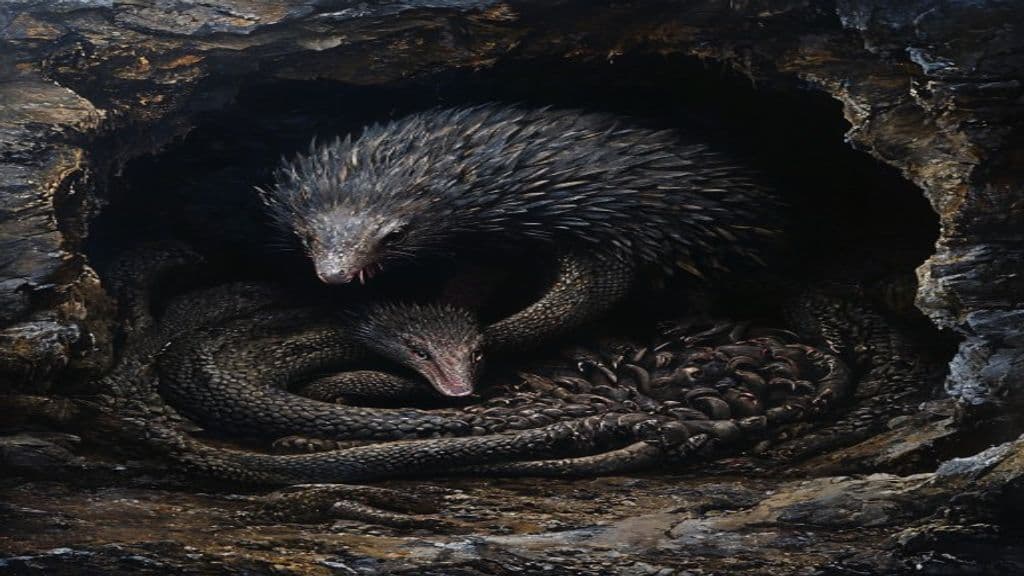
Echidna
The 'Mother of Monsters' — half beautiful woman, half enormous serpent — who with Typhon gave birth to nearly every great monster of Greek mythology.
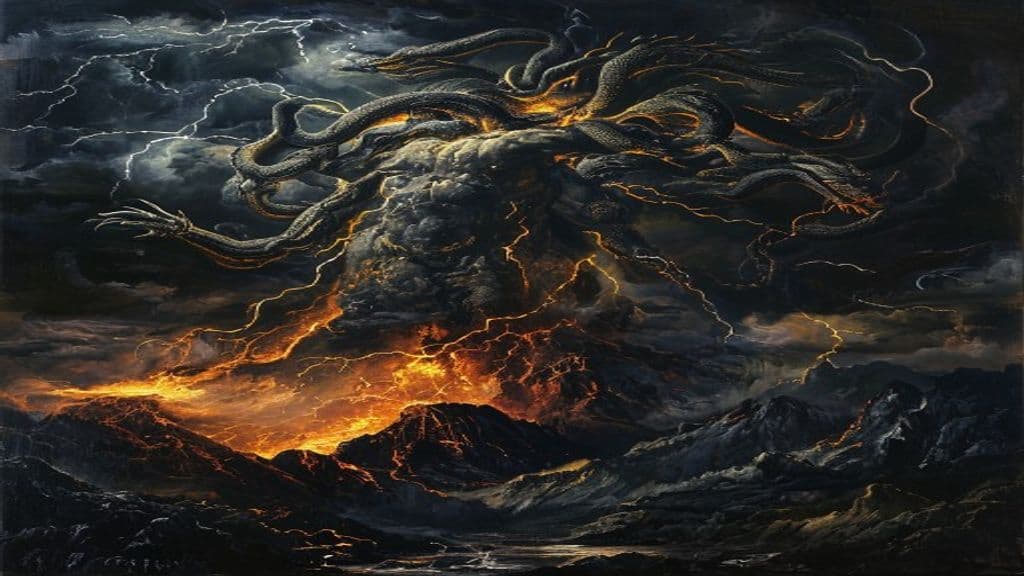
Typhon
The last great monster of Greek mythology — a vast, fire-breathing giant whose shoulders sprouted a hundred serpent heads, nearly toppling Zeus from Olympus.
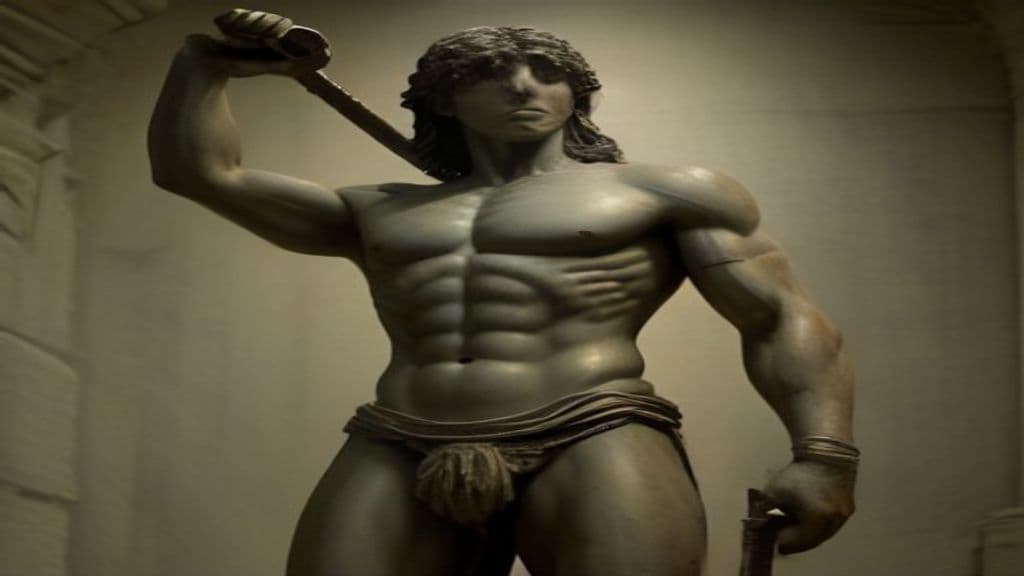
Theseus
Theseus is a legendary hero of Greek myth credited with clearing dangers from Attic roads, slaying the Minotaur, and performing foundational civic acts for Athens (including synoikismos and establishing cult practice). He is portrayed as of mixed mortal and divine parentage and functions as a culture-hero and exemplar in later authors' moralizing biographies.
Alcimede
Alcimede (Ancient Greek Ἀλκιμέδη, 'mighty cunning') is a mortal woman of heroic-age Greek myth: daughter of Phylacus and Clymene, wife of Aeson, and in several traditions the mother of the hero Jason. She functions as a genealogical and maternal figure in the Argonautic cycle rather than as a supernatural being.
Ceryneian Hind
A singular, extraordinary deer of Greek myth sacred to Artemis and famed as the quarry of Heracles' third labour; described as unusually large, extremely swift, and ritually dedicated to a goddess rather than merely a wild animal.
Erigone (daughter of Aegisthus)
Erigone (Ἠριγόνη) in these sources is a mortal figure of Greek heroic genealogy: daughter of Aegisthus and Clytemnestra, placed in the post‑Trojan‑War cycle of kin‑slaying, prosecution, and succession. She is attested as both an accuser associated with bringing a charge regarding matricide before Athenian judicial memory and, in several accounts, as the later wife of Orestes.
Ialmenus
Ialmenus (Ancient Greek: Ἰάλμενος) is a mythic heroic figure of the Greek heroic age, described in ancient catalogue traditions as a son of Ares and Astyoche, twin brother of Ascalaphus, an Argonaut, a suitor of Helen, leader of an Orchomenian contingent at Troy, and—according to later tradition—a survivor who founded a colony in Colchis.
Megareus of Onchestus
Megareus of Onchestus is a mytho-historical king and warrior-ally from ancient Greek tradition associated with Onchestus in Boeotia and, in some accounts, with Megara as an eponymous founder. He appears in narratives of the Cretan invasion led by Minos, where he comes from Onchestus to aid Nisus and is slain in the conflict; Pausanias records a tomb to him at Megara.
Phrixus
Phrixus is a mortal prince in ancient Greek heroic tradition, son of King Athamas and the cloud-goddess Nephele. Rescued from a plotted sacrifice by a divine golden ram, he flees to Colchis, marries King Aeëtes' daughter, sacrifices the ram and gives the Golden Fleece to Aeëtes, thereby linking Boeotian royal lines to Colchis and providing the origin of the fleece that motivates the Argonauts' quest.
Crom Cruach
Crom Cruach is a pre-Christian cult figure in medieval Irish sources, presented as a central idol venerated on Magh Slécht and described in Christian-era narratives as surrounded by twelve subsidiary figures and associated with propitiatory offerings for agricultural bounty; hagiographies recount Saint Patrick destroying the image and casting out a demon said to inhabit it.
Crom Dubh
Crom Dubh is a fluid mythological and folkloric figure from Irish tradition, variously represented as a remnant cultic god, a pagan chieftain or robber, a servant-figure, and the focal figure of seasonal first-fruits rites (Crom Dubh Sunday). In later narratives he is frequently framed as an antagonist subdued or reinterpreted by St. Patrick.
Cromm Cruac (Robin of Sherwood)
Cromm Cruac is a reworking of the Irish figure Crom Cruach used in the British television series Robin of Sherwood as a named pagan locus of power. Historically attested in Christian sources as a pre‑Christian Irish deity whose worship Christian writers claim involved offerings, the television series presents 'Cromm Cruac' (episode title, 17 May 1986) as a place — associated in the episode with a lake — whose powers can be invoked in the drama.
Crone
A folkloric character-type of an older woman whose age and gender define her social and symbolic role. The crone appears ambivalently across traditions as a malicious hag, a stern tester or guardian, or a venerated wise woman and keeper of remedies and lore.
Cronopio dentiacutus
Cronopio dentiacutus is an extinct small insectivorous mammal species from the early Late Cretaceous of Patagonia (La Buitrera, Argentina). Described from partial skull and jaw material, it is named after Julio Cortázar’s fictional 'cronopios' and the Latin dentiacutus ('sharp-toothed'), and is placed among South American meridiolestidan/dryolestoid mammals.
Cronus
A principal Titan in ancient Greek myth, Cronus (Κρόνος) is the youngest leader of the Titans who overthrew his father Uranus, ruled in the mythic Golden Age, devoured his newborn children to avert a prophecy, and was later overthrown by his son Zeus and confined to Tartarus. He is associated in some traditions with the harvest and is later equated with the Roman Saturn.
Community Record
- [1]Crommyonian Sow - Wikipedia. Wikipedia, 'Crommyonian Sow' entry (summarizing classical sources including Pseudo-Apollodorus, Plutarch, Hyginus, Strabo)wiki
- [2]Hus Krommúōn (Crommyonian Sow) - Theoi Project. Theoi Project summary of classical attestations referring to the Crommyonian Sow as a giant boar/she-pigother
- [3]Plutarch, 'Labors of Theseus' (Life of Theseus summaries/transcriptions). Plutarch, Life of Theseus (Labors of Theseus) — notes that the Crommyonian sow called Phaea was 'fierce and hard to master' and records a tradition identifying Phaea as a female robber nicknamed 'Sow.'literary
- [4]Pseudo-Apollodorus, The Library (summary references). Pseudo-Apollodorus (as summarized in modern references) — records variant tradition that the sow was called after the old woman who raised it and that some called it a child of Echidna and Typhon.literary
- [5]Hyginus (summary reference). Hyginus (as cited in summaries) — in one account refers to the creature as a 'boar,' producing variant identification of its sex.literary
- [6]Strabo (as cited in secondary summaries). Strabo is cited in summaries as recording a tradition that the Crommyonian Sow was mother of the Calydonian Boar (variant genealogical tradition).literary
- [7]Popular retellings and summaries. Selected secondary retellings and myth summaries that corroborate the creature's role as an early adversary of Theseus and its setting at Crommyon.other