Cryptid, as a classificatory concept, arises in modern English-language contexts to name animals or beings whose existence has been suggested but is not recognized by scientific consensus. The origin is not a single mythic narrative but a taxonomic impulse within a contemporary subculture: cryptozoology and related popular media adopt the label to group together disparate reports, local legends, and anomalous sightings. Scholarly and reference sources present the term functionally — as a boundary category between verified zoology and rumor, folklore, or misidentification — rather than as a single cosmological entity (Source 1; Source 2).
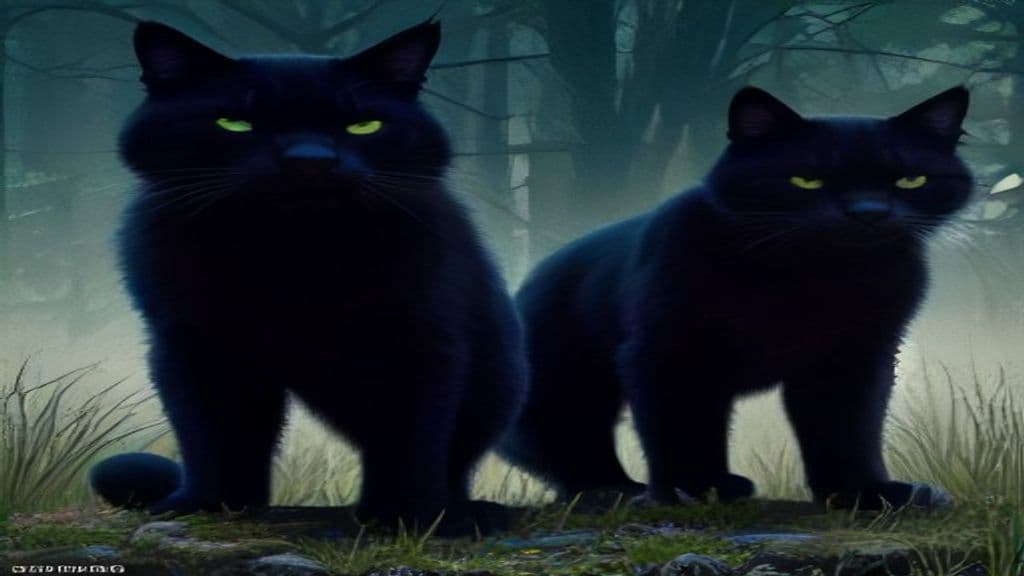
Because 'cryptid' denotes a category rather than a single creature, no standardized physical description exists. Reported appearances vary by example and locality: alleged 'Black Panthers' in parts of North America are described by witnesses as large black cats, though wildlife authorities identify only the Puma as the large native cat in those regions and note no historical record of an all-black Puma (Source 3); the Mothman is treated in local legend and podcast retellings as a specific, uncanny figure associated with particular communities (Source 5); the Loveland Frog is depicted in some media as a small, roughly three-foot-tall frog-like being that appears episodically to a few witnesses (Source 9). Popular culture adaptations in films, comics, and games further diversify visual portrayals to suit narrative needs (Sources 6, 8, 11, 9).
There is no universal set of abilities attributed to 'cryptids' as a class; reported behaviors and powers are specific to individual named examples and vary widely. For many alleged cryptids—such as reported large cats—the discussion centers on identity and natural behavior rather than supernatural abilities (Source 3). Legendary figures like the Mothman are framed in media and oral retellings as anomalous or uncanny, contributing to local lore and a sense of unexplained phenomena without consistent, evidence-based powers in the sources provided (Source 5). Analysts and scientists critique cryptozoological methods for relying on anecdote and misidentification, emphasizing that many attributed behaviors may be narrative embellishment or perceptual error rather than verifiable abilities (Source 1).
Chuchunya (Yeti / Abominable Snowman)
A large, hairy, humanoid creature reported in modern legend and cryptozoology as inhabiting the Himalayan mountains; presented in contemporary sources as a mythical humanoid or cryptid rather than a well‑documented indigenous cosmological being. Much alleged evidence consists of anecdotal sightings, disputed recordings, photographs, and footprint casts, some of which have been judged hoaxes.
Fish
Fish are aquatic, gill-bearing vertebrate animals and a widespread biological class whose members also function as cultural symbols, food resources, and religious iconography in the provided sources. The corpus treats fish primarily as natural animals and cultural referents rather than as autonomous supernatural beings.
Hibagon
The Hibagon is a regional cryptid reported around Mount Hiba in Hiroshima Prefecture, Japan, described as a large, bipedal, hairy humanoid. Reported since the 1970s, it is presented in sources as a local analogue to North American Bigfoot and the Himalayan Yeti and treated primarily as a cryptozoological/folkloric curiosity rather than a being embedded in traditional religious cosmology.
Igopogo
Igopogo is a modern Canadian lake‑monster legend said to dwell in Lake Simcoe, Ontario. Presented in popular folklore and cryptozoological sources, it is a place‑bound mysterious aquatic creature variously reported by witnesses, invoked in local media, and represented in civic art.
Mogollon Monster
A regionally anchored American folkloric cryptid reported along Arizona's Mogollon Rim, described as a large, bipedal, hairy humanoid whose accounts function as wilderness cautionary tales and local popular‑culture legend.
Phantom kangaroo
A modern folkloric and cryptozoological label applied to reports of kangaroos, wallabies, or their tracks appearing in places outside their native range. Accounts range from documented feral/introduced populations and escaped captive animals to sensational, apparitional, or misidentified sightings discussed in urban‑legend and Fortean contexts.
Vanishing Hitchhiker
A widespread modern folk-narrative type in which a traveler (often a motorist) gives a ride or shelter to a passenger who later disappears without mundane explanation; subsequent corroboration often reveals the passenger had died earlier or leaves a token such as a garment on a grave.
Croydon Cat Killer
A contemporary social and media label applied to an alleged perpetrator (or perpetrators) blamed for a large series of cat mutilations first reported in Croydon, South London, from 2014 onward. The term functioned as a focal agent in community fear, media coverage and police investigation, and was later reinterpreted by forensic reviews as more likely the result of vehicle trauma and wildlife scavenging.
Cruel Coppinger
Cruel Coppinger is a semi-legendary Cornish figure—remembered as a foreign, fearsome smuggler/wrecker whose biographical fragments were elaborated into a dramatic folk narrative. Collected in 19th-century sources (notably Rev. R. S. Hawker's account published in All the Year Round) the tale blends probable historical persons (members of the Coppinger family) with folklore motifs of seizure, wrecking, illicit wealth, and a mysterious maritime disappearance.
Cruinniuc
Cruinniuc is a mortal figure in the Ulster Cycle of Irish mythology, described as a wealthy widower and cattle-owner of Ulster whose boast at a festival precipitates the events in which his pregnant wife, later revealed as Macha, is forced to race the king's chariot, gives birth to twins at the finish, and curses the men of Ulster.
Ctesippus
Ctesippus (Greek Κτήσιππος, Ktēsippos) is an ancient Greek personal name attested for several distinct mortal figures in literary and mythographic sources: one or more sons of Heracles in genealogical lists, a wealthy and disorderly suitor of Penelope in the Odyssey, and a named minor interlocutor or symposium participant in Platonic dialogues. The attestations show recurring onomastic use rather than a single supernatural entity.
Cthulhu
A fictional cosmic entity created by H. P. Lovecraft and introduced in the 1928 story "The Call of Cthulhu." Presented in Lovecraft's fiction as one of the Great Old Ones: an immensely ancient, non‑human being that lies sleeping in the submerged city of R'lyeh and exerts a subconscious influence on humanity while inspiring cult worship.
Community Record
- [1]List of cryptids (Wikipedia). "Cryptids are animals or other beings whose present existence is disputed or unsubstantiated by science."wiki
- [2]Wikidata: cryptid. "creature or plant whose existence has been suggested but is not recognized by scientific consensus"wiki
- [3]Archive: 052 Unearthing Black Panthers. Discussion of reported 'Black Panthers' in North America and scientific counterpoints about Puma (Source 3).other
- [4]Archive: Episode 06 - Frenchies Kiss Real Well (Mothman). Podcast episode covering local legend of the Mothman (Source 5).other
- [5]Glorious Trainwrecks: cryptid (taxon entry). Game taxonomy entry referencing cryptid examples including Loveland Frog (Source 9).other
- [6]Cryptid (film). Film titled 'Cryptid' (2022), example of popular culture use of the term (Source 6).wiki
- [7]Cryptids (film). Anthology horror comedy film 'Cryptids' (2023), example of media adaptation (Source 8).wiki
- [8]King Cryptid (Alterna Comics). Comic titled 'King Cryptid', example of the category's use in comics (Source 11).literary
- [9]Archive: 008 Unearthing Norman, Oklahoma. Local legend and town-focused cryptid reporting, illustrating town-specific folklore (Source 4).other
- [10]Wampler Cryptid Fuzz (gearnews). Commercial product named after 'cryptid', showing cultural commercialization of the concept (Source 10).other