
The vanishing hitchhiker is not a single mythic origin figure but a narrative type documented by folklorists. Jan Harold Brunvand classifies it among 'urban belief tales' and traces modern versions back to at least the nineteenth century; comparative notes indicate resonances with a roughly 400‑year‑old Swedish manuscript and a documented cluster of American variants collected by Beardsley and Hankey. Beardsley and Hankey's survey of U.S. accounts identified multiple distinct versions (they reported four primary versions in their sample), showing the motif's long persistence and adaptation to local contexts rather than a single point of origin.
Accounts vary by local variant: many American and British retellings feature a young woman or girl (a common motif has a girl returning from a dance who borrows an overcoat), while a regional cluster recorded around Chicago emphasizes an old prophetic woman. Other variants present the passenger as an ordinary, unremarkable traveler who shows no overtly supernatural traits at pickup. In some localized traditions (notably Hawaiian accounts invoking Pele) the traveler may be a divine or semi-divine figure traveling incognito. The only consistent descriptive feature in the sources is ordinariness at the moment of encounter rather than a fixed supernatural visage.
Narratively, the figure's core 'abilities' are to appear to the living as an ordinary passenger, to vanish from a vehicle or place (sometimes while the vehicle is in motion), and occasionally to leave corroborating evidence: supplying an address that, when investigated, reveals the passenger had been dead for some time; a borrowed garment later found draped on a grave; or issuing a prophecy or warning. Variants differ in moral valence—some serve as harmless or tragic reminders of mortality, others (e.g., Pele variants) reward or rebuke behavior—rather than exhibiting consistent hostile or combative powers.
Weaknesses
- conditionNo uniform vulnerability — sources record no consistent weakness
- otherPractical avoidance: refusal to pick up strangers (modern sociocultural preventive measure rather than folkloric magical weakness)
Wards
- conditionAvoiding pickup — modern practical caution noted in sources as a way to reduce encounters
- otherProper conduct/kindness in culture‑specific variants (e.g., Hawaiian versions involving Pele): culturally appropriate behavior influences outcome rather than functioning as a ritual ward
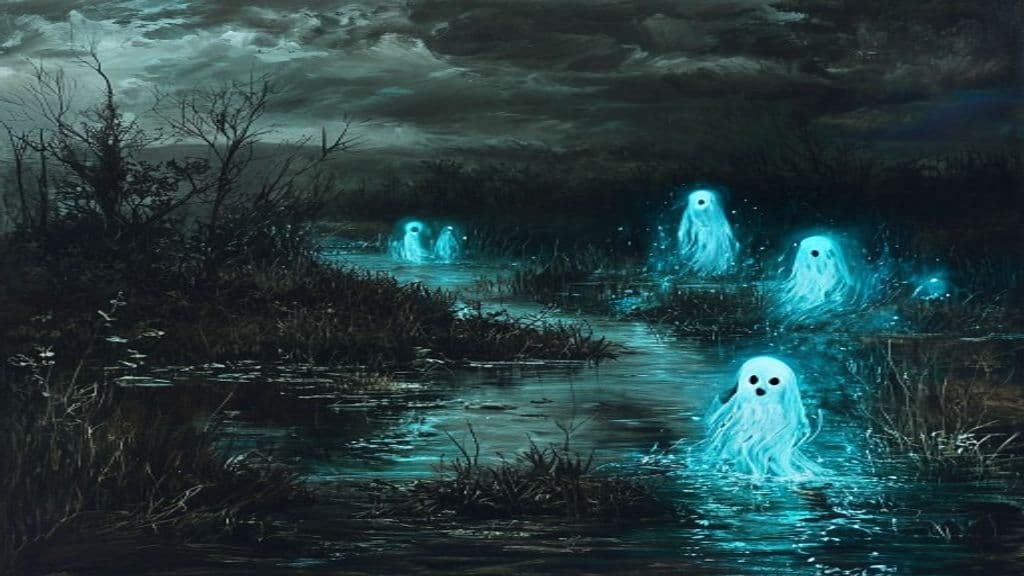
Will-o'-the-Wisp
A wandering light seen over marshy ground at night, leading travellers astray into bogs and fens. Possibly a spirit, possibly the soul of the unbaptised dead, possibly the devil himself.
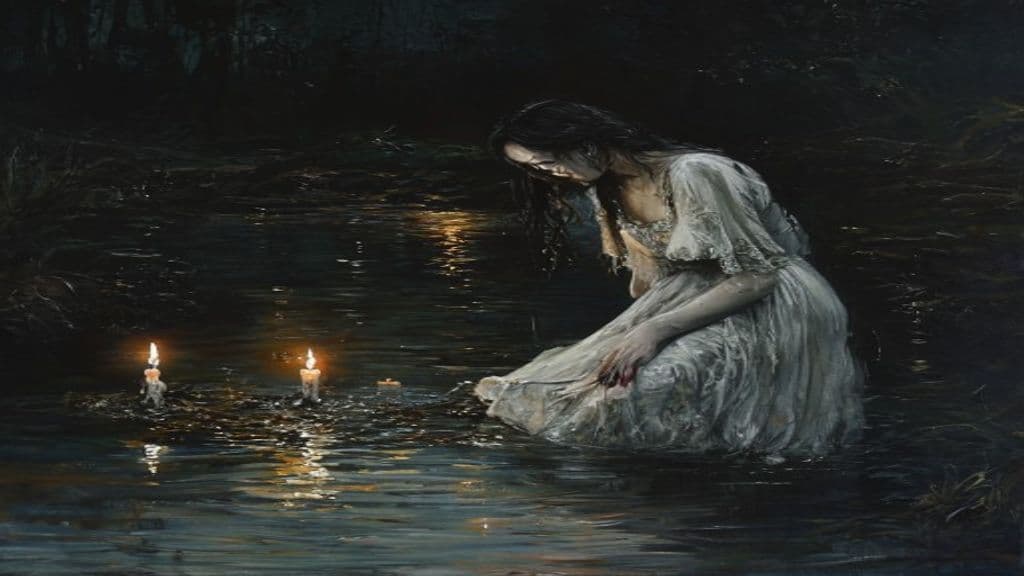
La Llorona
The Weeping Woman of Mexican folklore — the ghost of a mother who drowned her children and now wanders rivers and lakes, weeping for them and taking other children she finds at night.
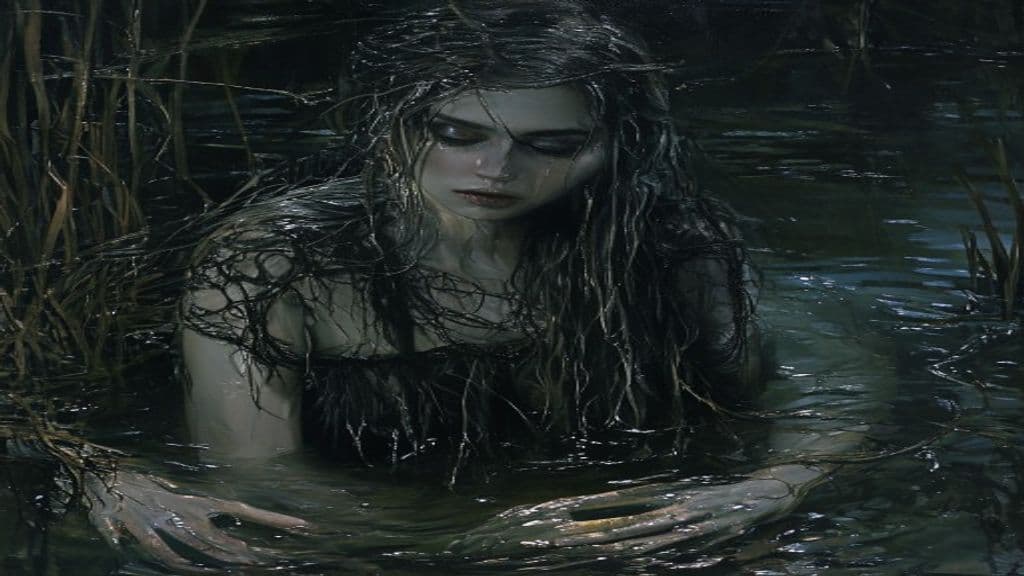
Rusalka
Water spirits in Slavic folklore — the spirits of young women who died by drowning or suicide, bound to rivers and lakes. Beautiful and dangerous, they can bewitch men to their deaths.
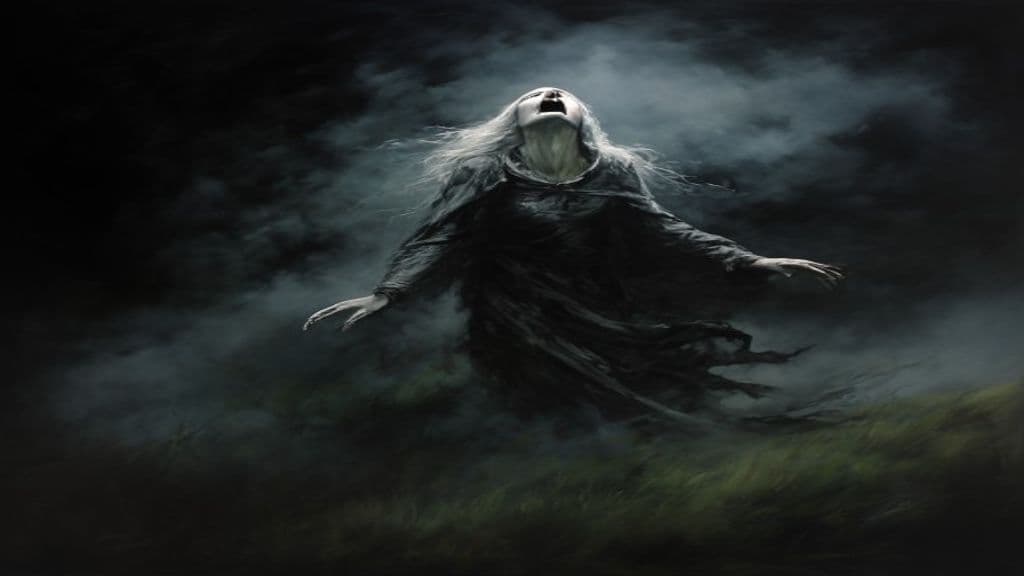
Banshee
A female spirit of Irish and Scottish folklore whose wail heralds an impending death in a family of Gaelic descent. Not a cause of death — a witness to it.

Ghoul
A ghoul is a demon-like or monstrous humanoid originating in pre-Islamic Arabian religion, traditionally associated with graveyards and the consumption of human flesh. The concept later entered broader folklore and has been widely reused and transformed in modern fiction and popular culture.
Cryptid
A contemporary classificatory label for animals or other beings whose present existence is disputed or unsubstantiated by mainstream science; used in folklore, eyewitness reports, and popular culture. The term functions as a category rather than a single mythic being and is central to the subculture of cryptozoology and to popular media treatments.
Valþjófsstaður Door
A medieval wooden door in the National Museum of Iceland featuring a unique representation of the Lion-Knight legend, a popular theme in Icelandic chivalric sagas and a rare example of runic script carved in wood. (Note: * Remove Power tier as it's not mentioned in the source material. * Update Appearance to match Source 1: The door depicts scenes from the Lion-Knight legend, including a knight slaying a dragon and fr)
Vamana
Avatar of Vishnu in Buddhist tradition, representing a physical manifestation or descent into the world. (Note: - Summary: The article should clarify that Vamana is an avatar of Vishnu primarily in Hindu tradition (not Buddhist), representing a divine descent into the world. - Power tier: Based on the source ma)
Vammatar
Vammatar (also presented in a Finnish-mythology-derived source under the names Kivutar or Kiputyttö) is described in the cited material as a spirit or goddess who is asked to take the pains and injuries of humans onto herself. She is located on named places associated with pain (Kipumäki / Kipuvaara / Kipuvuori) and is called a 'maiden of the underworld' in the cited encyclopedia entry.
Vampire (tradition)
A class of revenant beings in southeastern and eastern European folk belief that subsist by feeding on the vital essence (generally blood) of the living. Recorded chiefly in early modern to modern oral traditions, these vampires are typically described as reanimated corpses whose presence explains unexplained illness, death, and post-mortem disturbances in their communities.
Vanatühi (Vanapagan)
Vanatühi, also called Vanapagan, is a figure from Estonian folk tradition described in available sources as a giant farmer and characterized as a devil or god of the underworld who is portrayed as more foolish than malevolent. The character appears in Estonian folk tales rather than in documented organized religious practice.
Vanemuine
Vanemuine is an Estonian cultural institution — originally the Vanemuine Society (Vanemuise Selts) founded in Tartu in 1865 — that gave rise to the first Estonian-language theatre and later a multi-genre theatre company and concert organization. It played a foundational role in staging Estonian-language drama, organising song festivals, and training theatre practitioners during the late 19th and 20th centuries.
Vanth
Vanth is an Etruscan chthonic female attendant depicted in funerary art as a benevolent psychopomp who escorts and assists the dead on their journey to the Underworld. She appears in tomb paintings, sarcophagi, and ash urns from the classical Etruscan period and is often shown with attributes such as a torch, key, and scroll.
Vapula
Vapula is a named goetic spirit represented in Western grimoire-derived and modern occult literature as a high-ranking Duke/Prince who teaches crafts and sciences and commands numerous legions. In contemporary occult commentary he is frequently characterized as a patron of technical knowledge and 'Prince of Technology'.
Varatantu
A sage in Hinduism associated with the Vāratantavīya philosophy, embodying spiritual and intellectual authority. (Note: 1. Power tier: Downgrade to Ancient (deity-level) as the sources only mention his association with a school of thought, but do not indicate cosmic powers. 2. Abilities: More specific description of hi)
Varda / Elbereth
Varda, often called Elbereth in secondary references, is identified in the provided sources as one of the Valar — the mightiest Ainur who chose to enter the created world (Arda) in J. R. R. Tolkien’s legendarium. The Valar are described in the sources as the 'Powers of the World' who shape and govern Arda after its form is determined by the Music of the Ainur.
Vardøger
A spirit-predecessor in Scandinavian folklore whose sensory manifestations (footsteps, voice, scent, appearance) precede a living person, producing the impression that the person was present before arrival. Traditionally associated with attendant/guardian spirit concepts such as fylgja and vǫrð.
Community Record
- [1]Vanishing hitchhiker. Wikipedia, 'Vanishing hitchhiker'wiki
- [2]The Vanishing Hitchhiker: American Urban Legends and Their Meanings (sample). Jan Harold Brunvand, The Vanishing Hitchhiker: American Urban Legends and Their Meanings (sample archive)academic
- [3]Beardsley and Hankey survey (summarized). Beardsley & Hankey survey of U.S. accounts summarized in secondary literature (as cited in Wikipedia)academic
- [4]Archive: Analysis and Decomposition of Narratives in Security: DARPA (Honeypot). Archive collection referencing narrative analysesother
- [5]Frankly Curious: The Vanishing Hitchhiker and the Charming Return to Glennascaul. Frankly Curious essay on vanishing hitchhiker variantsfolk
- [6]Multo (blog): Revisiting the Vanishing Hitchhiker. Multo blog revisiting variants and cultural notesfolk