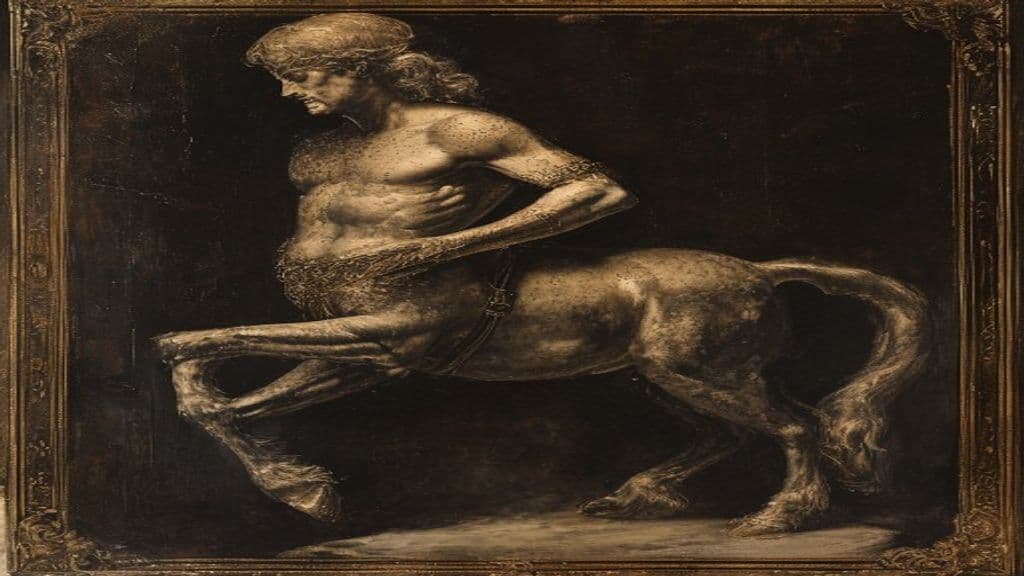
Cyllarus is attested in Ovid's Metamorphoses (Book XII) within the narrative of the centaur–Lapith battle (the conflict erupting at Pirithous' wedding). The supplied sources present him as one of the centaurs who fought the Lapiths; no separate genealogy or founding origin for Cyllarus is provided in the cited materials. His story in the sources is a dramatic episode within the larger mythic confrontation rather than an independent origin myth.
Cyllarus is described in the supplied texts as a centaur — possessing the conventional composite form of human upper body and horse lower body — and explicitly characterized as "handsome and valiant" (summary of Ovid as reported in secondary sources). The available materials do not provide further iconographic details, measurements, coloration, or distinctive markings beyond the general centaur morphology and the attributes of handsomeness and valor.
In the cited accounts Cyllarus' demonstrated abilities are martial: he participated in the battle against the Lapiths and is portrayed as valorous in combat. He is also presented as deeply attached to his centaur wife Hylonome; his death and her reaction emphasize emotional devotion. The supplied sources do not record any supernatural powers, magical abilities, or cosmic functions for Cyllarus beyond his role as a mortal combatant among centaurs.
Weaknesses
- othersusceptibility to mortal weapons (fatally wounded by a spear)
- conditionmortality / vulnerability in battle
Wards
- othernone attested in sources
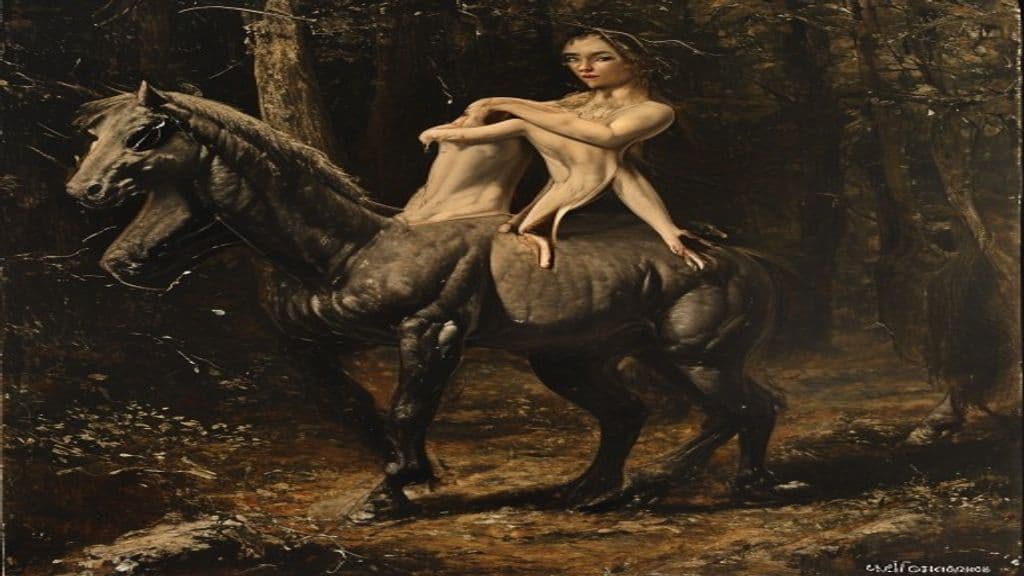
Hylonome
Hylonome (Ancient Greek: Ὑλονόμη) is a female centaur from Greek mythology known primarily from Ovid's Metamorphoses (Book 12) as one half of a pair of centaur lovers; after her husband Cyllarus is killed in the battle between the Centaurs and the Lapiths she kills herself from grief.
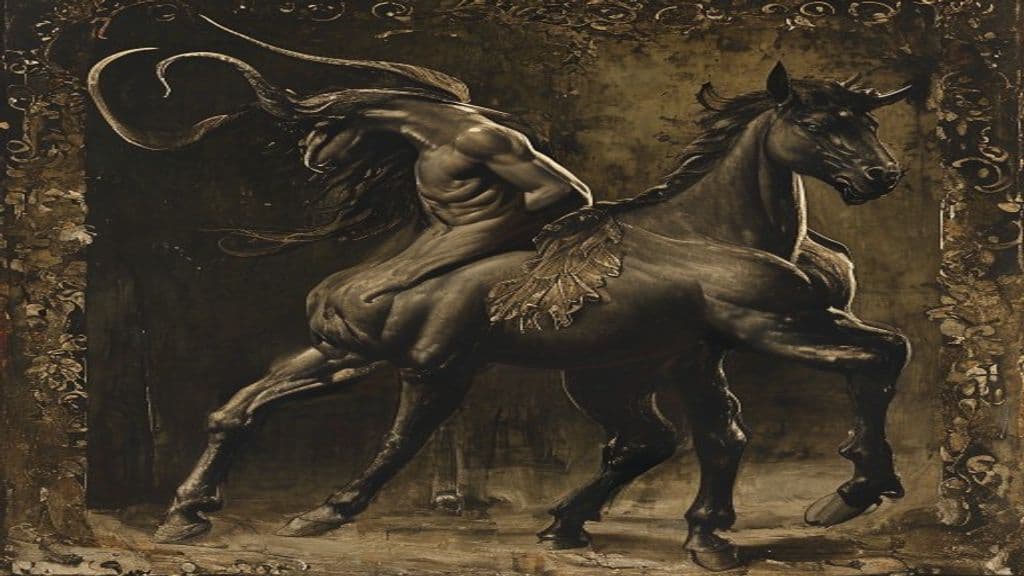
Centaur
A mythic hybrid from ancient Greek tradition with the upper body of a human and the lower body and legs of a horse. Centaurs appear as a tribal population associated with mountainous and wooded regions of Greece and embody tensions between human social order and untamed nature.
Cycnus of Aetolia
Cycnus (Kyknos) of Aetolia is a mythic Aetolian prince, traditionally described as a son of Apollo by Hyrie/Thyrie and situated in Calydonian/ Aetolian narrative cycles. He appears in sources as a semi-divine youth, variously cast as a princely figure involved in erotic episodes (traditionally the beloved of Phylius in some retellings) and as a combatant referenced in heroic/martial catalogues and poetic metamorphosis traditions.
Cydon
Cydon (Greek Κύδων) is a personal name used for multiple mortal figures in ancient Greek myth and epic: an eponymous founder associated with Cydonia in Crete, several warriors appearing in war-cycles (including the Seven against Thebes and the Lemnian massacre), an ally in Virgil's Aeneid, and even the name of a horse in epic catalogue. The name functions onomastically rather than designating a single supernatural being or class.
Cydonians
Historically, the Cydonians (from Kydonia/Cydonia) are the inhabitants of the ancient city of Kydonia at the site of modern Chania on Crete, attested in classical Greek geographic and literary sources as one of the island's local peoples. In modern popular culture and fringe speculation the name has been repurposed to label imagined Martian inhabitants or game factions; these are distinct, later usages separate from the ancient ethnonym.
Cydragora
Cydragora (also attested Cyndragora) is an alternate personal name used in Greek mythic genealogies for the woman more commonly called Anaxibia, here identified in some traditions as a daughter of Atreus who married Strophius of Phocis and was mother of Pylades. The figure is presented as a mortal mythic woman whose primary role is dynastic and genealogical rather than supernatural.
Cyhyraeth
A Welsh spirit whose groaning, sighing wail presages the death of a family member — heard but never seen, specifically associated with the families of Welsh descent.
Cyledr Wyllt
Cyledr Wyllt (Cyledr the Wild) is a human warrior figure from the early Welsh Arthurian tale Culhwch and Olwen who goes mad after being forced to eat his father's heart by the captor Gwyn ap Nudd. Though madness marks him as 'Wyllt,' he remains capable as a warrior and later helps Arthur recover a pair of shears from the monstrous boar Twrch Trwyth.
Cyllen
Cyllen (also attested as Cyllene in place-name forms) is an eponymous figure in Greek mythographic and topographic tradition credited with giving his name to Mount Cyllene in Arcadia. He appears in genealogical lists of Arcadian heroes and functions primarily as an etiological ancestor in local myth rather than as a richly characterized deity or monster.
Cyllene (nymph)
Cyllene (also Kyllini, Kyllene) is a place-bound nymph from Greek tradition associated with Mount Kyllini in the Peloponnese. In the supplied sources she functions primarily as an eponymic, landscape-linked figure rather than as a named actor in preserved myths or cult narratives.
Cymatolege
Cymatolege is attested in the supplied sources as one of the Nereids, the fifty sea-nymph daughters of Nereus and Doris in Greek mythology. The supplied materials contain no individual myths, etymology, or distinct attributes for Cymatolege; the same name is also used in a separate, non-mythological context as a genus of cyanobacteria.
Cymelus
Cymelus (Latin/Cymelos; Greek Kymelos) is a named Lapith warrior who appears in accounts of King Pirithous's wedding and the ensuing battle between Lapiths and Centaurs. In Ovid's Metamorphoses and later mythographic summaries he is recorded as being killed when the centaur Nessus hurled a spear that struck his groin.
Cymidei Cymeinfoll
A giantess from the Second Branch of the Mabinogi who lived under a lake in Ireland, gave birth to a fully formed and armed warrior every six weeks, and with her husband kept the Cauldron of Regeneration used to restore the dead (who returned mute). They appear as guests at Matholwch's court, survive an attempted killing, and later give the cauldron to Bendigeidfran.
Cymo
Cymo is recorded in modern reference lists as a named member of the Nereids, the class of sea-nymphs in Greek mythology. The available sources supply only the name and its categorization; no independent ancient attestations, narratives, or descriptive details for Cymo are provided in the supplied material.
Community Record
- [1]Metamorphoses (Book XII) — Ovid. Ovid, Metamorphoses, Book XII (as available in The Internet Classics Archive)literary
- [2]Cyllarus — Wikipedia. Wikipedia entry 'Cyllarus' (summarizing Ovid)wiki
- [3]52975 Cyllarus (asteroid) — Wikipedia. Wikipedia entry for asteroid 52975 Cyllarus (notes naming after the centaur)wiki
- [4]Cyllarus — Wikidata. Wikidata entry for Cyllarusother
- [5]52975 Cyllarus — Mark Andrew Holmes. Asteroid naming notes referencing the centaur Cyllarusother