
Sources present Daidarabotchi both as a type of gigantic yōkai and in specific localised legendary figures recorded in classical place-records. Hitachi no Kuni Fudoki (as summarized in modern sources) relates a Daidarabotchi living near Hiratsu Ogushi who fed on giant clams and piled their shells into a hill; Izumo no Kuni Fudoki recounts Ōmitsunu, a giant-strength king linked thematically to land-pulling (kuni-biki). Across accounts the figure functions as a mythic explanation for conspicuous landforms rather than a single canonical life-story.
Daidarabotchi is described in the tradition as an enormous humanoid or giant yōkai whose size is great enough that its sleeping body could be mistaken for a mountain range and whose footprints became lakes and ponds. Some modern glosses and derivative depictions describe a bald-monk-like silhouette (rendering the kanji 大座法師 as 'big seated monk'), but the core folkloric descriptions emphasize vast humanoid scale and landscape equivalence rather than standardized iconography.
Primary attributed abilities are geological in scale: creating lakes and ponds with its footprints, moving or piling up mountains and hills, and altering coastal material (for example, piling clam shells into a hill). Legends credit prodigious physical strength and earth-shaping agency; in related tradition Ōmitsunu performs kuni-biki (land-pulling) to enlarge territory. In some regional accounts (notably Ibaraki) the being uses its strength benevolently to assist people by moving mountains.
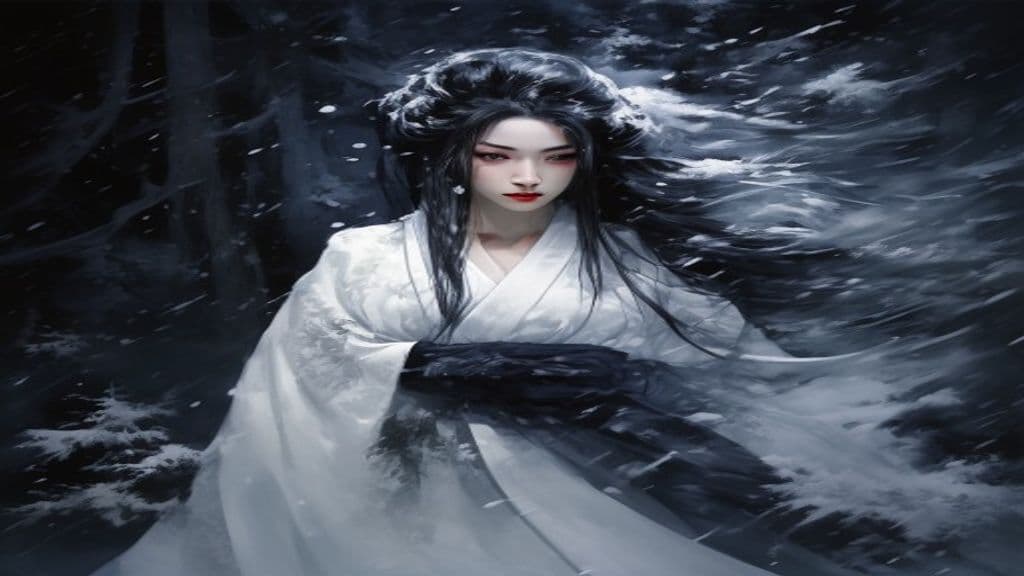
Yuki-onna
The Snow Woman of Japanese folklore — a spirit born of blizzards who appears to travelers lost in snowstorms. Beautiful and lethal, she can show mercy or bring death depending on her mood.
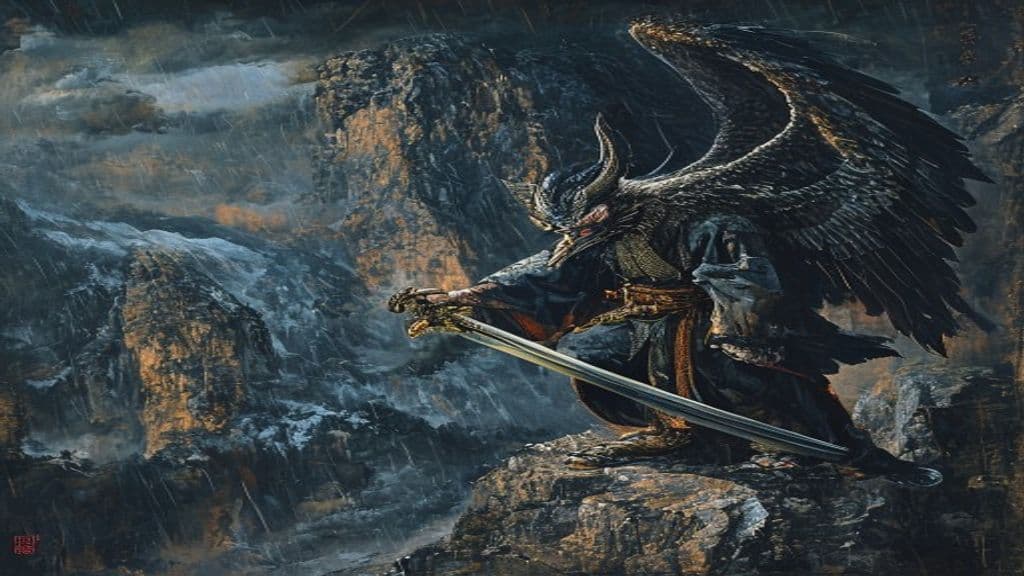
Tengu
Proud, warrior-like mountain spirits of Japan, associated with martial arts, pride, and the wild mountains. Neither fully good nor evil — they test and train warriors and monks, but punish the arrogant.
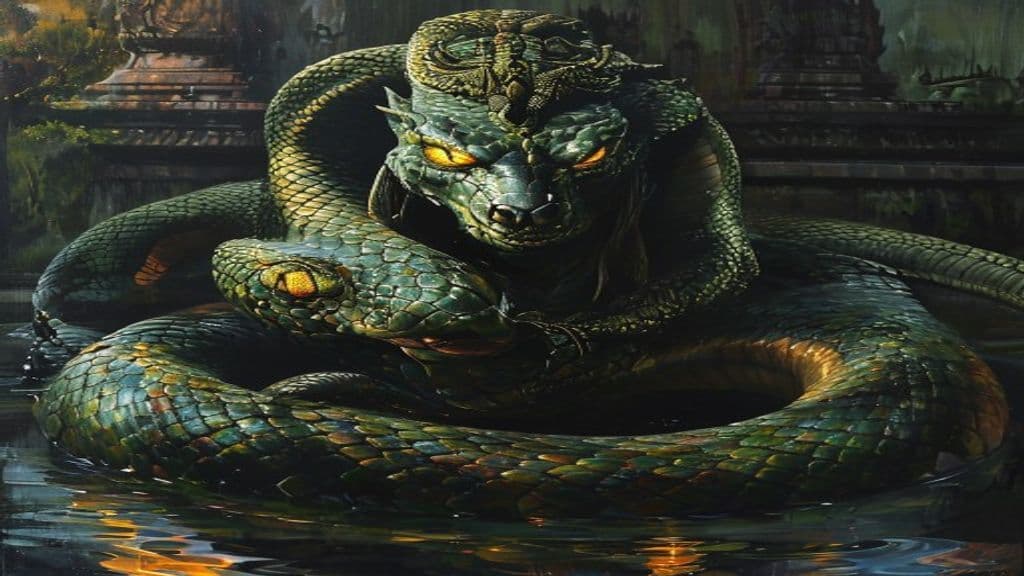
Naga
Divine serpent beings of Hindu, Buddhist, and Jain cosmology — powerful guardians of water, earth, and underground treasures. Revered as deities in South and Southeast Asia.
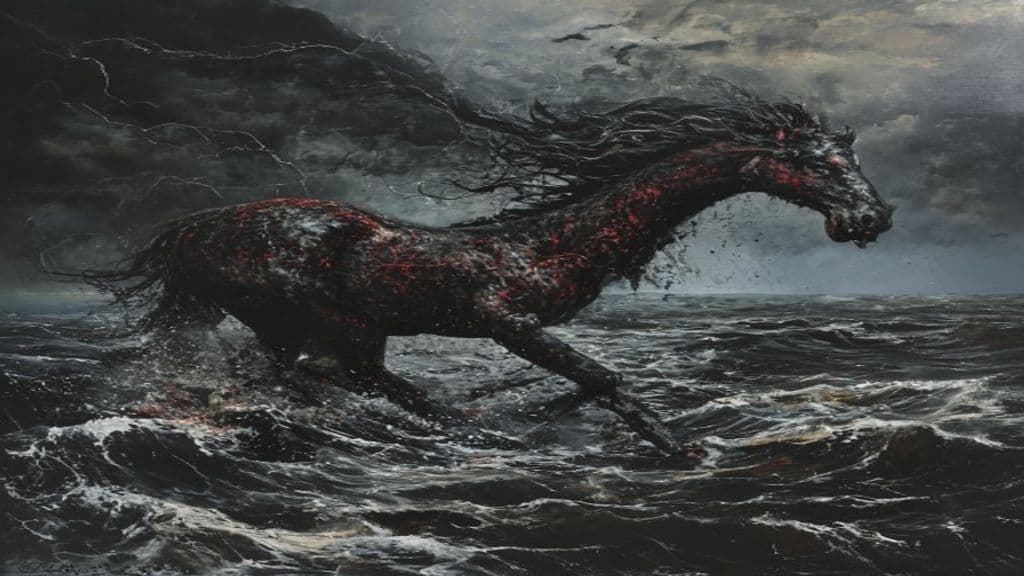
Nuckelavee
The most terrifying creature of Orcadian folklore — a skinless, horse-headed demon of the sea whose breath spreads plague and whose presence causes crops to wither. It cannot cross fresh water.
Dag the Wise
Dag the Wise (Old Norse Dagr spaki) is a legendary Swedish king in the Yngling dynasty attested in skaldic and saga sources. He is noted for understanding the speech of birds and for keeping a sparrow that gathered news; the bird's death prompted a vengeful expedition to Reidgotaland in which Dag was ambushed and killed.
Dagon (Dagan)
Dagon (also Dagan) is an ancient Near Eastern deity attested across inland Syria and the middle Euphrates, with principal temples at Tuttul and Terqa. In inland contexts he functions as a senior, paternal god — a source of prosperity and royal legitimacy — and was syncretized with Mesopotamian and Hurrian senior gods in later theological lists. Later Biblical and medieval receptions reinterpreted the name (including an incorrect fish-association) and the theonym has been reused in modern literature and media.
Dagonet
Dagonet is a named individual in the Arthurian literary tradition, variously portrayed as a Knight of the Round Table, a court fool/jester attached to King Arthur, or a deranged former knight. He appears across medieval prose romances (notably the Vulgate Cycle, Guiron le Courtois, Prose Tristan) and later retellings (Malory, Tennyson, Howard Pyle, nineteenth–twentieth-century pastiches).
Dagr
Dagr is the Old Norse personification of the day: a luminous being who rides across the sky on the horse Skinfaxi, bringing daylight in the mythic cosmology preserved in the Poetic Edda and Prose Edda. The lexical item Dagr functions both as the common noun for 'day' and as a proper name for this mythic actor.
Dahu
A legendary mountain creature from francophone regions of France, Switzerland and adjacent Alpine valleys, presented in folklore as a goat-like animal with markedly asymmetrical limb lengths; primarily known as the subject of prank 'dahu hunts' and a staple tall tale and tourist joke rather than a true supernatural being.
Dai (Daini / Dai witch) — Assamese (unconfirmed)
No reliable information about an Assamese supernatural entity called Dai (also cited as Daini or 'Dai witch') is present in the provided sources. The available materials include general disambiguation and unrelated archive items that do not describe such a folk entity, so details about its nature, attributes, or cultural role cannot be documented from these sources.
Daikokuten
Daikokuten (大黒天) is a syncretic Japanese deity of fortune, wealth, and household/professional prosperity. Originating from the Buddhist/Hindu figure Mahākāla and transformed within Chinese and Japanese religious contexts, Daikokuten functions as a protector of monastic kitchens and, in Japan, as a beneficent patron of farmers, cooks and occupations tied to money.
Daimon Hellstrom
Daimon Hellstrom is a fictional Marvel Comics character, presented in-universe as the human son of an infernal being and a mortal woman. Portrayed variously as an occult investigator/exorcist, sorcerer, and at times ruler of an infernal dimension, his stories explore the struggle between inherited demonic heritage and chosen humanity.
Daitya
Daitya (Sanskrit: दैत्याः) denotes a hereditary race or clan of powerful asura-type beings in Hindu purāṇic and epic tradition, described as the descendants of the sage Kaśyapa by his wife Diti. They appear in genealogies and narratives as collective kin-groups whose notable members (e.g., Hiranyaksha, Hiranyakashipu, Mahabali) confront the devas and provoke divine (Viṣṇu) avatāras.
Daji
Daji (妲己, Dájǐ) is a figure in Chinese narrative and popular religious-cultural materials who blurs human and spirit categories: historically remembered as the favorite consort of King Di Xin of Shang but in later legend and fiction identified as a fox‑spirit (often a nine‑tailed or thousand‑year fox) that possessed or impersonated the woman and precipitated moral and political decline.
Daken (Akihiro)
Daken (Akihiro) is a fictional Marvel Comics character: the mutant son of Wolverine who was raised and conditioned by Romulus. Introduced in Marvel's Wolverine titles, he has served alternately as antagonist, antihero, and later a reformed team member, and at one point becomes bonded to a demon called Bagra-ghul.
Dakinī
A dakini is a feminine spiritual figure attested in Hindu and Buddhist literature and in Himalayan Vajrayāna cultural contexts; sources in this set characterize the dakini as a type or class of goddess and as a figure embedded in tantric and Himalayan religious landscapes. Specific iconography, powers, and ritual formulas are not documented in the supplied sources.
Community Record
- [1]Daidarabotchi - Wikipedia. Wikipedia, 'Daidarabotchi' article (summary of Fudoki and regional traditions)wiki
- [2]Wikidata entry Q1157529. Wikidata: Daidarabotchiwiki
- [3]Daidarabotchi | Megami Tensei Wiki. Megami Tensei Wiki entry (derivative depiction noting 'Big Seated Monk' gloss)wiki
- [4]Daidarabotchi - Final Fantasy XIV Wiki. FFXIV community wiki (derivative/popular-culture adaptation)wiki
- [5]Villains Wiki: Daidarabotchi. Villains Wiki (popular-culture/fictional adaptations)wiki
- [6]Orion's Arm - Daidarabotchi Megadyson. Orion's Arm (science-fictional reuse of the name/concept)other
- [7]Ninja Sentai Kakuranger - Wikipedia. Reference to use of the name in modern media adaptationswiki