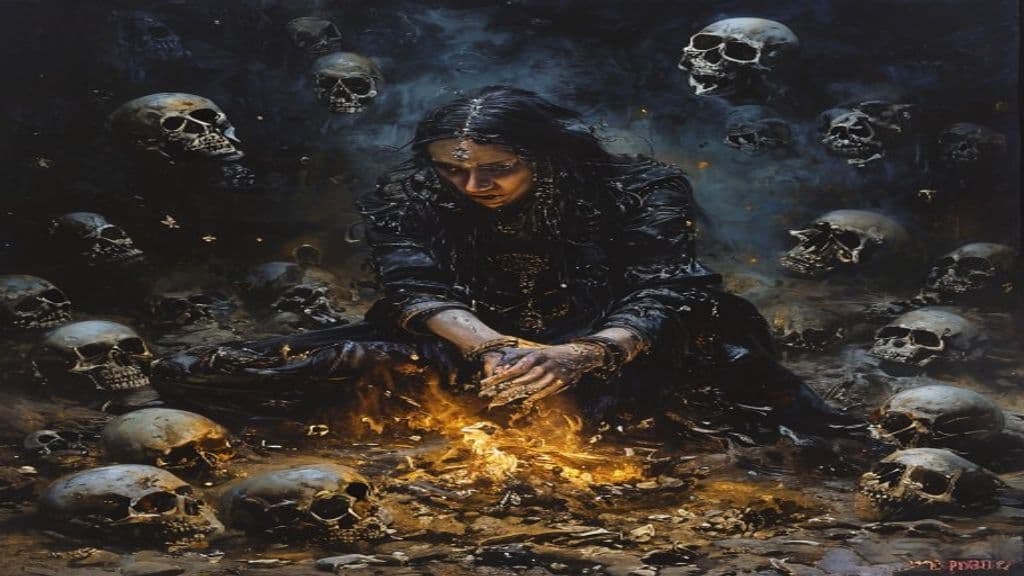
Eight centuries of accumulated power bring the Dayan to her third threshold — Damyanti, named for the legendary princess of extraordinary virtue whose name paradoxically describes the most powerful active witch-form. At 800 years, the witch's powers have stopped being purely social or personal and have become environmental. She has domain over the dead of her region, over the weather above her territory, and over disease patterns in the communities around her.
Folk accounts from Bihar and eastern UP describe the Damyanti as a force that is felt before she is seen — a district-wide chill, livestock losses, an unseasonable disease moving village to village. She rarely needs to be physically present to act. Her threshold crossing from Manthara to Damyanti is often marked by an event visible across the region: a sudden frost in summer, a drought that affects only certain villages, an epidemic that spares some households while destroying others.
Can appear as any age but the face has become somehow difficult to remember precisely — features slip from recollection. In her presence people feel that something very old is watching them. Animals panic. Some accounts say she casts no shadow at noon.
Can direct disease outbreaks with regional precision. Can cause or end droughts over her territory. Commands the unquiet dead of her region — can mobilize pre-existing spirits. Can curse across bloodlines with permanence that survives the individual target. Her knowledge of folk pharmacology and poison is encyclopedic after eight centuries.
Weaknesses
- ritualCollective puja involving seven priests from outside her territory
- ritualHer true name spoken at the crossroads at midnight
Wards
- ritualVillage boundary wards renewed every new moon
- substanceTurmeric and iron filings buried at four corners of the village

Menka
A Dayan witch who has survived approximately 200 years — the first named threshold, when her glamour is at its most potent and her seductive powers allow her to pass freely among the living.
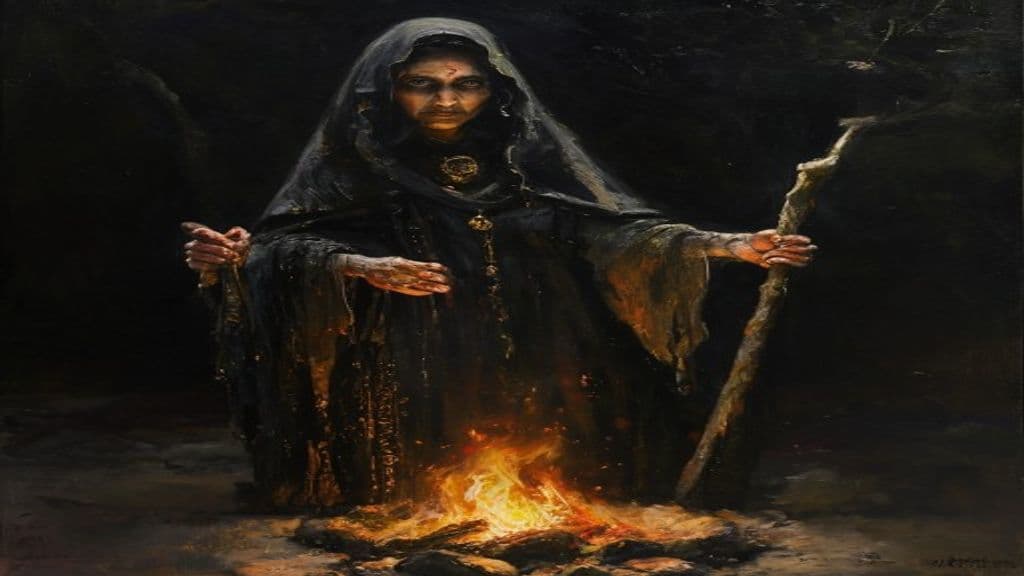
Manthara
A Dayan witch of approximately 400 years — named for the scheming Manthara of the Ramayana, her power has shifted from seduction to manipulation, able to bend the fates of entire families through whispered influence.
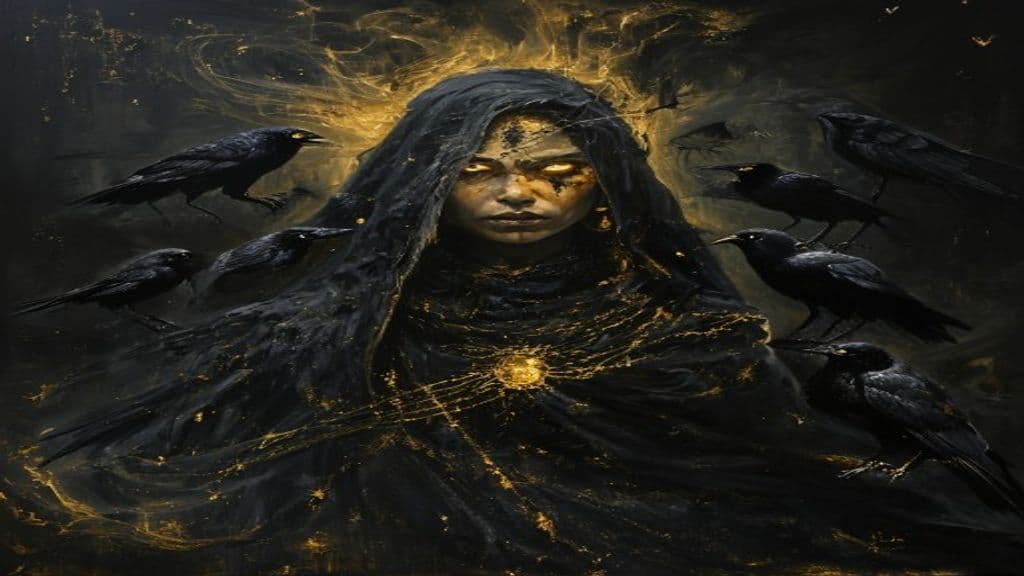
Chandalika
A Dayan witch who has reached approximately 1600 years of age — the final threshold, beyond which she has become more force than person, capable of destroying entire lineages and withstanding divine invocations.
Community Record
- [1]Folk Demonology of North India. Crooke, William. 1896. The Popular Religion and Folk-Lore of Northern India. Archibald Constable.folk
- [2]Magic and Religion in India. Bhattacharya, Jogendra Nath. 1896. Hindu Castes and Sects. Thacker, Spink & Co.academic