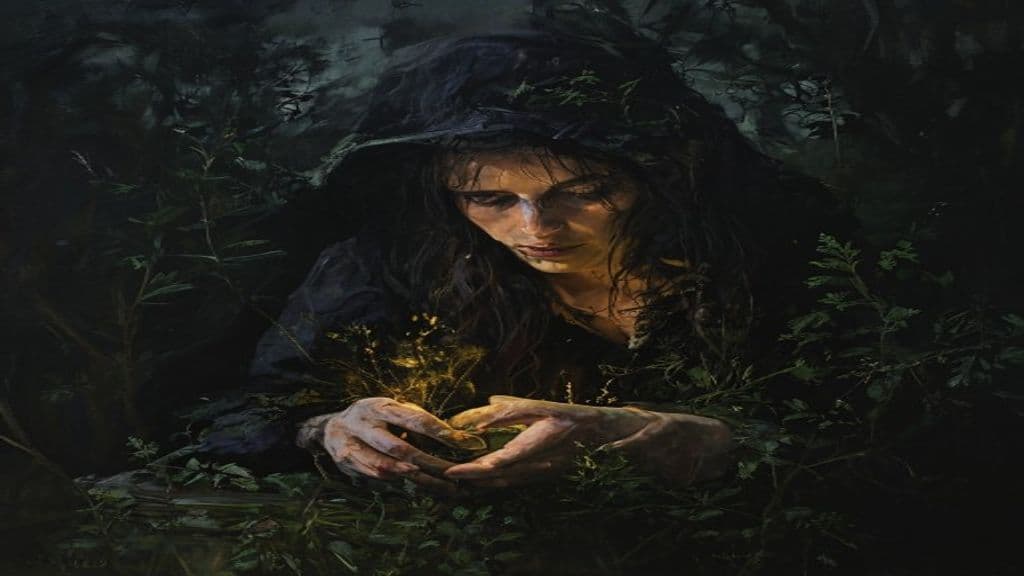
In the folk traditions of North India — particularly Bihar, Uttar Pradesh, and Rajasthan — a Dayan (witch) who survives long enough does not simply grow more powerful; she passes through distinct named thresholds, each marking a fundamental change in her nature and abilities. At approximately 200 years of age she becomes Menka, named after the celestial apsara who seduced the sage Vishwamitra — an acknowledgment that at this stage her greatest weapon is beauty and charm.
Unlike a young Dayan who relies on crude hexes, a Menka has refined her arts over two centuries. She can live undetected in a village for generations, appearing perpetually in her mid-twenties, taking new names when old identities become suspect. She is the most dangerous variant of the Dayan to encounter precisely because she is the most believable.
Appears as a beautiful woman in her apparent mid-twenties, well-dressed by the standards of her era and location. Hair is always perfectly arranged. Eyes are striking — either too bright, too dark, or an unusual shade for the region. She never appears to age and is never seen to eat in the normal manner, though she will perform eating socially.
Glamour so refined it works even on those who suspect her nature. Can pass through village social structures undetected for decades. Her hexes are subtle — long-duration wasting illness rather than sudden death. Can read the desires and fears of those around her and exploit them with precision. Can take a man's vitality over months without visible mechanism.
Weaknesses
- substanceMustard seeds scattered at her threshold
- ritualIron nail in her shadow
Wards
- symbolNimbu-mirchi (lemon-chilli ward) at the door
- mantraHanuman Chalisa recited at threshold
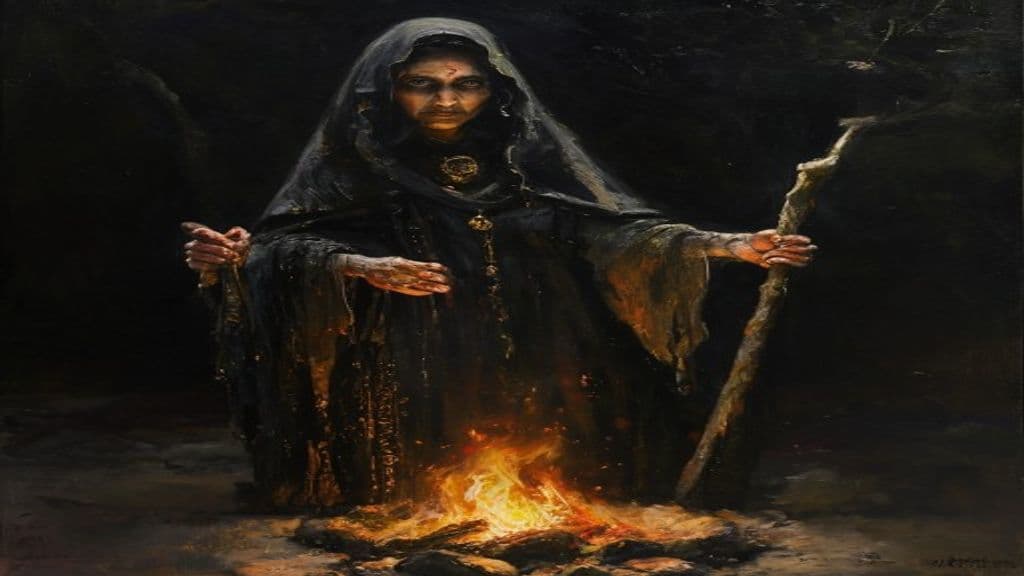
Manthara
A Dayan witch of approximately 400 years — named for the scheming Manthara of the Ramayana, her power has shifted from seduction to manipulation, able to bend the fates of entire families through whispered influence.
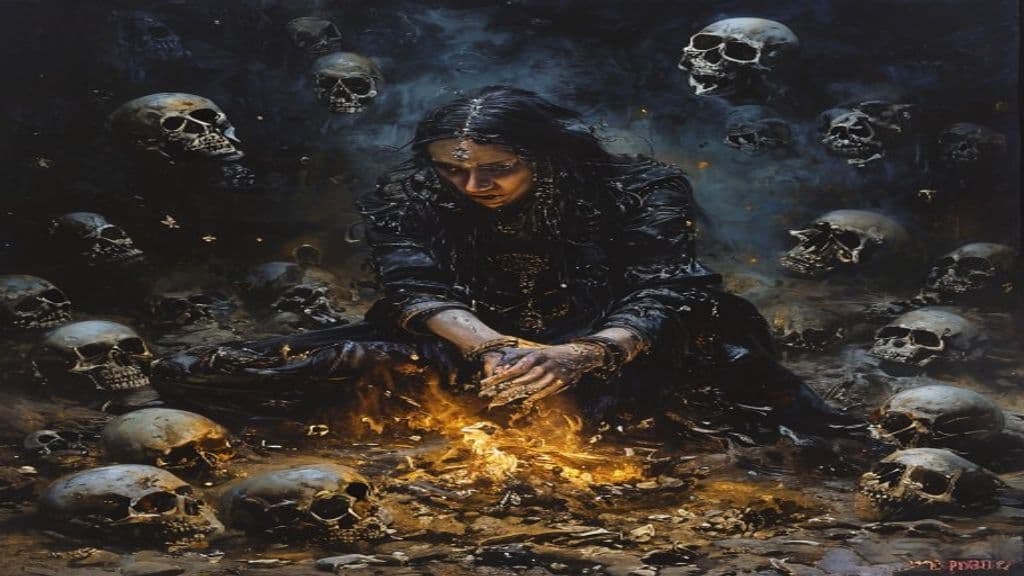
Damyanti
A Dayan witch of approximately 800 years — named for Damayanti of the Mahabharata, her power has grown to command weather, disease, and the spirits of the dead across an entire district.
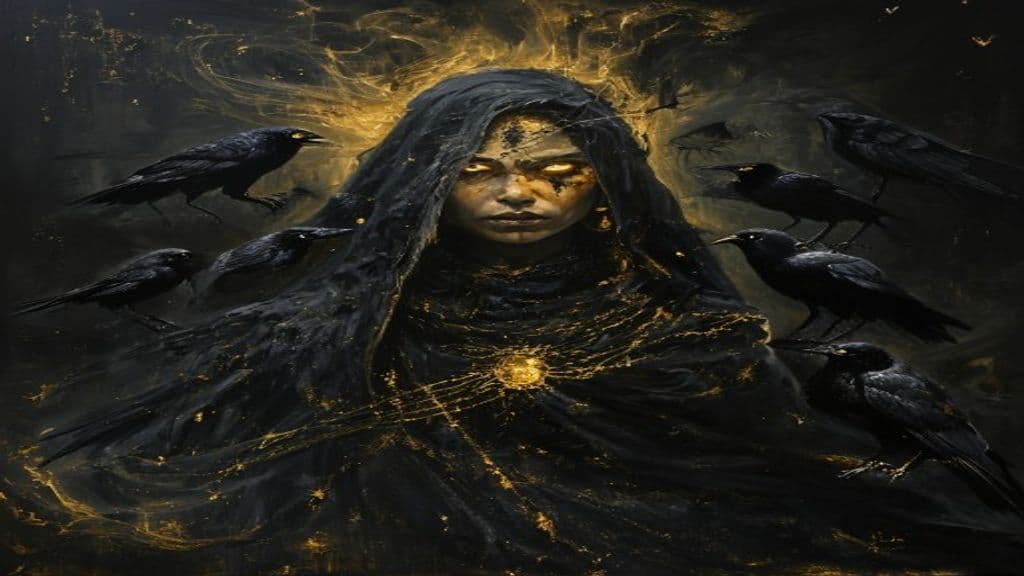
Chandalika
A Dayan witch who has reached approximately 1600 years of age — the final threshold, beyond which she has become more force than person, capable of destroying entire lineages and withstanding divine invocations.
Community Record
- [1]Folk Demonology of North India. Crooke, William. 1896. The Popular Religion and Folk-Lore of Northern India, Vol. 1. Archibald Constable.folk
- [2]Dayan Tradition. Elwin, Verrier. 1955. The Religion of an Indian Tribe. Oxford University Press.academic