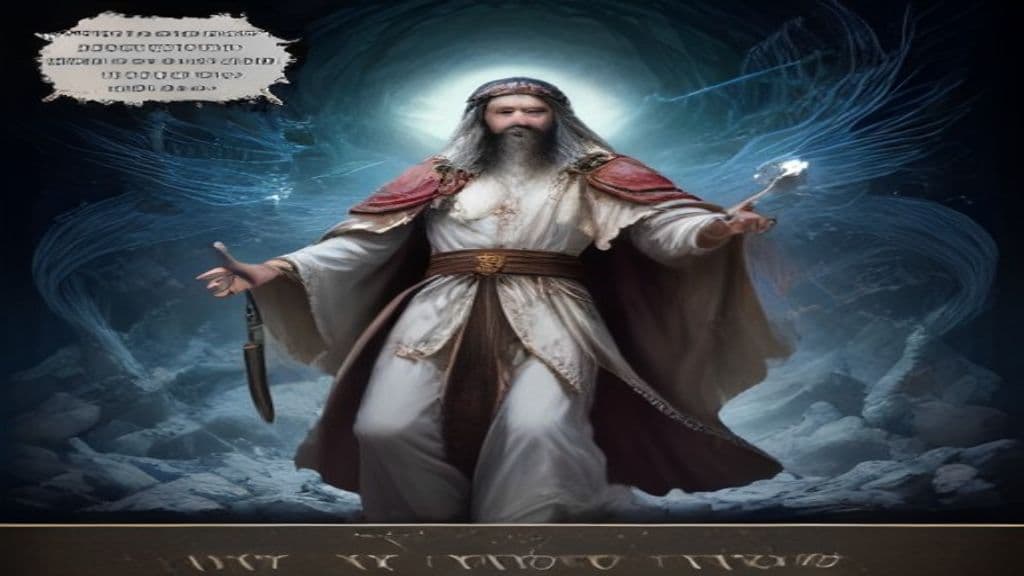
In the Hebrew Bible and subsequent Jewish writings, the destroying angel is not an independent primordial being but a class or instance of heavenly messenger (mal'āḵ) commissioned by God to carry out sentences or divine commands. Biblical narratives present specific destroying angels sent by God in episodes of plague or wartime judgment; rabbinic and Enochic materials develop the motif into categories of punitive angels (e.g., memitim, Malachei Habala) that operate within a heavenly judicial framework and, in Enoch, are grouped among satans who tempt, accuse, and punish under divine permit.
Scriptural accounts do not establish a consistent physical type for the destroying angel. Narratives sometimes present the agent as visibly manifest and armed (e.g., 1 Chronicles 21:15/2 Samuel 24: a figure seen 'between the earth and the heaven, with a drawn sword in his hand'), but the supplied sources do not record standardized traits such as wings, specific stature, or color beyond occasional visible appearance and weapon imagery.
Described functions are execution and punitive action under God's authority: carrying out mass or individual death as divine judgment (examples cited in scripture include the Passover-night execution prevented from entering blood-marked houses, 2 Kings 19:35 slaying 185,000 Assyrian soldiers, and the plague episode in 2 Samuel 24/1 Chronicles 21 recalled by God). In rabbinic and Enochic writings the same or related angels serve juridical roles—tempting, accusing, and executing sentences in the heavenly court—and are associated with postmortem punishment or Gehenna in later interpretive contexts. The destroying angel is presented as obedient to God and recallable by divine command.
Weaknesses
- symbolPassover blood sign on lintel and doorposts (Exodus 12:23 context) — prevents the destroyer from entering the house
- conditionRepentance/return to God (rabbinic theological claim) — as long as a person lives God allows repentance which may avert execution by angels of destruction
Wards
- symbolMarking of doorposts and lintel with sacrificial blood (Passover rite) — covenantal sign that causes God to 'pass over' and not allow the destroyer to enter
- conditionSincere repentance (teshuvah) in life — theological safeguard in rabbinic sources against angels executing divine sentences

Lamia
A child-devouring demon of Greek mythology — once a queen of Libya and lover of Zeus, driven mad by Hera's destruction of her children and transformed into a monstrous hunter of other women's children.

Yuki-onna
The Snow Woman of Japanese folklore — a spirit born of blizzards who appears to travelers lost in snowstorms. Beautiful and lethal, she can show mercy or bring death depending on her mood.
Lamia
A child-devouring demon of Greek mythology — once a queen of Libya and lover of Zeus, driven mad by Hera's destruction of her children and transformed into a monstrous hunter of other women's children.
Achish
Achish (Hebrew: אָכִישׁ, translit. ʾāḵīš) is a personal name or royal designation used in the Hebrew Bible for Philistine rulers associated with the city of Gath and is attested in extrabiblical West-Semitic and Akkadian inscriptions (rendered as ʾākayūš / Ikausu). Sources treat Achish as a human king (or a dynastic title) who interacts with Israelite figures such as David and appears in narratives concerning asylum, military service, and inter-polity politics.
Adonijah
Adonijah (Hebrew: אֲדֹנִיָּה, ’Ǎḏōnīyyā, "my lord is Yah") is presented in the Hebrew Bible as the fourth son of King David who made a bid for the throne during David's final illness, secured some elite support, took sanctuary at the altar, was pardoned conditionally, and later executed after petitioning Solomon to marry Abishag.
Ahasuerus
Ahasuerus is a royal personal name in the Hebrew Bible applied to one or more kings of Persia, most prominently the monarch who rules from Susa in the Book of Esther. The name is etymologically derived from Old Persian Xšayāršā (Xerxes) but functions in the texts as a name-title whose precise historical referent is disputed across traditions.
Ahijah the Shilonite
Ahijah the Shilonite is a Levite prophet attested in the Hebrew Bible (1 Kings) who foretold Jeroboam's rise and is credited in Chronicles with a now‑lost work. Rabbinic literature expands him into a legendary long‑lived transmitter of sacred lore while also debating his moral fallibility in the Jeroboam episode.
Ahithophel
Ahithophel (also Achitofel) is a human counselor in the Hebrew Bible famed for his wisdom. He served King David, later defected to Absalom during Absalom's rebellion, and after his advice was ignored he returned to Giloh and hanged himself.
Amoz
Amoz (Hebrew: אָמוֹץ, ʼAmōṣ/Amotz) is a personal name in the Hebrew Bible identified as the father of the prophet Isaiah. In rabbinic tradition the naming of a prophet's father is sometimes read as implying that the father was also a prophet; later rabbis therefore ascribe prophetic status and royal kinship to Amoz in interpretive accounts.
Androgynos (Judaism)
In rabbinic Jewish literature, the androgynos (Hebrew: אַנְדְּרוֹגִינוֹס, ʾandərôg̲înôs) is a human juridical category for a person who possesses both male and female sexual characteristics. It is treated as a special halakhic classification that raises questions about which gendered legal obligations, prohibitions, and ritual statuses apply.
Azazel
In earliest biblical usage Azazel is a ritual locus or destination in the Yom Kippur scapegoat rite to which communal sins are sent; in later Second Temple and subsequent Christian and Islamic receptions Azazel becomes personified as a fallen angel associated with rebellion and the transmission of forbidden knowledge to humans.
Beeri
Beeri (Hebrew: בְּאֵרִי, Bə’êrî) is a personal name appearing in the Hebrew Bible for at least two distinct human figures: a Hittite father of Judith (Genesis 26:34) and the father of the prophet Hosea (Book of Hosea). Jewish tradition treats the latter as a minor prophetic figure whose brief utterances are traditionally linked to Isaiah 8:19–20.
Belial
In Hebrew Bible usage Belial is originally a pejorative term for worthlessness; in Second Temple (Dead Sea Scrolls) literature it is personified as the malign leader of the 'Sons of Darkness', an angelic/oppositional figure who commands hostile spirits and features in Qumran dualist eschatology.
Buzi
Buzi (Hebrew: בּוּזִי, Būzī) is attested in Hebrew sources as the father of the prophet Ezekiel and identified as a priest of Jerusalem (Ezekiel 1:3). The name derives from the Hebrew Buz (בּוּז), which can mean 'despise' or indicate descent from Buz son of Nahor; later traditions sometimes read the name thematically rather than ascribing further biographical detail.
Dumah
Dumah (Heb. דּוּמָה, dūmā, 'silence') is an angelic figure in Jewish rabbinic and mystical literature and later Islamic reports, associated with the silence of death and with authority over the wicked dead and the punitive agents of the netherworld. In Zoharic material Dumah is depicted as a chief or prince over attendants who punish souls, and in a hadith compilation reported by Al‑Suyuti Dumah receives the souls of deceased unbelievers from Azrael.
Community Record
- [1]Destroying angel (Bible) - Wikipedia. Wikipedia, 'Destroying angel (Bible)'wiki
- [2]Exodus 12:23 (Passover and the destroyer) - hermeneutics commentary reference. Hermeneutics.SE discussion citing Exodus 12:23other
- [3]Book of Enoch angelology (summary in sources). Summary of Enochic tradition as cited in the Destroying angel (Bible) articlewiki
- [4]Rabbinic references: Berakhot 51a; Ketubot 104a; Sanhedrin 106b (Malachei Habala). Wikipedia summary citing rabbinic passages connecting Malachei Habala to punishment in the underworldwiki
- [5]Topical Bible: The Destroying Angel. Topical biblical summaries referencing episodes (Exodus, 2 Samuel/1 Chronicles, 2 Kings)literary