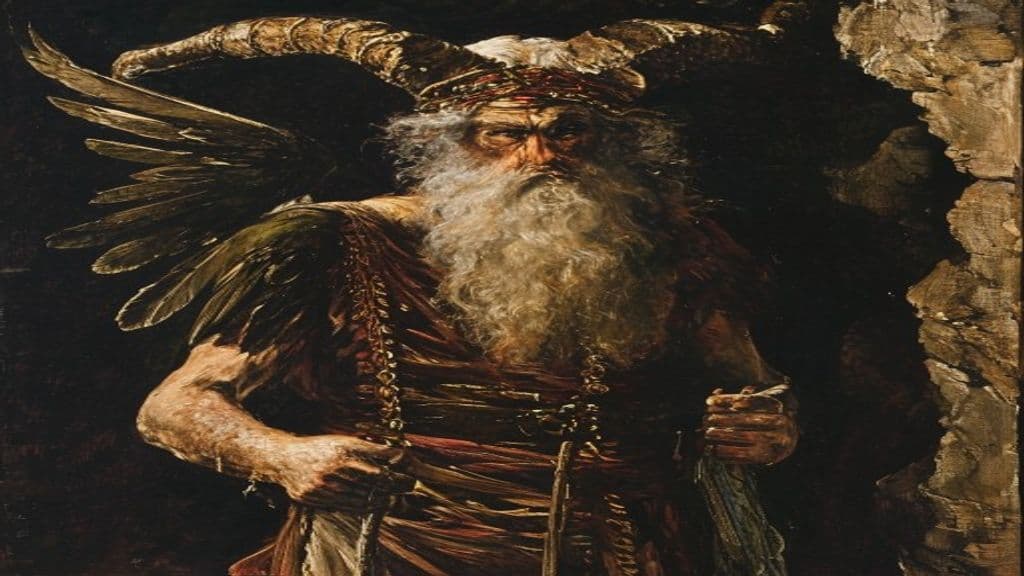
The earliest textual attestation of the term עֲזָאזֵל (ʿĂzāʾzēl) occurs three times in Leviticus 16 within the Yom Kippur ritual, where one goat is designated 'for Azazel' and sent alive into the wilderness bearing the community's sins. In rabbinic elaboration (Mishnah Yoma) the sending-away is described in procedural detail (selection of two similar goats, lots, laying on of hands/confession, fastening of a scarlet thread, leading to a precipice and pushing the goat off). During the late Second Temple period, in works circulating in that milieu (summarized in the sources by reference to the Book of Enoch), the term is reinterpreted and personified: Azazel becomes depicted as a rebellious angelic figure who imparts forbidden arts to humans. This personified Azazel is then taken up, in varied ways, in later Christian and Islamic traditions. Etymological ambiguity in Hebrew, Greek (Septuagint renderings as 'the sent away'), Syriac (Za-za-e'il), and scholarly conjectures produced multiple readings—toponym, ritual function, or proper name—facilitating the shift from place-name to individualized supernatural agent in later literature.
In the canonical biblical and rabbinic material Azazel has no independent anthropomorphic description: the primary biblical 'appearance' is non-visual and functional — a destination in the wilderness or precipice where the live scapegoat is dispatched, with ritual paraphernalia such as a scarlet thread and the route marked by booths. Later traditions that personify Azazel (not fully documented in the present excerpts) describe him as a fallen angelic rebel in narrative, but the provided sources do not supply consistent or authoritative iconography or corporeal detail for that personified figure. Modern fiction and media repurpose the name for widely varying invented appearances, which are distinct from the ancient ritual and literary attestations.
As a ritual locus in Leviticus Azazel's 'ability' is functional: to receive transferred communal impurity — the scapegoat is sent to Azazel so that sin is removed from the community. In the later Second Temple/Enochian tradition summarized in the sources, Azazel is credited with morally corrosive action: a rebellious angel who introduces forbidden knowledge or illicit arts to humanity. The provided materials do not enumerate supernatural faculties (such as flight or visible sorcery); emphasis in the sources is on moral and cosmological roles (recipient of impurity; transmitter of transgressive knowledge) rather than a catalogue of powers.
Weaknesses
- otherNo documented weakness; the Yom Kippur rite directs sin to Azazel rather than functioning as a defeat of a personal adversary
Wards
- ritualYom Kippur scapegoat rite (Leviticus 16; Mishnah Yoma procedures)
Ahijah the Shilonite
Ahijah the Shilonite is a Levite prophet attested in the Hebrew Bible (1 Kings) who foretold Jeroboam's rise and is credited in Chronicles with a now‑lost work. Rabbinic literature expands him into a legendary long‑lived transmitter of sacred lore while also debating his moral fallibility in the Jeroboam episode.
Androgynos (Judaism)
In rabbinic Jewish literature, the androgynos (Hebrew: אַנְדְּרוֹגִינוֹס, ʾandərôg̲înôs) is a human juridical category for a person who possesses both male and female sexual characteristics. It is treated as a special halakhic classification that raises questions about which gendered legal obligations, prohibitions, and ritual statuses apply.
Destroying angel
A divinely commissioned heavenly agent in the Hebrew Bible and later Jewish traditions sent by God to execute judgment, death, or punishment. The figure functions as an instrument of divine justice (mal'āḵīm / memitim / mashḥit) and appears in narrative episodes of plague, wartime slaughter, and in rabbinic and Enochic writings connected to postmortem or eschatological punishment.
Dumah
Dumah (Heb. דּוּמָה, dūmā, 'silence') is an angelic figure in Jewish rabbinic and mystical literature and later Islamic reports, associated with the silence of death and with authority over the wicked dead and the punitive agents of the netherworld. In Zoharic material Dumah is depicted as a chief or prince over attendants who punish souls, and in a hadith compilation reported by Al‑Suyuti Dumah receives the souls of deceased unbelievers from Azrael.
Eliezer
Eliezer (Hebrew: אֱלִיעֶזֶר, ʾĔliʿezer) is a Hebrew personal name borne by multiple human figures in the Hebrew Bible and later Jewish tradition — most prominently a steward associated with Abraham, a son of Moses, and a prophet who rebuked King Jehoshaphat. The name means roughly "Help of my God" and functions as a theological personal name and as a marker within rabbinic interpretive traditions.
Enoch
Enoch is a pre‑Flood patriarch in Judaeo‑Christian traditions who 'walked with God' and was taken by God rather than dying; later apocryphal and rabbinic literature expands him into a heavenly scribe, attendant of the divine throne, guardian of celestial treasures, and in some strands identified with the angelic figure Metatron.
Fallen angel
A heavenly being expelled from the divine court for transgression; a cosmological status found in Second Temple Jewish, Christian and contested Islamic materials. In Enochic literature the Watchers descend to earth, corrupt humans and transmit forbidden knowledge; later Christian theology uses the motif to explain the origin of moral evil.
Metatron
An exalted heavenly figure in postbiblical Jewish literature, often identified with the transformed patriarch Enoch in later mystical texts and portrayed as a celestial scribe and high court official in merkabah and Kabbalistic writings.
Azariah IV
Azariah IV is presented in the supplied materials as a label applied to a biblical/historical person bearing the theophoric name Azariah (Hebrew Azaryah/Azari'ah). The sources do not treat Azariah IV as a supernatural being; rather, Azariah is one of several individuals named in Israelite genealogies, priestly lists, and prophetic narratives (e.g., 1 Chronicles 6; prophetic episode with King Asa).
Azatiwada
Azatiwada was a historical late-Hittite (Neo-Hittite) dynast — a local ruler of the Karatepe (Karatepe-Aslantas) fortress in Cilicia whose bilingual Phoenician–Luwian inscription (the Karatepe or Azatiwada inscription) records building works, dedications, and administrative/ritual formulae.
Azazil
Azazil (Arabic: ʿAzāzīl; also recorded as Ḥārith) is the pre-fall name or identity in Islamic tradition of the being later identified as Iblis. In exegetical and mystical literature he appears as a high-ranking celestial figure—variously described as leader of angels or as of jinnly origin—whose prideful refusal to obey God's command to prostrate before the newly created human results in his expulsion and permanent damnation as Iblis.
Azeus
Azeus (Ancient Greek: Ἀζεύς; also Aezeius Ἀζειός) is a mortal figure in Greek mythic genealogies, identified as a Minyan prince of Orchomenus. He is recorded as the youngest son of King Clymenus and as a participant in a vengeance expedition against Thebes; through his descendants he is an ancestor of leaders who fought at Troy.
Community Record
- [1]Azazel - Wikipedia. Wikipedia, 'Azazel' (summary of biblical, rabbinic, and later interpretive traditions)wiki
- [2]Azazel - Biblical Cyclopedia. Biblical Cyclopedia entry on Azazel (discussion of interpretive doubt and etymology)other
- [3]Mishnah Yoma summaries and Leviticus 16 material (as cited in research notes). Summaries of Leviticus 16 and Mishnah Yoma procedures provided in the research notes (sending of the goat, scarlet thread, booths, precipice)academic
- [4]Azazel (Wikidata). Wikidata short label and linked data on Azazelwiki