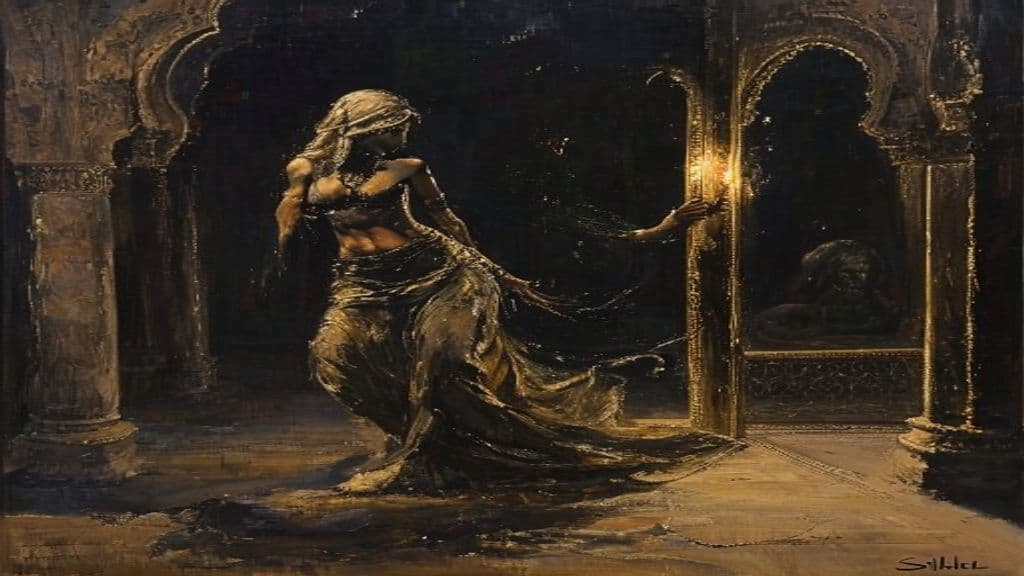
The Sila (Si'la or Si'lat) are documented in pre-Islamic Arabic poetry and persist strongly into Islamic folk tradition. Al-Jahiz (9th century) and other classical Arab scholars placed them at the apex of shapeshifting ability — unlike other djinn who transform with effort, the Sila assumes any form perfectly, including the forms of specific known people. They are predominantly female in classical accounts and use their shapeshifting to infiltrate households, seduce men, and steal children.
The Arab poet Al-Shanfara referenced the sila in desert poetry as beings that would take the form of a lost wife or a beloved to lure a traveler to his death. They differ from other djinn in their patience — a sila may maintain a disguise for years.
No fixed appearance whatsoever — this is the defining characteristic. Can be anyone, anything. Can hold a human disguise indefinitely without the slips (wrong-colored eyes, slight transparency) that betray other djinn. The only test that reportedly works: a sila in human form cannot cry real tears.
Perfect shapeshifting into any person, animal, or object. Can maintain disguise for years. Can move between locations with djinn speed while maintaining a specific human identity in one place. Particularly dangerous when assuming the form of a trusted family member.
Weaknesses
- conditionCannot produce real tears when weeping
- substanceIron forces reversion to true form
Wards
- ritualTesting returning travelers with an unexpected question only they would know
- substanceIron threshold
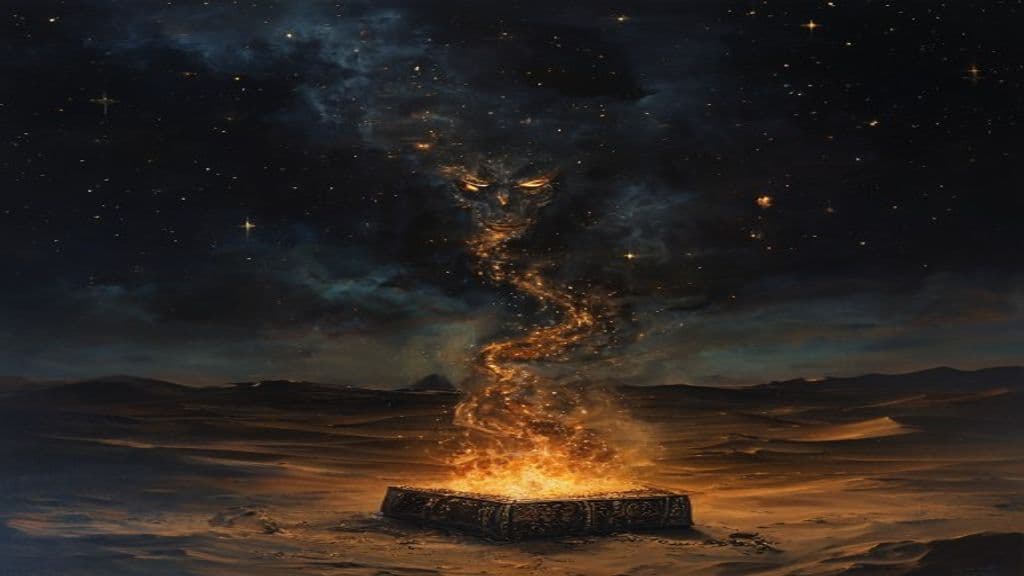
Djinn
The class of supernatural beings created from smokeless fire in Islamic cosmology — a parallel civilization to humanity, capable of belief or unbelief, with their own prophets, society, and judgment before God.
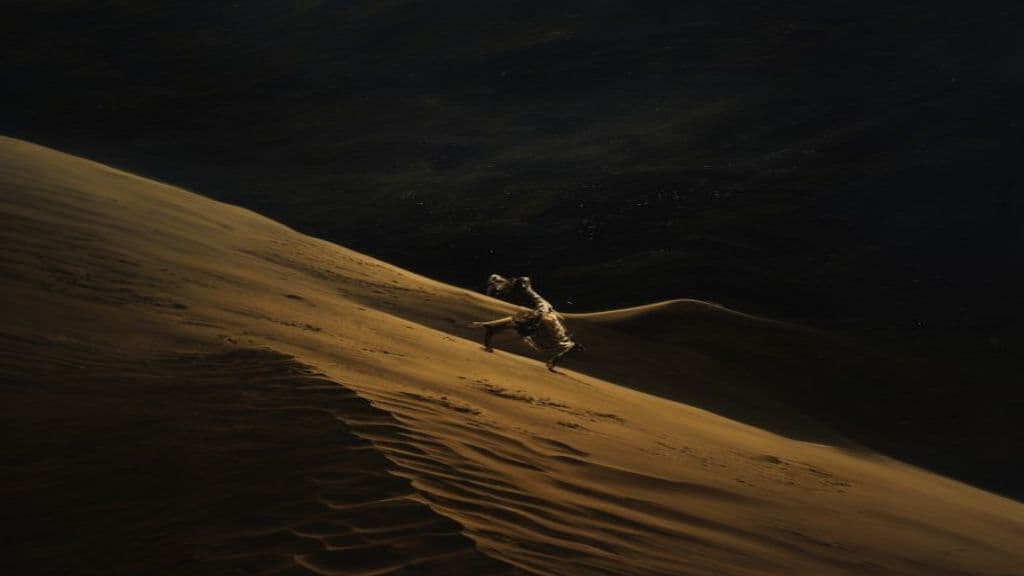
Jann
The weakest class of djinn in Islamic tradition, associated with desert winds and taking the form of snakes or whirlwinds, dwelling in empty wilderness and posing little threat to those who know the proper invocations.
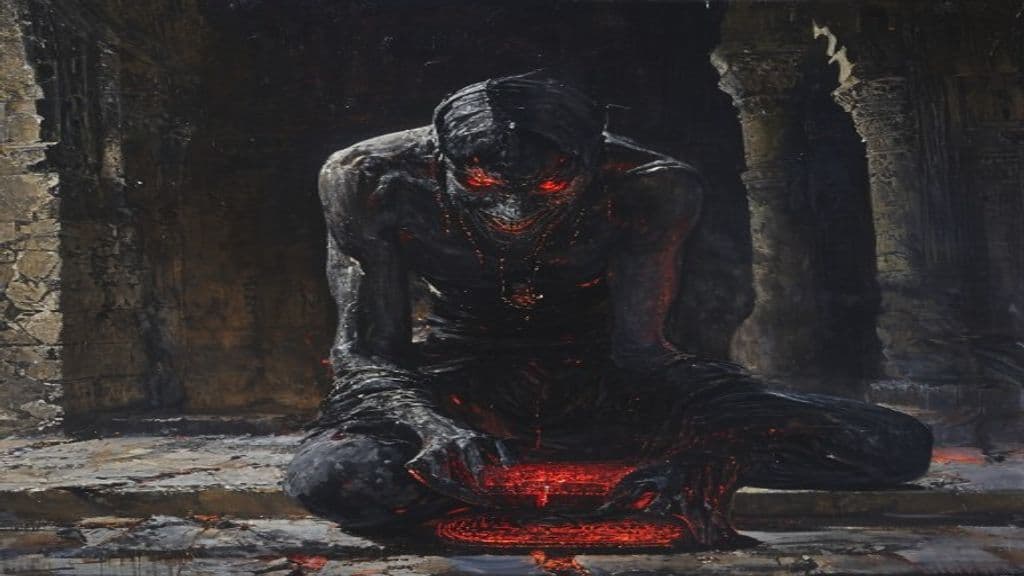
Shaitan
A class of corrupted djinn who follow Iblis and dedicate themselves to leading humans astray — distinct from Iblis himself, the Shayatin are a species of evil djinn who whisper doubts and temptations into the minds of the living.
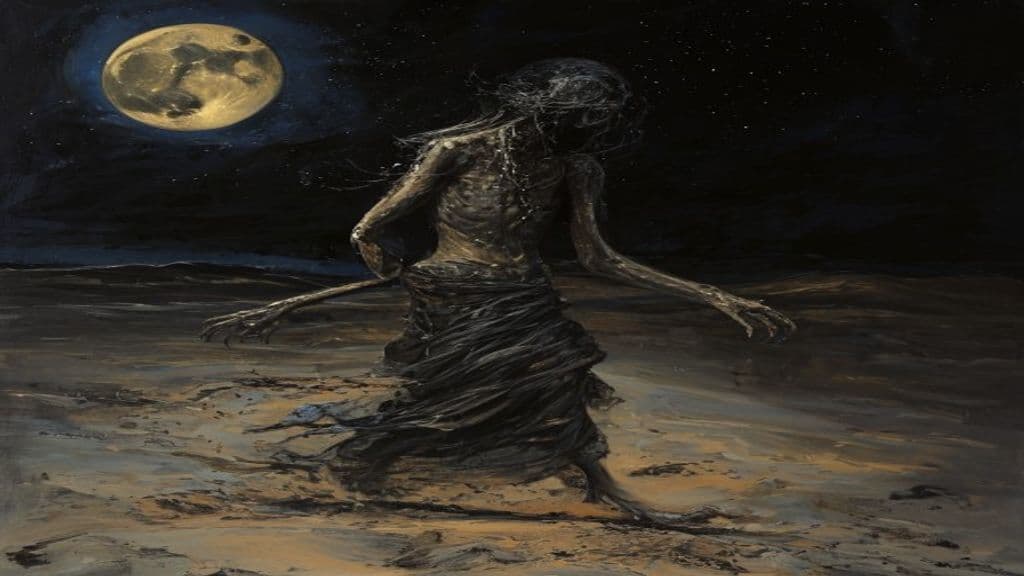
Nasnas
A half-human djinn creature of Arab folklore — possessing only half a face, one arm, one leg, and half a torso — descended from the union of a shaitan and a human, moving by leaping and highly dangerous to encounter.
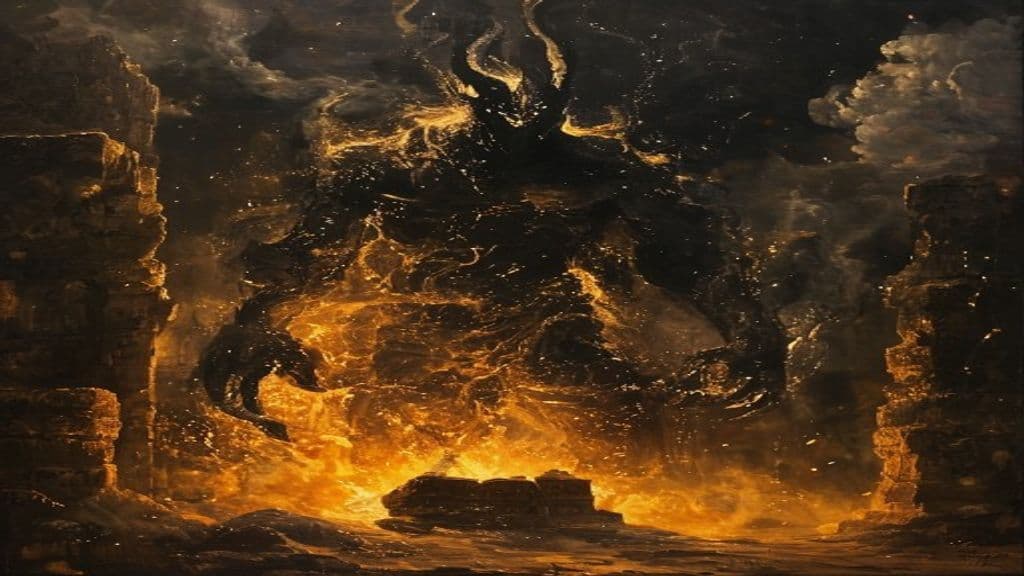
Ifrit
One of the most powerful classes of jinn in Islamic and pre-Islamic Arab tradition — a fire-born being of immense strength and cunning, capable of great works of engineering and terrible violence.
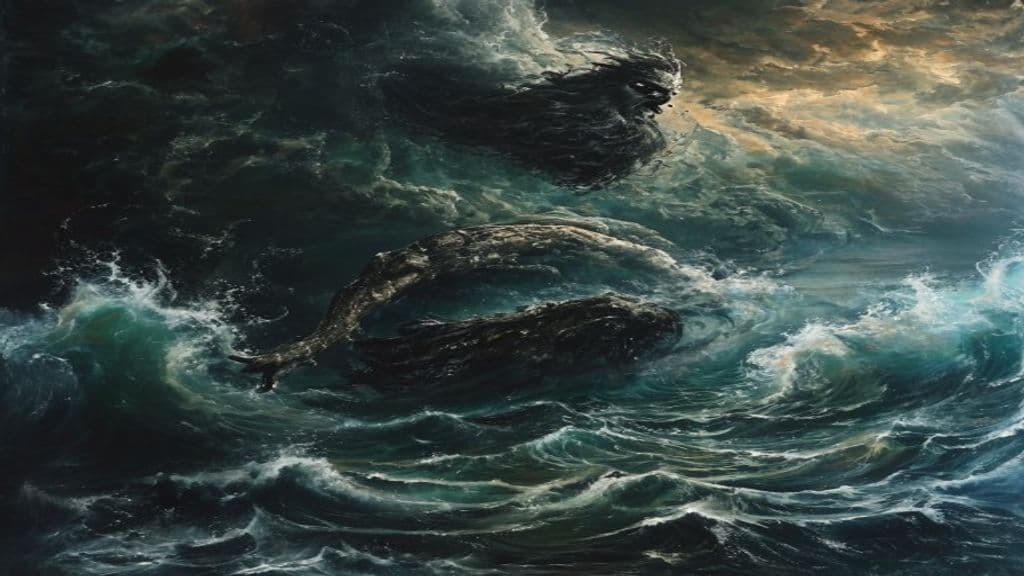
Marid
The most powerful class of jinn in Islamic tradition — beings of the sea, associated with the deep ocean, storms, and the granting of wishes at terrible cost. The classic genie of the Arabian Nights.
Community Record
- [1]Kitab al-Hayawan. Al-Jahiz. Kitab al-Hayawan (Book of Animals), Vol. 6. c. 847 CE. Cairo: Mustafa al-Babi al-Halabi.academic
- [2]The World of the Jinn. El-Zein, Amira. 2009. Islam, Arabs, and the Intelligent World of the Jinn. Syracuse University Press.academic