
Edmund Pevensie is a character created by C. S. Lewis for The Chronicles of Narnia. In the framing of the novels he is an English schoolboy and wartime evacuee who first enters Narnia through the wardrobe discovered by his sister Lucy. His actions in The Lion, the Witch and the Wardrobe — including succumbing to the White Witch's temptation, betraying his siblings, and becoming subject to the Witch's claim — precipitate Aslan's sacrificial substitution (Aslan dies in Edmund's place and is restored by a 'deeper magic'). Edmund later grows into an adult king who reigns in Narnia for fifteen years before returning to England and resuming his childhood life. He is a principal character in The Lion, the Witch and the Wardrobe, Prince Caspian, and The Voyage of the Dawn Treader, and appears to lesser degrees in The Horse and His Boy and The Last Battle.
As presented in the sources, Edmund is the third-eldest of the Pevensie children and an ordinary English schoolboy evacuated during wartime; specific physical details (height, hair color, eye color) are not supplied. In the Narnian timeline he matures into an adult and is depicted as King Edmund the Just who rules for fifteen years before reverting to childhood upon returning to England. Adaptations and media depict him with various actors and castings, but the primary sources give minimal physical description beyond age/status (child evacuee; later adult king).
Edmund possesses no innate supernatural powers in the supplied sources; his notability rests on human agency, moral development, and roles within Narnia. Initially selfish and susceptible to the Witch's temptation (notably enchanted Turkish delight), he betrays his siblings. After his redemption he becomes loyal, courageous, logical, and mature. He fights as a soldier in Peter's army (is wounded in battle and is healed by a magic cordial), neutralizes the Witch's wand in combat, serves as a negotiator and diplomat as king (for example accompanying Susan to Tashbaan over a marriage proposal), and forms confidences with Narnian figures such as Prince Caspian and Reepicheep.
Weaknesses
- conditionSusceptibility to temptation (notably enchanted Turkish delight)
- conditionMoral failings when young: selfishness, spitefulness, dishonesty
Wards
None recorded.
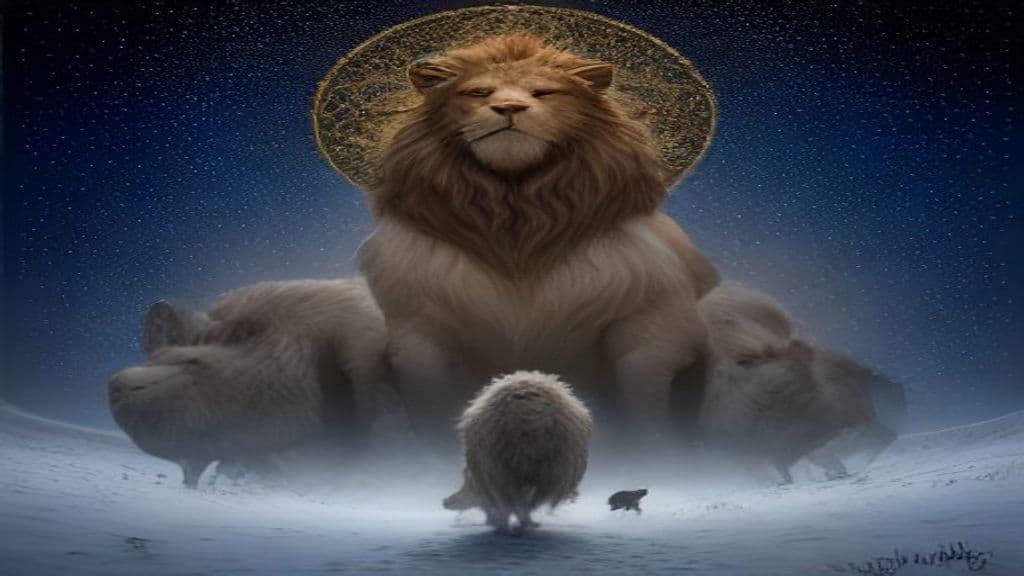
Caspian IX
Caspian IX is a fictional mortal king in C. S. Lewis's Chronicles of Narnia cycle, cited in secondary sources as the murdered father of Prince Caspian whose death enabled his brother Miraz to usurp the throne. He functions as a dynastic predecessor in Narnian narrative history rather than a supernatural figure.
Ectoplasm (paranormal)
A modern-paranormal term for a physically sensible substance or manifestation reported in séance and spirit-medium contexts and used metaphorically in contemporary media. Sources present it as a claimed material-like residue or emanation associated with spirit activity rather than as an individuated traditional spirit.
Ector
Ector (also Hector, Ectorius) is a named human noble and knight in the Arthurian tradition, best known as the foster (adoptive) father of King Arthur and the father of Sir Kay. Portrayed across medieval and later retellings as the head of a knightly household responsible for raising Arthur in concealment at Merlin's arrangement, he functions as a social guardian and narrative caretaker rather than a supernatural being.
Edain (Men)
The Edain, rendered in sources as Man or Men, are the human peoples of J. R. R. Tolkien's Middle-earth. They are the 'second' or younger people, created after the Elves and distinguished chiefly by their mortality; they are counted among the 'free peoples' of Middle-earth alongside other autonomous races.
Edda (Norse Tradition)
The Edda is a collection of literary works containing Norse mythology and traditional sources, preserving the cultural heritage and mythological traditions of the Norse people. (Note: 1. Power tier: Downgrade to Ancient (Edda is a collection of literary works, not a mythological figure with Primordial power). 2. Summary: Expand to include the fact that it's a medieval Icelandic tex)
Edern ap Nudd
Edern ap Nudd is a Welsh medieval literary figure presented as a noble warrior and member of King Arthur's retinue. Presented in native Welsh romances and in continental Arthurian adaptations under variant names, he is described as a son of Nudd and brother of figures such as Gwyn ap Nudd; later medieval/local tradition also attests a Saint Edern with church dedications in Wales.
Edimmu
In Mesopotamian religious tradition the edimmu are a type of utukku — restless, wind-like spirits of the improperly buried who can be vengeful, possessive, and life-draining; later popular media reinterprets them as vampire- or undead-styled monsters in games and fiction.
Edward Mordake
A late-19th-century apocryphal case popularized in sensational journalism and medical miscellany describing a supposedly well-born Englishman born with a second, allegedly malign face on the back of his head. Modern researchers treat the account as a likely hoax or urban legend rather than a documented historical or folkloric supernatural being.
Edward Tregear
Historical figure, not considered a supernatural entity in Māori tradition. (Note: * The Power tier should be "Primordial" as Edward Tregear is a historical figure, implying no supernatural abilities or powers. * The Appearance section should indicate that there is no physical descr)
Eeyeekalduk
Eeyeekalduk is identified in multiple compiled references as an Inuit supernatural figure associated with medicine, healing, and good health. The available sources list the name among Inuit deities or pantheons but provide no primary ethnographic detail about myths, rituals, or iconography.
Efnisien
Efnisien (also spelled Efnysien or Efnissien) is a human royal figure in the medieval Welsh Second Branch of the Mabinogi (Branwen ferch Llŷr). Presented as an explosively violent and disruptive kin whose cruelty precipitates international war, he ends the tale by sacrificing himself to destroy a magical cauldron used by the Irish to revive the dead.
Egbere
Malevolent humanoid supernatural beings in Yoruba mythology, residing in woods and active only at night. (Note: 1. Power tier should be Greater (powerful regional) based on the description as malevolent beings residing in woods. 2. Abilities need more specific information, such as their connection to darkness o)
Community Record
- [1]Edmund Pevensie — Wikipedia. Wikipedia contributors, 'Edmund Pevensie', Wikipedia, The Free Encyclopedia.wiki
- [2]Edmund Pevensie — Wikidata. Wikidata entry Q582234 for Edmund Pevensie.wiki
- [3]The Chronicles of Narnia: The Lion, the Witch and the Wardrobe (game demo). Archive.org: Demo materials for The Chronicles of Narnia adaptation (game).other
- [4]The Chronicles of Narnia: The Lion, the Witch and the Wardrobe — Wikipedia. Wikipedia contributors, 'The Chronicles of Narnia: The Lion, the Witch and the Wardrobe', Wikipedia.wiki
- [5]Edmund Pevensie Character Study | Activity Village. Activity Village — character study summary for Edmund Pevensie.other