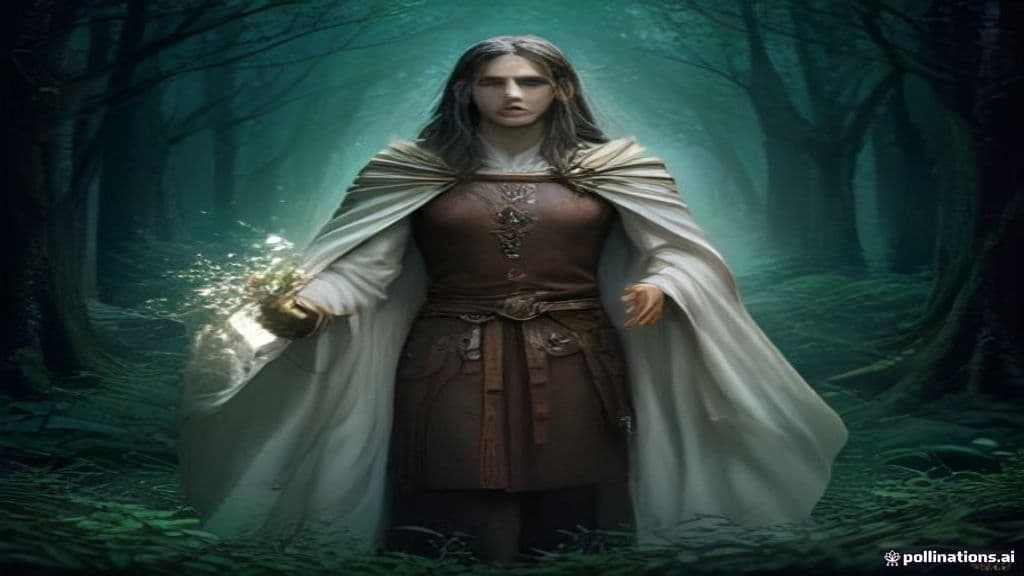
In the tale-cycle surrounding Boann and the birth of Aengus (Mac Óg), Elcmar appears as husband of the goddess Boann and steward of the Brugh (Brú na Bóinne). The Dagda sends Elcmar away on an errand around the time of Imbolc so that the Dagda may lie with Boann; the Dagda then alters temporal perception (holding back the sun) so that the pregnancy appears to last only a day, concealing it from Elcmar. The child, Aengus, is fostered by Midir. Later Oengus obtains the Brugh from Elcmar by a verbal trick and, after a cycle of abductions and killings involving Midir and Elcmar's daughter Englec, Oengus kills Elcmar. These episodes are attested in the Tochmarc Étaíne material and are summarized in modern narrative accounts of the cycle.
Primary tale texts emphasize Elcmar's social role rather than an extended physical portrait; however secondary summaries and related material describe him as bearing a fork of white hazel, a gold brooch, and a cloak. The Dindsenchas and later summaries also associate him with horses, sometimes styling him as a "lord of horses." The supplied primary quotations focus on his speech and stewardship at the Brug rather than detailed bodily description.
In the supplied sources Elcmar's notable capacities are social and political: he functions as the Dagda's chief steward, a landholder of the Brugh and surrounding three lands (he is granted the fruits of the Boyne in The Wooing of Étaín), and is presented as a judge in tradition. Narrative material does not ascribe to him overt miraculous powers in these extracts; his importance derives from rank, household authority, control of property, and involvement in feuding and juridical contests rather than demonstrable cosmic or magical abilities.
Aengus
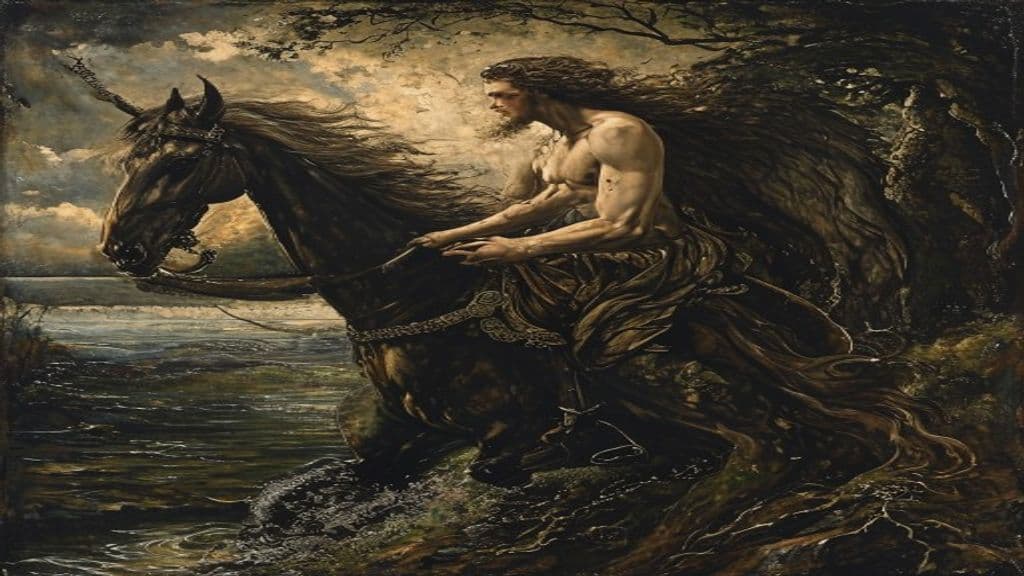
Aengus (Óengus, Aonghus) is a member of the Tuatha Dé Danann in Irish myth, portrayed as a youthful, attractive figure associated with love, youth, poetic inspiration and seasonal/solar symbolism; he is linked to Brú na Bóinne (Newgrange) and appears as fosterer, protector, enchanter and avenger in multiple tales.
Boann
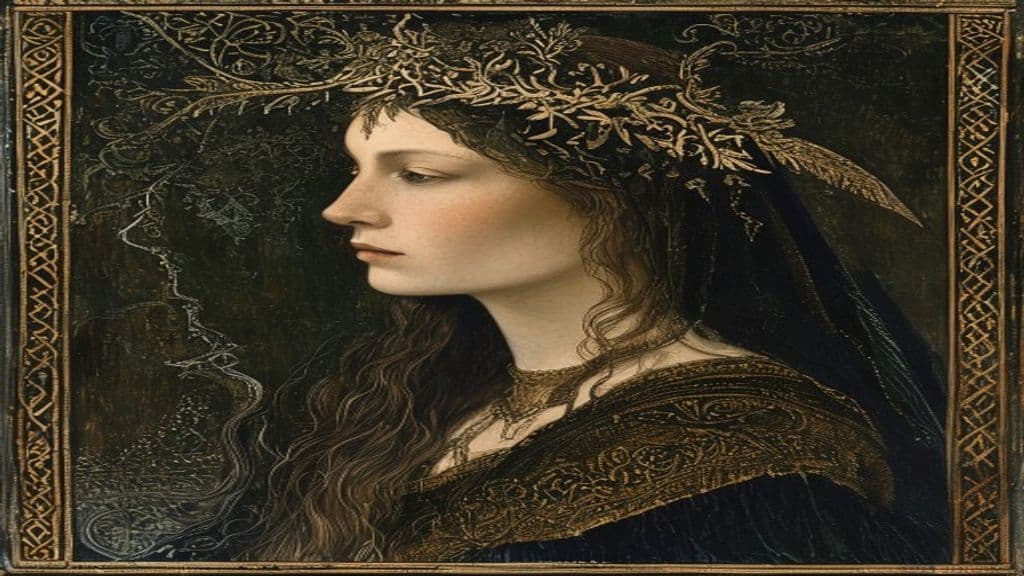
Boann (also Boand) is a figure of early Irish tradition associated with the River Boyne (Bóinn) and the Well of Segais. Presented in the Dindsenchas and other medieval sources as a member of the Tuatha Dé Danann, she functions as a mythic landscape-progenitor, mother of the god Aengus, and a woman whose transgressive actions at a sacred well bring the river into being.

Nechtan
Nechtan is a figure in Irish tradition associated with a sacred spring called Nechtan's Well or the Well of Wisdom, described as the source of the River Boyne. In the corpus he appears as the named owner/custodian of the well and as a personal name borne by historical figures; sources vary over whether he is the husband of Boann or whether other husband-names (e.g., Nemed, Elcmar) appear in different texts.
Community Record
- [1]The Wooing of Étaín (Tochmarc Étaíne). Tochmarc Étaíne (The Wooing of Étaín), CELT: The Corpus of Electronic Texts, University College Corkliterary
- [2]The Wooing of Etain (ancienttexts mirror). Tochmarc Étaíne (The Wooing of Étaín), English translation and summary (ancienttexts mirror)literary
- [3]Elcmar (Wikipedia). Wikipedia article 'Elcmar' (summarizes textual tradition and modern commentary)wiki
- [4]Elcmar (Celtsite summary). Celtsite summary of Elcmar and related Tuatha Dé Danann materialfolk
- [5]The Wooing of Étaín (mirror by Mary Jones). Tochmarc Étaíne (English rendering and notes) hosted by Mary Jones' Celtic Literature siteliterary