Two distinct traditional strands preserve figures named Epeius. In the Elis genealogical tradition (as reported in ancient topographical and legendary accounts summarized in the provided sources), Epeius is presented as a son of Endymion and a member of a dynastic group that includes brothers Aetolus and Paeon and a sister Eurycyda. Endymion set his sons to compete in a race at Olympia for succession; by winning that race Epeius obtained his father's kingdom and is integrated into accounts that explain early rulership and the origins of local institutions connected with Olympia. In the epic Trojan-war tradition, a different Epeius is named among the Achaean contingent as a skilled builder and warrior credited with constructing the wooden stratagem (the Trojan Horse) whose use brought about the fall of Troy. These dual attestations show the name functioning in localized foundation legend and in pan-Hellenic epic narrative.
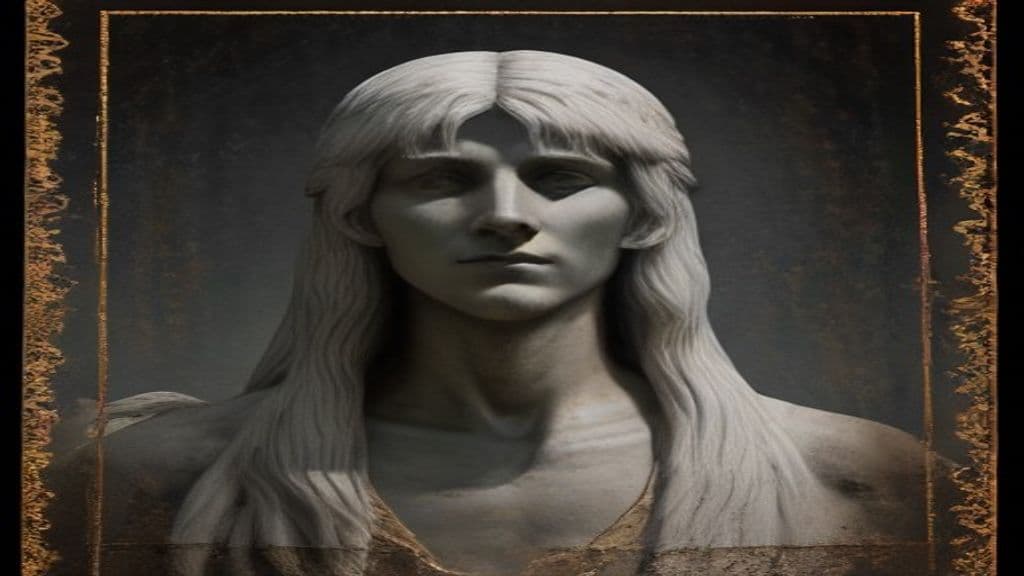
The provided sources do not preserve an iconographic or descriptive portrait of Epeius’ physical appearance, attire, or distinguishing marks. Instead the traditions record genealogical and social identifiers—parentage (son of Endymion in the Elis line), marital connection (named spouse Anaxiroe in some accounts), and offspring (a daughter Hyrmine is attested for the Elean Epeius)—and role-identifiers such as 'runner at Olympia' and 'builder of the Trojan Horse.' The surviving record therefore presents Epeius through relational and functional details rather than through direct visual description.
Sources attribute to the Elean Epeius athletic prowess and political consequence: he won a race at Olympia against his brothers (Aetolus and Paeon) and thereby acquired his father's kingship, marking him as an accomplished runner and a dynastic claimant. The epic Epeius is characterized for technical skill and martial participation: he is named as a Greek (Achaean) soldier credited with constructing the wooden device used to enter Troy, indicating proficiency in craft, engineering, and wartime stratagem. Neither tradition presents supernatural powers; both locate Epeius' capacities within human athletic, technical, and leadership competencies.
Weaknesses
- othernone attested
Wards
- othernone attested
Amazons
A society of women-warriors in ancient Greek myth and legend, depicted as skilled horsemen and archers who inhabit the periphery of the Greek world and act as recurring opponents and counterparts to Greek heroes. Treated by ancient authors as a past people and by modern scholars as a mythic construct possibly inspired by Eurasian female warrior burials.
Ampycus (Ampyx)
Ampycus (also Ampyx/Ampyce) is a name borne by several related mortal figures in Greek myth: chiefly a father of seers (notably Mopsus), and in variant traditions a local eponym, a priest of Demeter, and a Lapith warrior. He functions as a genealogical marker and occasional ritual or martial actor within heroic-age narratives rather than as an independent supernatural being.
Calchas
Calchas is a human Argive seer (mantis, oionopólos) of the Trojan War tradition, a member of a hereditary mantic family who interprets omens and entrails on behalf of Greek commanders and declares the will of Apollo to guide ritual and military decisions.
Chalcon
Chalcon (Ancient Greek: Χάλκων) is a personal name borne by several distinct figures in Greek myth and epic—ranging from ordinary mortal princes, fathers, and a charioteer/tutor to one attested member of the Telchines. The name does not denote a single species or office but recurs across genealogies and Trojan War–cycle episodes.
Eumelus (name borne by several mythic figures)
Eumelus (Ancient Greek: Εὔμηλος, 'rich in sheep') is a personal name applied to multiple mytho-historical figures in Greek tradition — including a son of Poseidon and co‑ruler of Atlantis (called Gadeirus/Eumelus in Plato's account), a king of Pherae and Achaean charioteer who succeeded Admetus and fought at Troy, and several local founders, poets, and family figures in genealogical and epic fragments. These bearers are mortal or semi‑divine actors within mythic narratives rather than a recurring supernatural class.
Hippothoe
Hippothoe (Ancient Greek: Ἱπποθόη, 'swift as a mare') is a name borne by multiple distinct female figures in Greek myth: a Nereid (sea‑nymph), a Danaid (Libyan princess), a granddaughter of Perseus abducted by Poseidon and mother of Taphius, a daughter of Pelias (Peliad), and an Amazon warrior who fought at Troy.
Polyctor
Polyctor (Ancient Greek: Πολύκτωρ) is a proper name attested in classical Greek literary sources for several mortal figures (an Egyptian prince, a local Ithacan benefactor/father, and as an identity used in a Homeric disguise) and separately as a modern taxonomic name applied to certain butterflies/skippers. The name functions across distinct cultural and biological contexts rather than denoting a single supernatural entity.
Strophius
Strophius (Ancient Greek: Στρόφιος, Strophios) is a recurring personal name in Greek literary and mythographic traditions. It denotes several mortal figures—kings, fathers, companions, and crewmen—who appear across the Atreid cycle, Trojan War narratives, and later epic such as Nonnus’s Dionysiaca.
Eotenas
Eotenas (Old English eotenas) are a race-class of other-than-human beings attested in Anglo-Saxon poetic contexts, notably Beowulf, where they appear among a catalogue of hostile or monstrous stocks. Philological traditions link the term to Old Norse jötnar/ettins (often rendered "giants" in modern summaries), but primary Old English lines give little concrete physical description.
Epaphus
Epaphus (Ancient Greek Ἔπαφος) is a mythic human figure in Greek tradition, presented as a son of Zeus and Io who becomes king of Egypt and an eponymous ancestor in genealogical myths. He functions as a legendary founder-king linking Olympian divinity to foreign lands (notably Egypt and Libya) and as a progenitor in lineages that lead to figures such as Belus, Agenor, Cadmus, and Europa in some traditions.
Epeius of Elis
Epeius (Ancient Greek: Ἐπειός) is a legendary ancestral king of Elis in Greek tradition, presented as a son of Endymion who won a footrace at Olympia and thereby obtained the kingship. He is an eponymous founder: from his reign the people of Elis were called Epeans; he is treated as a mortal dynastic ancestor rather than a deity.
Epeius of Phocis
Epeius (Ancient Greek: Ἐπειός; Latinized Epeus) is a heroic-age Greek figure from the Trojan War cycle, remembered as a warrior and as the builder of the hollow Wooden Horse. Traditions portray him as a man of exceptional physical strength and technical/architectural skill who dedicated the tools of his craft to Athena and was later associated with settlement traditions in Italy.
Community Record
- [1]Epeius — Wikipedia. Wikipedia contributors, 'Epeius,' Wikipedia, The Free Encyclopedia.wiki
- [2]Epeius — Wikidata entry Q278930. Wikidata: Q278930 (Epeius).wiki
- [3]Legendary Passages on Pausanias’ Description of Greece: The Kingdom of Elis (LP0052). Archive.org, 'LP0052 The Kingdom of Elis' (summary of Pausanias-related legendary passages).other