
Euroswydd appears in medieval Welsh textual sources rather than as a fully developed deity: he is named in genealogical material connected to the Second Branch of the Mabinogi (Branwen ferch Llŷr) as the father of Nisien and Efnysien by Penarddun (daughter of Beli Mawr). The Second Branch records Penarddun's marriage to Llŷr and the children of Llŷr (Brân, Branwen, Manawydan) but does not describe the circumstances of Nisien and Efnysien's conception. Separately, a Welsh Triad (preserved in the Hergest Triads tradition) lists Euroswydd among those who held Llŷr captive as one of the "Three Exalted Prisoners of the Island of Britain." These attestations derive from medieval Welsh manuscripts that preserve the Mabinogi tales and the triadic mnemonic lists; surviving references to Euroswydd in those texts are sparse and primarily functional (name, parentage, and a role in an episode of captivity).
The supplied medieval sources give no physical description of Euroswydd. He is treated as a named human actor in genealogical and triadic material rather than as a character described in physical detail; this absence of appearance information is common for minor genealogical figures in the Mabinogi and Triads, which emphasize relationships and notable actions over portraiture.
No supernatural powers or magical faculties are ascribed to Euroswydd in the primary texts cited. His recorded role is narrative, genealogical, and political: he is identified as the father of Nisien and Efnysien (uterine half-brothers to Brân, Branwen, and Manawydan) and, according to a Welsh Triad, as a figure who participated in holding Llŷr captive. The Triadic record implies agency in interpersonal and political conflict (the detention of an important mythic figure), but the sources do not attribute extraordinary abilities such as sorcery, prophecy, or divine authority to him.

Efnisien
Efnisien (also spelled Efnysien or Efnissien) is a human royal figure in the medieval Welsh Second Branch of the Mabinogi (Branwen ferch Llŷr). Presented as an explosively violent and disruptive kin whose cruelty precipitates international war, he ends the tale by sacrificing himself to destroy a magical cauldron used by the Irish to revive the dead.
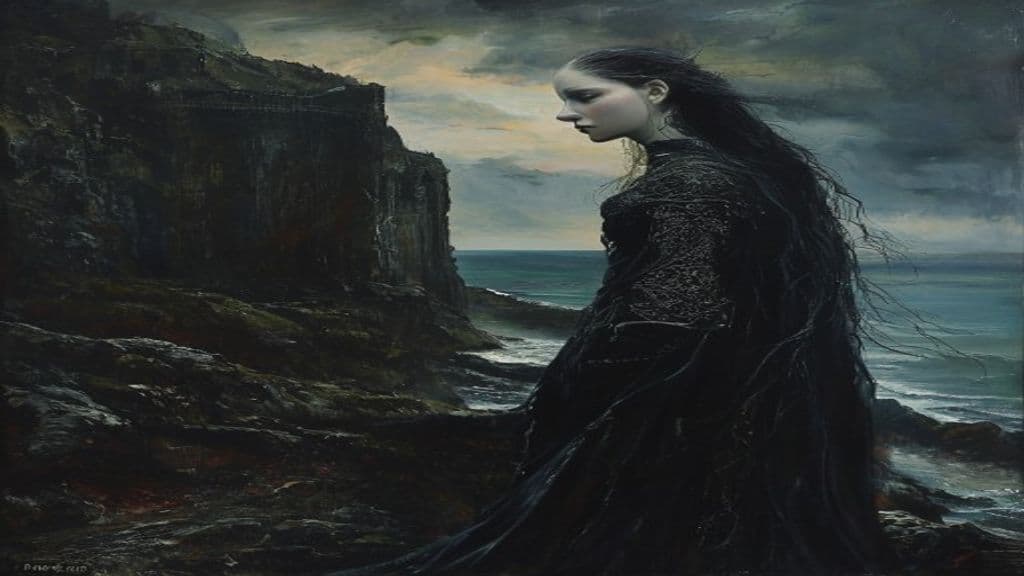
Branwen
Major character in Welsh mythology and daughter of Llŷr, a sea god. (Note: - Power tier should be Primordial (as she is a sea god's daughter and a central figure in a major mythological narrative). - Appearance: Add note that physical description is not provided. - Abilities)
Bleiddwn
Bleiddwn is a named individual from the fourth branch of the medieval Welsh Mabinogi: the child born to two men temporarily transformed into wolves, who is taken by the ruler-mage Math and transformed into a human and baptized 'Bleiddwn' (from Welsh blaidd, 'wolf'). His existence indexes metamorphosis, punishment, and restoration within the tale-world.
Coraniaid
A legendary race described in medieval Welsh sources (notably the tale Lludd and Llefelys) as a plague/oppressive people in Britain whose defining trait is extraordinarily acute hearing. They are overcome in the tale by a biological concoction advised by Llefelys and by tactics that muffle speech.
Efnisien
Efnisien (also spelled Efnysien or Efnissien) is a human royal figure in the medieval Welsh Second Branch of the Mabinogi (Branwen ferch Llŷr). Presented as an explosively violent and disruptive kin whose cruelty precipitates international war, he ends the tale by sacrificing himself to destroy a magical cauldron used by the Irish to revive the dead.
Eupeithes
Eupeithes is a mortal figure from Greek myth, known as the father of Antinous, one of the principal suitors of Penelope in the Odyssey cycle. After Antinous is killed by Odysseus, Eupeithes leads a revolt seeking vengeance and is slain by Laertes. The name Eupeithes is also used in modern taxonomic databases as the label of a genus of insects, but that is a separate, scientific namesake.
Euphemus
Euphemus is a hero of ancient Greek mythic tradition, often counted among the Argonauts and Calydonian hunters, commonly described as a son of Poseidon and associated with seafaring, a miraculous clod-of-earth episode, and the foundation-ancestry of colonies such as Thera and Cyrene.
Euphorbus
Euphorbus is a named mortal Trojan youth in the Homeric epic tradition who wounds Patroclus and is later killed by Menelaus; in later classical anecdote he becomes a figure in stories of transmigration of souls in which his shield is said to be recognized in a temple.
Europa (consort of Zeus)
Europa is a mythic mortal princess in Greek tradition who becomes the consort of Zeus (Jupiter in Roman versions) after he approaches her in the form of a bull. Through that union she is presented as ancestress to notable lineages (e.g., Cretan kings such as Minos in some accounts) and as the eponym for the geographical name Europe.
European dragon
A legendary reptilian monster from overlapping European folkloric and mythological traditions, combining classical Graeco‑Roman serpents, Near Eastern dragon‑forms, and medieval popular imaginings; commonly depicted as a large, often winged, lizardlike creature that hoards treasure and opposes heroes.
Eurryroe
Eurryroe is a minor mythic figure in Greek mythology, described as a daughter of the river-god Nilus and presented principally as an ancestress. In some traditions (cited to Hippostratus via Tzetzes) she is named as the sole mother of the fifty sons of King Aegyptus; other accounts attribute those children to multiple mothers.
Euryalus
Euryalus (Ancient Greek: Εὐρύαλος, Eurýalos, lit. 'broad') is a conventional Ancient Greek proper name borne by multiple mortal characters in Greek and Roman epic (heroes, warriors, suitors, sons), used as a place-name for the principal citadel of Syracuse, and attested as a surname/epithet of Apollo. The name does not denote a single supernatural taxon but labels distinct literary and topographical referents across classical sources.
Euryanassa
Euryanassa (Ancient Greek: Εὐρυάνασσα, 'wide-ruling' or 'of wide queenly sway') is a named woman in Greek mythological genealogies. She appears in variant traditions as a daughter of the river-god Pactolus and wife of Tantalus (mother in some accounts of Pelops, Broteas, and Niobe) and alternatively as daughter of Hyperphas and mother of Minyas by Poseidon; she functions primarily as a genealogical/marital link rather than as an independently acting supernatural figure.
Eurybius
Eurybius (Ancient Greek: Εὐρύβιος, Eurybios) is a personal name borne by multiple mortal personages in Greek mythic genealogies — notably a son of Neleus of Pylos and a son of Eurystheus of Tiryns. Attestations are genealogical and narrative, recording parentage and reported fates rather than supernatural attributes.
Community Record
- [1]Euroswydd — Wikipedia. "Euroswydd" (Wikipedia entry), summarizing material from the Mabinogi and Welsh Triads.wiki
- [2]Branwen ferch Llŷr (The Second Branch of the Mabinogi). Second Branch of the Mabinogi (Branwen ferch Llŷr), which records Penarddun's marriage to Llŷr and the children of Llŷr; notes that the circumstances of Nisien and Efnysien's conception are not described.literary
- [3]The Hergest Triads (Welsh Triads). Hergest Triads (Welsh Triads) listing Euroswydd among those who held Llŷr captive as one of the 'Three Exalted Prisoners of the Island of Britain.'literary
- [4]Llŷr — Wikipedia. Entry on Llŷr, used for contextual information on Llŷr's position in the Mabinogi family network.wiki
- [5]Branwen summary — Mabinogion.info. Summary and notes on the Second Branch providing contextual commentary on characters including Nisien and Efnysien.literary