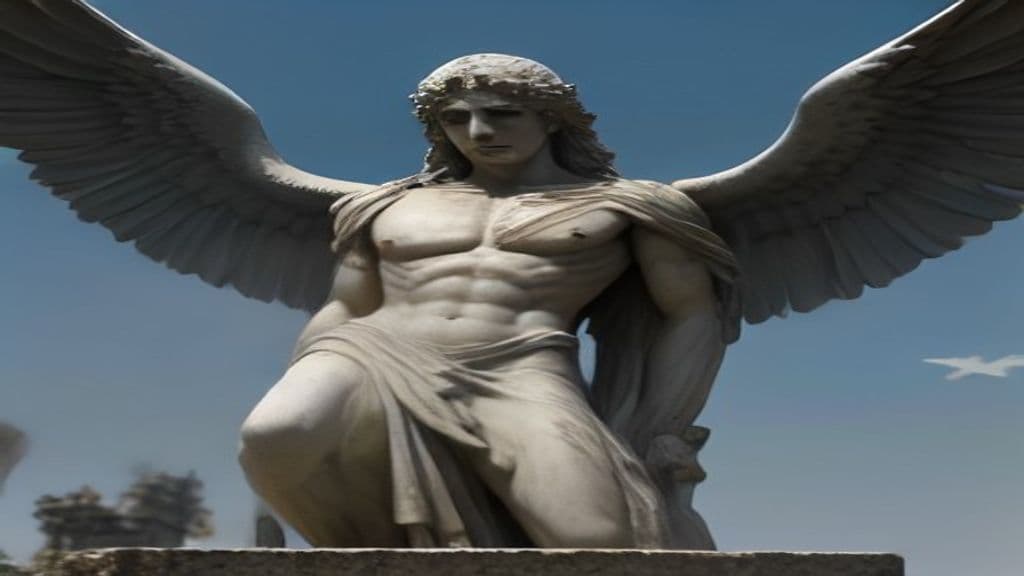
Accounts vary by author. Multiple traditions make Euphemus a son of Poseidon (mothers variably named — Europe, Doris/Oris, Mecionice/Macionassa), placing him between gods and men. As an Argonaut he receives a clod of earth from a sea-divinity (Triton/Eurypylus) at Lake Tritonis; in Pindar’s tradition the clod is to be thrown by Taenarum and will secure rule in Libya for his descendants, while in Apollonius Rhodius’ Argonautica Euphemus dreams the clod becomes a woman who promises a future home for his line and, following counsel, the clod is committed to the sea and becomes the island Calliste/Traha/modern Thera. Later genealogical tradition links Euphemus to Battus and the colonization of Cyrene.
Surviving literary sources provide little sustained physical description. Narratives represent Euphemus as a youthful, skilled mariner — the helmsman among the Argonauts who lets a dove fly through the Symplegades — and as a heroic ancestor in foundation scenes. No consistent clothing, stature, or distinctive bodily features are preserved in the cited accounts.
Primary attested traits connect him to the sea and to heroic functions. Most sources present him as a son of Poseidon and as an exceptional helmsman among the Argonauts; summaries record that Poseidon granted him the power to walk on water. Narrative episodes attribute to him the reception and custodianship of a miraculous clod of earth that, through dream-vision and ritual action in differing traditions (Pindar, Apollonius), becomes the seed of an island or secures rule for descendants—thereby performing an ancestral/foundational role rather than broad supernatural domination.
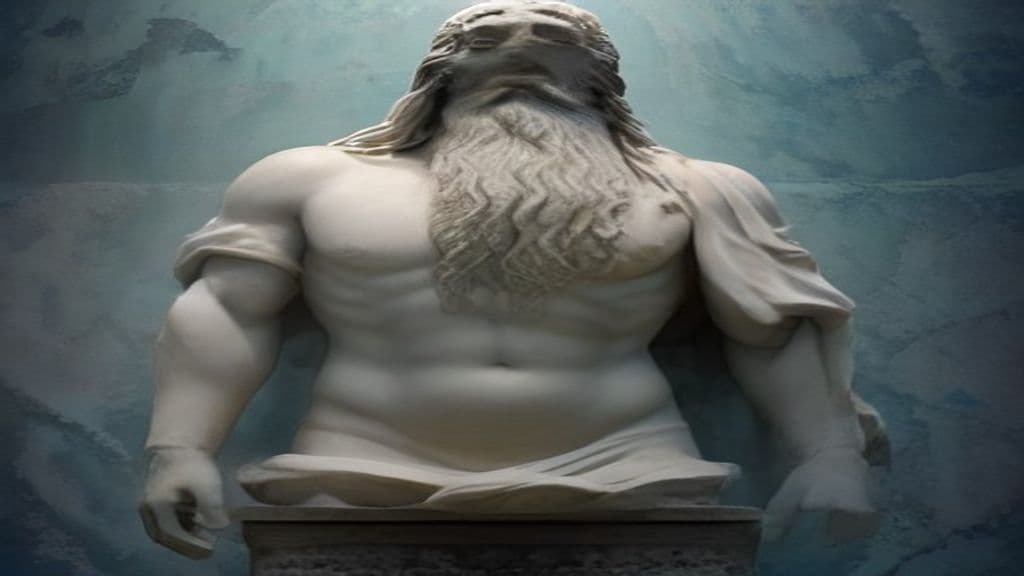
Poseidon
Poseidon is a principal deity of the ancient Greek pantheon, counted among the Twelve Olympians; he presides over the sea, storms, earthquakes and horses and functions as protector of seafarers and guardian of cities and colonies.
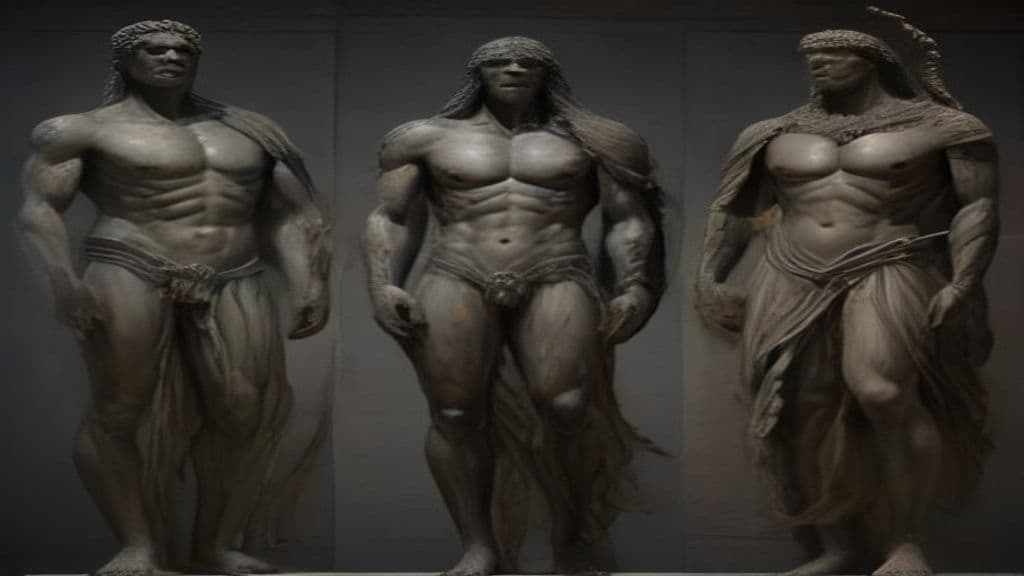
Argonauts
A band of human heroes in Greek myth who sailed aboard the ship Argo under Jason to Colchis to retrieve the Golden Fleece. Their identity is defined by membership in the celebrated voyage and by shared heroic lineages; membership lists and details vary by source.
Aconteus
Aconteus (Ancient Greek: Ἀκόντιος, Akóntios, lit. 'javelin') is a personal name borne by several distinct mortal figures in Greek myth: an Ethiopian chief turned to stone by Medusa's head at Cepheus' court, an Arcadian warrior killed in the Seven against Thebes, and Acontius of Ceos who used a trick with an apple to secure marriage to Cydippe. The name functions as a human actor across heroic-age narratives rather than a single supernatural class.
Amphitrite
Amphitrite is an ancient Greek sea-divinity, queen of the sea and consort of the sea-god Poseidon; in poetry her name is often used metonymically for the sea itself. She is counted among the daughters of Nereus and Doris in Hesiod and in some accounts is also listed among the Oceanids, and appears chiefly in mythic narrative and iconography rather than as an independent civic cult figure.
Andromeda
Andromeda is a mortal princess in ancient Greek myth, daughter of Cepheus and Cassiopeia, who is offered as a sacrificial victim to the sea monster Cetus and rescued by the hero Perseus. Her story links human hubris, divine punishment, heroic rescue, and catasterism—she is later placed among the stars as the constellation Andromeda in some accounts.
Ceto
Ceto (Ancient Greek: Κητώ, Kētṓ) is a primordial sea goddess in Greek mythic cosmology, daughter of Pontus and Gaia, primarily notable as the maternal progenitor of various named monstrous beings (e.g., the Graeae and Gorgons) by Phorcys. Her name is etymologically linked to the common Greek term for sea-monster (kētos), and she functions chiefly as a genealogical and cosmological figure rather than an active, individualized actor in surviving narratives.
Cyrene
Cyrene is an eponymous ancient Greek mythological heroine associated with the North African city of Cyrene and remembered chiefly as a mortal lover of the god Apollo and as an aetiological figure whose name is applied to place and artistic types in Greco-Roman culture.
Heliades
In Greek myth, the Heliades are the daughters of the sun-god Helios (by the Oceanid Clymene) whose intense mourning for their brother Phaëthon leads to their metamorphosis into poplar trees; their tears are said in the tradition to become amber.
Hyades
A sisterhood of mythic figures in ancient Greek tradition identified with an open star cluster in the constellation Taurus; popularly called 'the rainy ones' because their seasonal risings and settings were associated with rain and the rainy season. They appear in myth as nurses/escorts (notably caring for the infant Dionysus) and in astronomy as the Hyades star cluster.
Lamia
In ancient Greek mythology, Lamia is described as a child-eating monster who, in later tradition, came to be regarded as a type of night-haunting spirit or 'daimon'. The supplied sources do not provide a full physical description or detailed mythic genealogy, and some modern fictional portrayals recast her with serpentine features which are not attested in the provided classical summary.
Piras
Piras (Ancient Greek: Πειρᾶς) is an Argive king in Greek mythic genealogies, known primarily by name and familial connections rather than by individual deeds or cult. He appears in variant forms (Piren, Peiren, Peirasus, Piranthus) and is attested as a son of Argus and Evadne.
Eunuch
A eunuch is a human male who has been castrated (testicles removed or destroyed) and who, in many societies, occupied specific social and institutional roles—especially in royal courts, harems, and religious or administrative offices. The term historically designates both an office (bed-keeper, chamberlain) and, in many contexts, men who had undergone castration and filled those offices.
Eupeithes
Eupeithes is a mortal figure from Greek myth, known as the father of Antinous, one of the principal suitors of Penelope in the Odyssey cycle. After Antinous is killed by Odysseus, Eupeithes leads a revolt seeking vengeance and is slain by Laertes. The name Eupeithes is also used in modern taxonomic databases as the label of a genus of insects, but that is a separate, scientific namesake.
Euphorbus
Euphorbus is a named mortal Trojan youth in the Homeric epic tradition who wounds Patroclus and is later killed by Menelaus; in later classical anecdote he becomes a figure in stories of transmigration of souls in which his shield is said to be recognized in a temple.
Community Record
- [1]Euphemus — Wikipedia. Wikipedia article 'Euphemus'wiki
- [2]Argonautica, Book I (and related passages) — Apollonius of Rhodes. Apollonius Rhodius, Argonautica (selected passages and summaries)literary
- [3]Intro to the Argonauts (archive recording). Archive: introductory material on the Argonautsother
- [4]LP0084 - ARGONAUTS - Crete & Calliste, from The Argonautica (archive). Archive: readings from the Argonautica concerning Crete and Callisteother
- [5]Athenaeus, Deipnosophists - Book 5 (c). Athenaeus, Deipnosophistae (passages cited in notes)literary
- [6]Argonaut Biographies — Jason and the Argonauts (compilation). Modern compilation of Argonaut biographies (summary source)other
- [7]The Golden Fleece and the Heroes Who Lived Before Achilles — Chapter 11. Modern retelling/summaries of Argonautic episodesother
- [8]Euphemus — Anthologia Graeca (keyword entry). Anthologia Graeca entry for Euphemusacademic