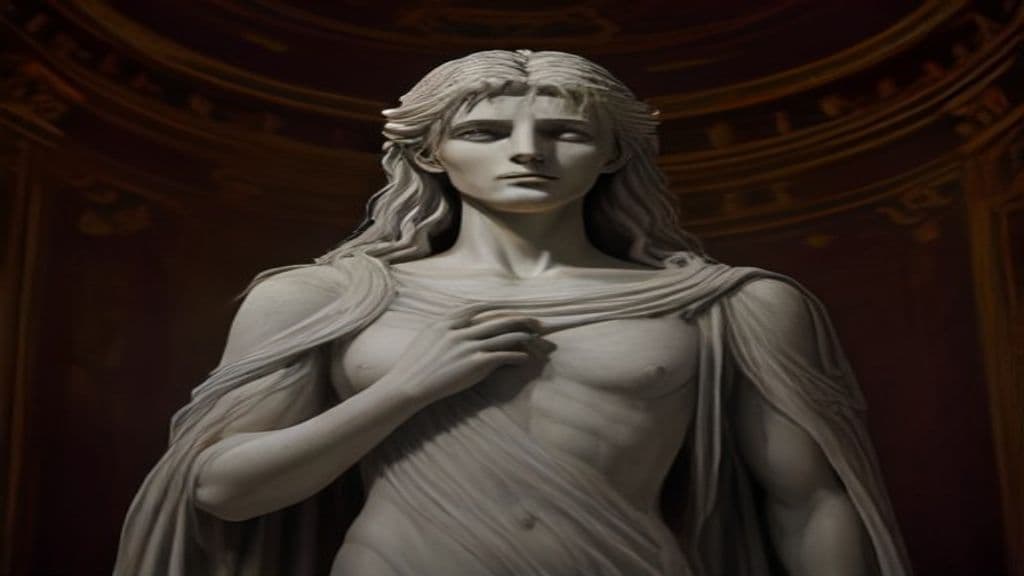
Eurybius appears in classical Greek mythic registers as a proper name for at least two distinct noble figures. In one genealogy he is listed as a Pylian prince, a son of King Neleus and Chloris and a sibling of Nestor and other Neleids. In a separate tradition he is enumerated among the children of King Eurystheus and Antimache of Tiryns; within that narrative context his death is tied to the conflicts surrounding the Heracleidae and Heracles. The sources present these as distinct personages who share the same name rather than a single recurring supernatural entity.
No physical description is supplied in the cited sources. Eurybius is attested solely through genealogical lists and narrative references; the traditions offer no details about his bodily features, clothing, or distinguishing marks.
The sources do not attribute supernatural powers or particular habitual behaviors to any figure named Eurybius. Attestations focus on kinship and fate: as offspring of Neleus or of Eurystheus he serves as a node in dynastic and heroic narratives. Reported actions are limited to his inclusion among princes who meet violent ends in the Heracles/Heracleidae cycles (killed either in battle by Athenians or slain in one account by Heracles at a sacrificial meal).
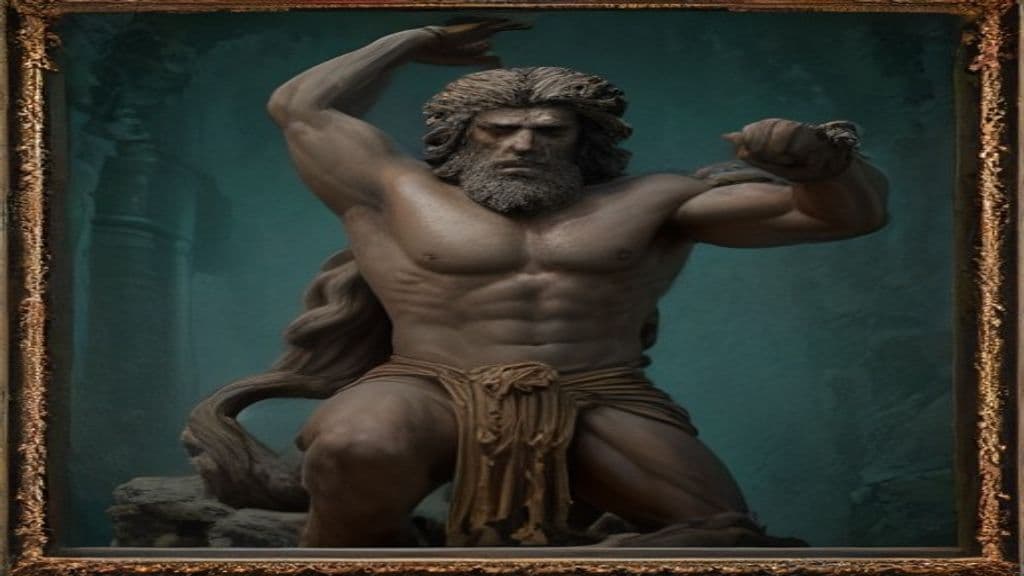
Heracles
Heracles is the greatest hero of Greek myth whose career bridges mortal hero-cult and full divinization. Celebrated for his Twelve Labours, martial prowess, and travels between the mortal world, the underworld, and Olympus, he functioned as a civic patron, ancestor of royal lines (the Heracleidae), and object of cult that treated him both as chthonic hero and as god.
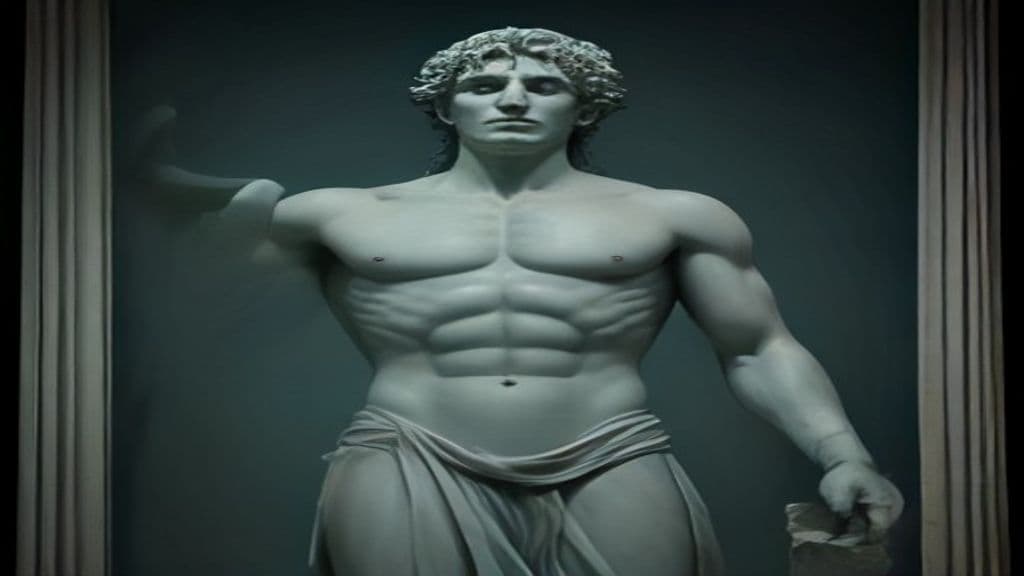
Neleus
Neleus (Greek Νηλεύς) is a mythological heroic-age king of Pylos in Greek tradition, son of Poseidon and Tyro in most accounts, husband of Chloris, and father of Nestor and other sons. He appears in genealogical and foundation narratives and is notably killed by Heracles after refusing to purify him for the murder of his family.
Heracles
Heracles is the greatest hero of Greek myth whose career bridges mortal hero-cult and full divinization. Celebrated for his Twelve Labours, martial prowess, and travels between the mortal world, the underworld, and Olympus, he functioned as a civic patron, ancestor of royal lines (the Heracleidae), and object of cult that treated him both as chthonic hero and as god.
Aegeas (Aegeus)
Aegeas (classical Aegeus) is the mytho-historical king of Athens from Greek myth, father of Theseus and traditional eponym of the Aegean Sea. The provided sources treat him as a mortal royal figure embedded in epic and local foundation narratives rather than a supernatural spirit or cultic being.
Aglaia (Grace)
Aglaia (Ancient Greek: Ἀγλαΐα) is one of the Charites (the Graces) in classical Greek myth, the personification of splendor, brilliance and festive radiance. She appears in poetic narratives as an attendant of Aphrodite, a dancer of Orchomenus in Nonnus's Dionysiaca, and in some traditions as the wife of Hephaestus and mother of personified social virtues.
Ampyx
Ampyx (Ancient Greek Ἄμπυξ, also Ampycus/Ampykos) is a personal name borne by several distinct mortal figures in Greek myth. The name is attached to seers, a priest, warriors, and ancestral/founder figures across different local traditions rather than to a single supernatural species or class.
Androgeus
Androgeus is a mythic human name borne by at least two distinct figures in Classical Greek and Roman tradition: a Cretan prince, son of Minos and Pasiphaë, famed for athletic victories and whose death in some accounts is linked to the Marathonian/Cretan bull; and Androgeos, a Greek soldier named by Virgil in the Aeneid who, during the sack of Troy, mistakes Aeneas and his companions for fellow Greeks. Both are mortal figures woven into larger heroic and epic cycles rather than supernatural beings.
Aora
Aora (Ancient Greek: Ἀώρα) is attested in the classical Greek mythic record as a nymph and eponymous ancestress: the town of Aoros in Crete was said to have been named for her, and aristocrats of Eleutherna claimed descent from her and her husband Eleuther, one of the Kouretes.
Ariadne
Ariadne is a figure from Greek myth—described as a Cretan princess, helper of the hero Theseus, and in many accounts the consort of Dionysus—whose narratives range from abandoned mortal lover to deified cult figure associated with the labyrinth, weaving, and a wedding diadem set among the stars (Corona Borealis).
Astydamia
Astydamia is a mortal woman attested in classical Greek genealogical myth. In the primary mythographic excerpt provided she is named as a daughter of Pelops and as wife of Alcaeus (mother of Amphitryon and Anaxo in that account); a modern botanical note alternatively identifies an Astydamia as wife of Acastus, son of Pelias, a conflicting attribution in the sources given.
Cassiopeia (mother of Andromeda)
Cassiopeia is a named mortal figure from Greek myth presented in the sources as the queen of Aethiopia and mother of Andromeda; her name is also applied to a northern constellation that represents that mythic queen. The provided materials also record other mythic women bearing the same name in varied genealogies and many modern cultural and scientific reuses of the name.
Evadne
Evadne (Ancient Greek: Εὐάδνη, Euádnē) is an ancient Greek personal name borne by several mortal women in classical mythic genealogies and dramas; in modern usage it appears as a personal or taxonomic name. The supplied sources treat Evadne primarily as an anthroponym rather than a discrete supernatural class or persistent spirit.
Lycaon of Arcadia
Lycaon is a mythic king of Arcadia who, in the commonly attested classical version, murders and cooks his son to test Zeus's omniscience and is by divine retribution transformed into a wolf; the tale functions as an etiological and moral narrative about impiety and metamorphosis in Greek myth.
Palaechthon
In classical Greek literary context Palaechthon (Παλαίχθονος) is an earth-linked eponymous ancestor invoked to mark indigenous origin; attested only in Aeschylus' The Suppliants and discussed by later commentators and modern reference works. The name combines elements meaning 'old/long' (palai-) and 'earth' (chthon-) and functions as an aetiological device legitimizing Pelasgian claims to the land.
Phoroneus
Phoroneus is a primordial culture-hero and early king of Argos in Classical Greek tradition. Ancient authors credit him with gathering scattered families into a community, instituting worship (notably of Hera), introducing fire and the forge, founding law, and receiving ongoing cultic veneration at an eternal fire and tomb-sanctuary in Argos.
Community Record
- [1]Eurybius - Wikipedia. Wikipedia contributors, 'Eurybius,' Wikipedia, The Free Encyclopedia.wiki
- [2]Wikidata: Eurybius. Wikidata entry Q61023560 for Eurybius.other
- [3]The Library of Apollodorus (Argonauts introduction) - Archive. LP0077 -III ARGONAUTS- Introduction to the Argonauts, from The Library of Apollodorus (archive reference cited in research notes).literary
- [4]Antimache - Wikipedia. Wikipedia contributors, 'Antimache,' Wikipedia, The Free Encyclopedia (entry listing children of Eurystheus including Eurybius).wiki
- [5]Person: Eurybius (Neleus lineage) - University of Victoria Mythology. University of Victoria, 'Person: Eurybius' (Neleid genealogy entry).academic
- [6]Person: Eurybius (Eurystheus lineage) - University of Victoria Mythology. University of Victoria, 'Person: Eurybius' (Eurystheus household entry).academic
- [7]ToposText: Eurybius (Neleid entry). ToposText person index (Neleid Eurybius).literary
- [8]ToposText: Eurybius (Eurystheus entry). ToposText person index (Eurystheus' son Eurybius).literary