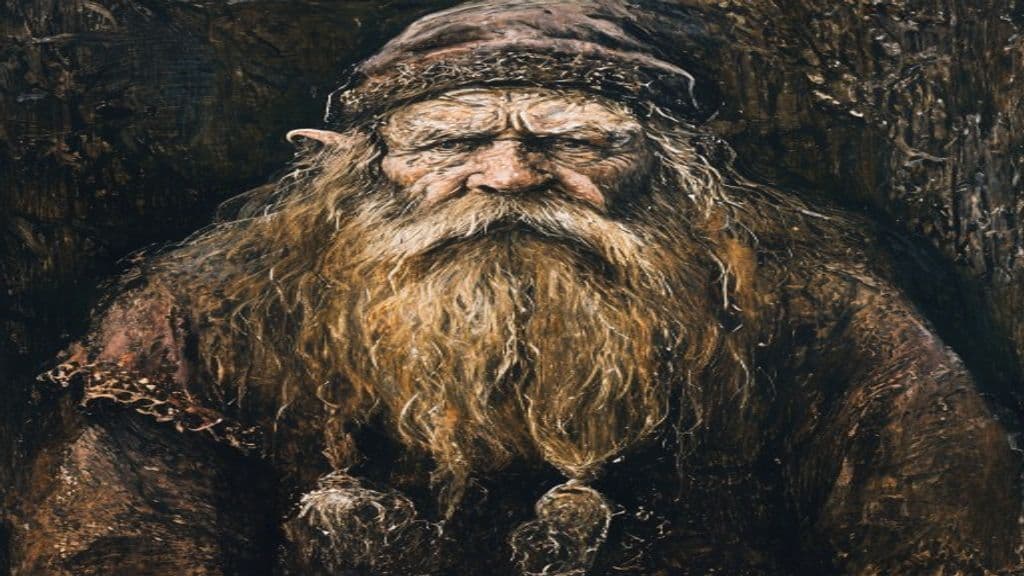
In the Norse textual tradition dwarfs (Old Norse dvergr; Proto-Germanic *dwergaz) are subterranean or hidden beings who appear in mythic genealogy and cosmology as independent artisan peoples. Eddic narrative contexts place them in Svartálfheimr or in mountains and stones and attribute to them the creation of key magical objects for the gods (for example, makers of Mjölnir, Gungnir, Skíðblaðnir, Draupnir and other crafted artifacts in specific episodes). Linguistic and comparative scholarship summarized in the sources links the term and its cognates to a conceptual cluster including craft, stone and metal, and—by some etymological proposals—to roots meaning damage, deception, or mental disturbance; these proposals imply a wider pre-Christian semantic field that associates dwarfs with hiddenness, possible roles in sickness or misfortune, and expertise in working underground resources.
Early textual sources provide few consistent physical details beyond describing dwarfs as human-shaped; later folklore often depicts them as short, but the earliest Eddic material does not make small stature explicit or central to their role. Individual narratives present variable portrayals (for example, Alvíss appears in a marriage-quest episode and is physically present in Þórr's hall until daybreak), while other named dwarfs (Andvari, Brokkr, Sindri, sons of Ívaldi) are primarily characterized by deeds and skills rather than standardized bodily attributes.
In Norse mythic narratives dwarfs are famed craftsmen and makers of magically potent artifacts: specific Eddic episodes credit them with producing items such as Mjölnir, Gungnir, Skíðblaðnir, Sif's hair, Draupnir, and treasures used in the Völsung material. Some dwarfs display additional supernatural capacities in particular tales: Andvari is described as shapechanging, and Fjalarr and Galarr brew the mead of poetry from Kvasir's blood. Folktale material also records dwarfs bound to magical objects (e.g., the 'blue light' tale in which possession of a light compels a dwarf to serve its holder). Scholarship cited in the sources further discusses etymological links suggesting dwarfs could be implicated conceptually in causing certain illnesses or mental disturbances, though specific clinical behaviors are inferred from linguistic argument rather than narrated prescriptions.
Weaknesses
- conditiondaylight (narrative vulnerability)
- othersuspected association with plants (e.g., pennyroyal / Old English dweorge-dwostle) as protective folk inference
Wards
- conditionexposure to daylight (narratively neutralizes certain dwarfs — e.g., Alvíss turns to stone at daybreak)
- substancepennyroyal (dweorge-dwostle) — attested only as an etymological/folk-suggestive association that may indicate use against dwarf-related malady
Elf
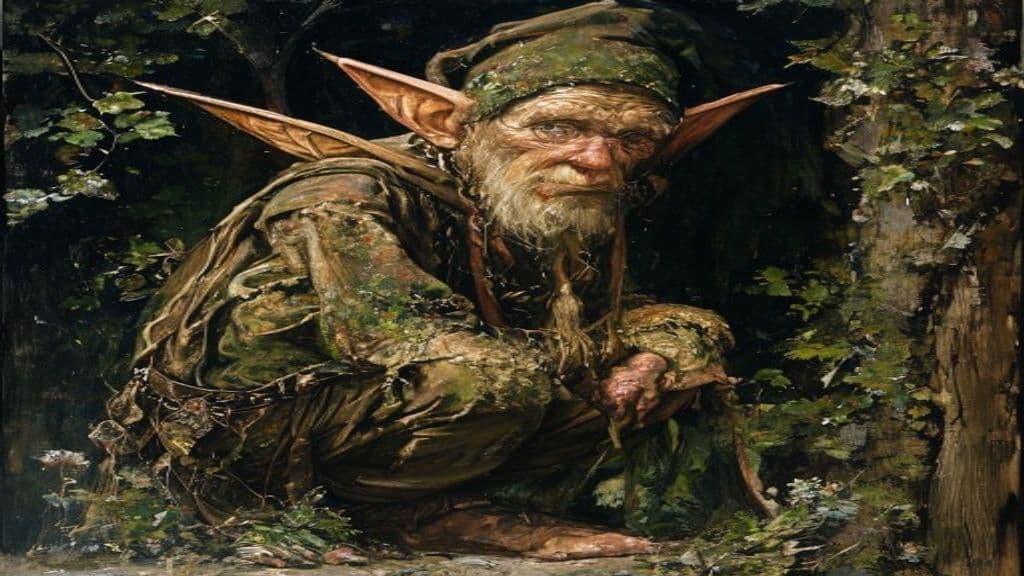
An elf is a humanoid supernatural being from Germanic folklore, especially prominent in North Germanic (Norse/Icelandic) myth and in later early-modern Scottish and Scandinavian belief. Elves are typically depicted as magically powerful and unusually beautiful, ambivalent toward humans and capable of helping or harming them.
Andvari
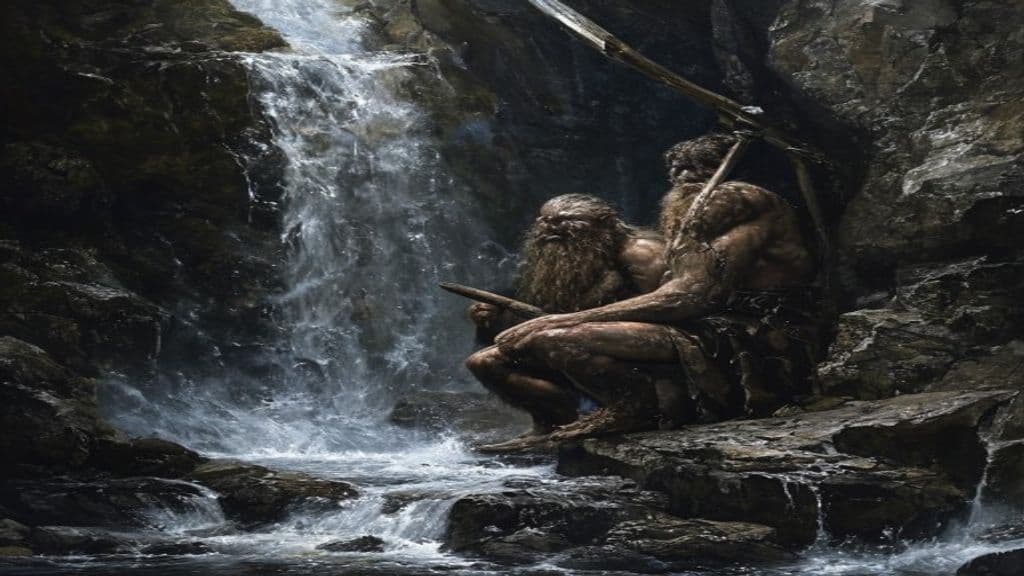
Andvari is a dwarf from Old Norse sources (attested in the 12th century) who lives beneath a waterfall, hoards gold, owns a magical ring called Andvaranaut, can change into a pike, and curses the gold when it is stolen—events that set in motion tragic outcomes in Norse heroic narrative.
Agnarr Geirröðsson
Agnarr Geirröðsson is a mortal prince attested only in the Poetic Edda poem Grímnismál; he aids Odin (disguised as Grímnir) during Geirröðr's torture and, after Odin reveals himself and King Geirröðr dies, Agnarr succeeds as king.
Anund (Bröt-Anund)
Anund, commonly known by the byname Bröt-Anund ('trail‑blazer' or 'land clearer'), is a semi-legendary Swedish king of the Yngling dynasty attested in early Norse genealogical poetry and saga prose. Sources credit him with avenging his father in Estonia, accumulating wealth, promoting settlement by clearing land and making roads, and dying under ambiguous circumstances (landslide or killing).
Aurvandill
Aurvandill is a figure attested in medieval Germanic onomastics and Norse narrative, most famously remembered in an Old Norse tale where Thor carries him across icy rivers and his frozen toe is cast into the sky as the star called Aurvandils-tá. Comparative linguistic study reconstructs a Common Germanic name associated with dawn or the morning star.
Beaduhild (Böðvildr)
Beaduhild (Old Norse Böðvildr; Old English Beaduhild/Beadohild; also Bodil, Badhild) is a legendary human princess in Germanic heroic tradition whose life is entangled with the smith Wayland (Weland/Vǫlundr). In earlier sources she appears as a tragic victim in the Weland cycle; in later Scandinavian recensions she is recast as Wayland's wife and the mother of a heroic descendant (Viðga).
Billingr
Billingr is a named paternal figure in Old Norse sources, best attested as the father of a maiden whose household prevents Odin from consummating a nocturnal rendezvous (Hávamál stanzas 96–102). Manuscript and kenning evidence leave his taxonomic identity (dwarf or jötunn) ambiguous.
Domalde (Dómaldi)
Domalde (Old Norse Dómaldi/Dómaldr) is a legendary Swedish king of the Yngling dynasty whose reign is associated with prolonged famine. In Old Norse sources his personal ill‑luck (ósgæssa), said to be caused by a curse from his stepmother, is presented as coterminous with the land's fertility; communal cultic escalation culminates in the king's sacrificial killing and the restoration of good harvests.
Eadgils (Aðils / Adils)
Eadgils is a semi-legendary 6th-century Swedish king of the Yngling/Skilfing dynasty attested in Old Norse skaldic poetry and sagas and in the Anglo-Saxon epic Beowulf. Sources present him as a dynastic figure whose exile, restoration, and conflicts (notably with Onela/Áli and later associations with Hrólfr Kraki) explain succession and inter-kingdom violence; he is treated as a mortal ruler rather than a supernatural being.
Fjalar and Galar
Fjalar and Galar are two named dwarf brothers in Old Norse myth who murdered the wise being Kvasir and transformed his blood into the mead of poetry; they also killed the jötunn Gilling and his wife, an act that led Suttungr to take possession of the mead. Their actions set in motion the canonical mythic sequence recorded in Skáldskaparmál/Prose Edda linking dwarfs, giants, gods, and the origin of poetic inspiration.
Fulla
Fulla (Old Norse Fulla; Old High German Volla/Folla) is a named goddess (ásynja) in the Germanic tradition, attested as Frigg's trusted attendant and confidante in Old Norse sources and as a named singer in the Old High German Merseburg horse-healing charm.
Fáfnir
In Old Norse heroic legend Fáfnir is a kin-figure who, after killing his father Hreiðmarr over a cursed hoard, withdraws into the wilderness and takes the hamr of a worm/dragon to brood over treasure; he is slain by the hero Sigurð (Sigurd).
Læraðr
Læraðr (also Léraðr; anglicized Laerad) is a named sacred tree in Old Norse mythic geography described as standing over Odin’s hall/Valhöll. In the Poetic Edda (Grímnismál) and Prose Edda (Gylfaginning) it is the tree browsed by the goat Heiðrún and the stag Eikþyrnir; modern scholars sometimes identify it with or as an aspect/name of the central world-tree Yggdrasill.
Sigi
Sigi is a mytho-historical ancestral figure in Old Norse tradition, presented in the Völsung cycle as a son of Odin and the progenitor of the Völsung lineage. His narrative in saga summaries records outlawry for murder, flight aided by Odin, raiding and kingship in Húnaland, and eventual assassination followed by his son's vengeance.
Community Record
- [1]Dwarf (folklore) — Wikipedia. Wikipedia contributors, 'Dwarf (folklore),' Wikipedia, The Free Encyclopedia.wiki
- [2]La luz azul (Das blaue Licht) — archive summary. Archive.org summary of the tale 'La luz azul' (German folktale Das blaue Licht) — tale notes indicate a dwarf bound to a magical blue light who must serve its possessor.folk
- [3]Snorri Sturluson — The Prose Edda (1965 edition). Snorri Sturluson, The Prose Edda (translation edition cited in supplied material).literary