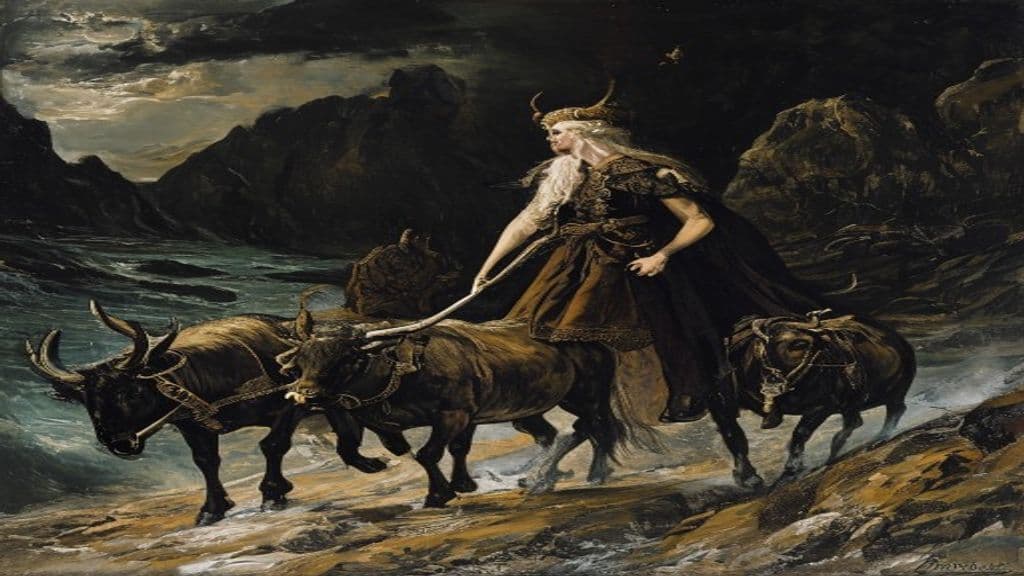
In Snorri Sturluson's Prose Edda Gefjon is granted 'one plough-land' by King Gylfi; she takes four oxen from Jötunheimr — said to be her sons by a jötunn — and ploughs so deeply that she uproots a tract of land, which she draws out into the sea to become the island of Zealand while the pit left behind becomes a lake in Sweden (Snorri aligns this with Lake Mälaren though he notes other geographies such as Vänern have been suggested). Heimskringla presents a euhemerized account in which Gefjon is associated with Odense and is said to marry the legendary Danish king Skjöldr, placing her among ancestral/royal figures in saga-historic prose.
Primary source descriptions supply no sustained physical portrait of Gefjon beyond narrative scenes and poetic imagery. The Prose Edda and associated skaldic verses portray her in the act of ploughing with four swift oxen (her sons), and the Poetic Edda (Lokasenna) records her as a speaking participant among the gods. Kennings and skaldic usage place her as a known divine name in verse but do not provide detailed bodily features.
Texts attribute cosmological and social functions to Gefjon rather than enumerated magical rites. Her signature mythic act is land-creation by ploughing (Prose Edda, Heimskringla): by enlisting four oxen she removes land to form Zealand. Snorri's prose also describes her as a virgin and states that 'all who die as virgins attend her,' indicating a named post-mortem association. In Lokasenna Odin defends her, saying she 'knows the destinies of mankind just as well as Odin himself,' which associates her with foresight or knowledge of fate. She appears among the ásynjur at Ægir's feast and is used as a name in skaldic kennings.
Freyja
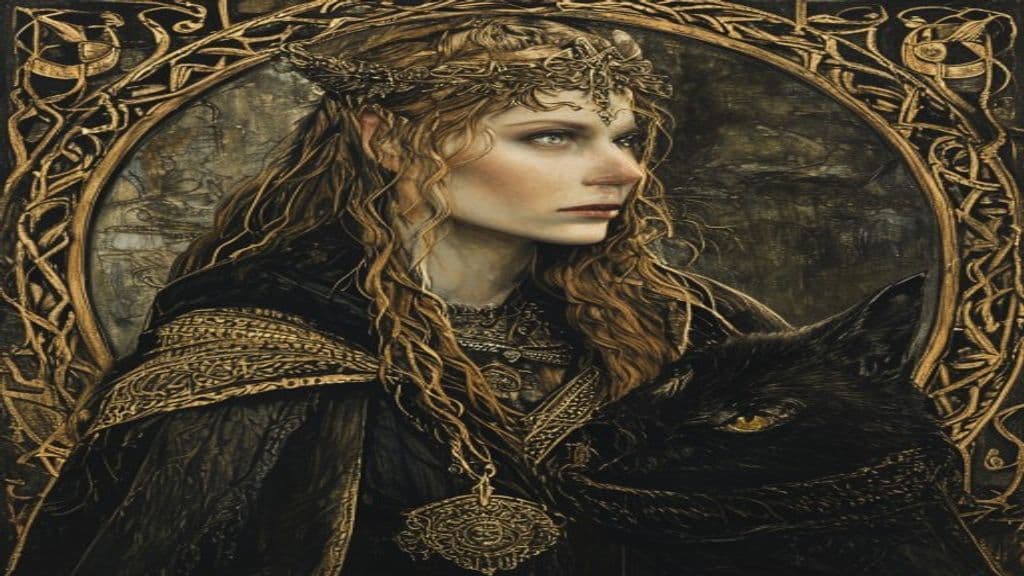
Freyja is a major Vanir goddess in Norse mythology associated with love, beauty, fertility, gold, war, and the seiðr form of magic. She rules the field Fólkvangr and the hall Sessrúmnir, where she receives half of those slain in battle, and is attested across the Poetic Edda, the Prose Edda, skaldic poetry, and later Scandinavian folklore.
Fulla
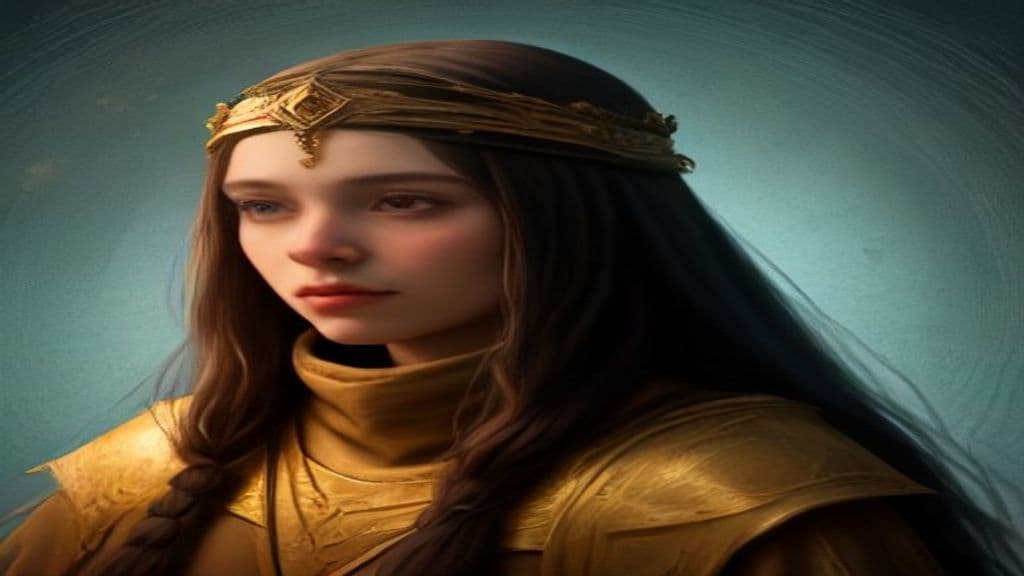
Fulla (Old Norse Fulla; Old High German Volla/Folla) is a named goddess (ásynja) in the Germanic tradition, attested as Frigg's trusted attendant and confidante in Old Norse sources and as a named singer in the Old High German Merseburg horse-healing charm.
Alvaldi
Alvaldi (Old Norse: Alvaldi / Ölvaldi) is a jötunn in Norse mythic genealogies, attested chiefly as the father of the notable jötunn Þjazi and described in one source as exceedingly rich in gold. He survives in the record mainly as a familial antecedent and an etiological figure rather than as an active participant in preserved narratives.
Andhrímnir
Andhrímnir is the named cook of the Æsir and the einherjar in Old Norse myth, responsible for slaughtering and preparing the beast Sæhrímnir daily in Valhalla and for producing the gods' mead from Heiðrún's milk. He is attested in the Poetic Edda and summarized in modern reference works.
Austri, Vestri, Norðri and Suðri
A quartet of named dwarfs in Old Norse cosmology positioned at the four cardinal points who are described in medieval sources as holding up the sky after the gods made heaven from Ymir’s skull. They function as structural/cosmogonic supports and are attested in the Prose Edda and the Dvergatal of Völuspá, with echoes in skaldic kennings and in later scholarly interpretation linking their role to roof-beam terminology.
Bestla
Bestla is a jötunn (giantess) in Old Norse mythic genealogies, attested as the mother of Odin, Vili, and Vé by the giant Borr. She functions primarily as a maternal progenitor in the medieval Icelandic corpus (Poetic Edda, Prose Edda, and skaldic verse), and surviving references to her are sparse and fragmentary.
Brimir
In Old Norse mythic tradition the name Brimir appears in two closely related roles: as a name applied to a primordial jötunn (often equated with Ymir/Aurgelmir) whose body supplies the material of the world, and as the name of a beer‑hall or hall of plenty that Snorri interprets as an afterlife dwelling for virtuous survivors after Ragnarök.
Búri
Búri is an Old Norse primordial divinity attested in the Prose Edda and a skaldic verse as an early ancestor of the Æsir. He is presented as a first-born godlike figure who is freed from salty rime by the primeval cow Auðumbla and is genealogically prior to later gods such as Borr and, by descent, the Æsir.
Býleistr
Býleistr is an Old Norse mythic name attested as a brother of Loki. He appears only as a kin-term in skaldic and Eddic contexts and in Snorri Sturluson's prose lists; no independent deeds or narratives are preserved for him in the cited sources.
Dagr
Dagr is the Old Norse personification of the day: a luminous being who rides across the sky on the horse Skinfaxi, bringing daylight in the mythic cosmology preserved in the Poetic Edda and Prose Edda. The lexical item Dagr functions both as the common noun for 'day' and as a proper name for this mythic actor.
Durinn
Durinn is an early named dwarf (Old Norse: dvergr) attested in the medieval Norse corpus; counted as the second-created dwarf after Mótsognir and associated in saga tradition with exceptional smithcraft, including a role in forging the magic sword Tyrfing.
Dvalinn
Dvalinn is an Old Norse mythic name attested in the Poetic Edda and several sagas applied to at least two distinct figures: a named dwarf among the dwarf-kind (craftsman, rune‑figure, leader in some lists) and one of the four harts/stags that feed among the branches of the world‑tree Yggdrasill. The corpus does not reconcile these uses of the same name into a single coherent biography.
Eitri
Eitri (also attested as Sindri) is an Old Norse dwarf smith celebrated in the Skáldskaparmál episode for forging three famous artifacts — Gullinbursti, Draupnir, and Mjöllnir — while working with his brother Brokkr. He is presented as a master craftsman whose work directly affects the gods, not as a deity.
Eldir
Eldir is a named servant of the sea-being Ægir in Old Norse myth, attested in the poem Lokasenna where he stands outside Ægir's hall and speaks with Loki. His name, Old Norse Eldir, is glossed as 'fire-stoker' and marks him as a household attendant and threshold interlocutor rather than a deity.
Community Record
- [1]Prose Edda (Gylfaginning, Skáldskaparmál) - accounts of Gefjon. Snorri Sturluson, Prose Edda (Gylfaginning, Skáldskaparmál) — ploughing myth; statement that Gefjon is a virgin and receives those who die virgins; skaldic quotations.literary
- [2]Lokasenna (Poetic Edda) — Gefjon attested in three stanzas. Poetic Edda, Lokasenna — conversational poem in which Loki accuses and Odin defends Gefjon, with Odin saying she knows destinies as well as he.literary
- [3]Heimskringla (Ynglinga saga) — euhemerized account. Snorri Sturluson, Heimskringla — euhemerized narrative placing Gefjon in Odense/Lejre and saying she married Skjöldr (legendary royal association).literary
- [4]Gefjon (Wikipedia summary). Modern summary of attestations, etymological discussion linking Gef- to Gefn and referencing scholarly debate about geography (Mälaren/Vänern) and functions.wiki
- [5]Archive JSTOR snippet / academic discussion (Gefjon). Secondary scholarly material discussing Gefjon's name, functions and links to other goddess-forms (used in source summaries).other