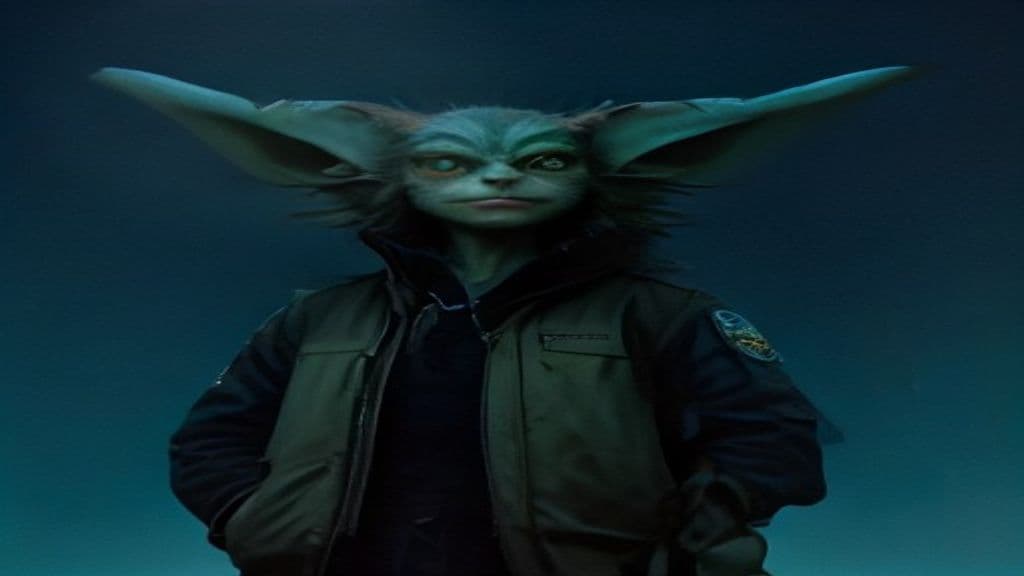
The gremlin arose within machine-age communities, particularly among RAF aircrews, as a folkloric explanation for mechanical failures and accidents. The term first appears in RAF slang in the 1920s, with the earliest printed record in a poem published in the journal Aeroplane in Malta on 10 April 1929. Folklorists characterize the gremlin as a product of the age of air — a modern narrative device created by airmen to personify technical mishap and to redistribute blame away from human operators; multiple etymologies have been proposed (e.g., derivation from Old English gremian 'to vex', blends involving 'Fremlin' beer and 'goblin' or Grimm's Fairy Tales) but none are definitive in the cited sources.
Depictions vary widely and no single canonical physical description is recorded in the RAF lore summarized here; in the in-group airmen material the gremlin is primarily characterized by behavior rather than by morphology. Roald Dahl's fictional account (The Gremlins) popularized a specific imaginative image—small humanoid creatures living on RAF fighters and a domestic vocabulary (wives called 'Fifinellas', male children 'Widgets', female children 'Flibbertigibbets')—but Dahl's forms are literary inventions and not presented as authoritative folk description in the available sources.
Gremlins are credited chiefly with sabotaging aircraft and machinery, causing otherwise inexplicable accidents and mechanical malfunctions. Wartime lore sometimes suggested they favored one side, but RAF reporting and commentary describe them as equal-opportunity tricksters acting from self-interest. Functionally, the gremlin serves as a scapegoat and morale device: attributing faults to a mischievous external agent deflects interpersonal blame among crews and helps maintain unit cohesion in dangerous operations. Roald Dahl's fiction expanded the gremlin into a fuller narrative ecology for popular audiences, but the core folkloric behavior is machine-related mischief.
Weaknesses
- otherNo documented folkloric weaknesses
Wards
- otherNo attested ritual wards or charms in the cited sources
Green Arrow
Green Arrow is a fictional, non‑superpowered costumed crime‑fighter (Oliver Jonas Queen) appearing in American comic books published by DC Comics. Portrayed as an expert archer and vigilante who uses specialty arrows, gadgets, and vehicles, he operates in urban settings (Star City, Seattle) and frequently teams with other superheroes.
Green Goblin
The Green Goblin is a fictional costumed supervillain persona in American comic-book fiction (Marvel Comics), a recurring archenemy of Spider-Man adopted by multiple human characters and characterized by Halloween-themed gadgetry, a flying Goblin Glider, and an association with chemically induced insanity in its original incarnation.
Green Knight
A late-medieval Arthurian figure who functions as a supernatural challenger and tester of knightly virtue. In key narratives he appears at King Arthur’s court to issue a beheading challenge and is revealed in some versions to be the enchanted lord Bertilak de Hautdesert (or Bredbeddle in other variants).
Green Lantern
Green Lantern is a title used by multiple superhero characters in DC Comics. The name denotes either the original mystical ring‑wielding hero (Alan Scott) of the Golden Age or members of the later Green Lantern Corps, an interstellar law‑enforcement body empowered by power rings linked to willpower and imagination.
Green Tara
Green Tara (Tārā, Ārya Tārā, Jetsün Dölma) is a central female buddha/bodhisattva figure in Mahāyāna and especially Vajrayāna Buddhism, venerated as a liberator who grants swift assistance, removes obstacles, and functions as a meditation deity (yidam) embodied in green form.
Green monkey
A biological species of Old World monkey (Chlorocebus sabaeus) native to parts of West Africa and introduced to several Atlantic islands and Caribbean locations. Descriptions in the provided sources are zoological — covering appearance, behavior, distribution, and social structure — with no material treating it as a supernatural entity.
Gremory
Gremory (also attested as Gemory in the supplied corpus) is named in at least one modern reference as a demon listed in demonological grimoires. The supplied materials identify the name within the Western grimoire tradition but do not provide further primary grimoire details in this dossier.
Grendel
A hostile supernatural figure from the Old English epic Beowulf who raids King Hroðgar’s mead‑hall Heorot. Presented as a night‑dwelling, exiled being variously classified with Germanic eotenas/þyrs and described in the poem as descended from the Biblical Cain; his defeat by Beowulf restores communal order.
Grendel's mother
A principal antagonist in the Old English epic Beowulf, presented as the mother of Grendel and a member of the poem's category of Cain-descended “monsters.” She attacks Heorot in vengeance for her son and is slain by Beowulf in her underwater lair.
Grey Gargoyle (Paul Pierre Duval)
A Marvel Comics supervillain whose right hand was permanently transformed into living stone by an industrial chemical accident; he can transmute touched matter to stone temporarily and can convert his whole body into living stone, acting as a recurring antagonist to superheroes such as Thor. He has at times been amplified by cosmic events (e.g., becoming Mokk during Fear Itself) and has been reverted or contained through a variety of tactical and magical interventions.
Grey Hulk
A distinct persona/alter of Bruce Banner within mainstream American comic-book continuity and adaptations, identified by grey skin in many iterations and a temperament that differs from other Hulk personae. The Grey Hulk is an internal, emergent identity that manifests during Banner's transformations rather than an external spirit or traditional folkloric being.
Grey wolf (mythology)
The Grey wolf is both the biological species Canis lupus and a mythic/symbolic animal in several Eurasian traditions. In Turkic, Mongolian, and broader Altaic contexts it is described as a sacred animal and national symbol; in other Eurasian mythic corpora wolves also appear as powerful mythic figures (e.g., Norse Fenrir) though those are distinct literary entities.
Community Record
- [1]Gremlin. Wikipedia: Gremlinwiki
- [2]Gremlins — commentary citing John W. Hazen and Marlin Bressi. Wikipedia summary with citations to John W. Hazen and Marlin Bressi as reported in the noteswiki
- [3]The Gremlins (Roald Dahl). Wikipedia summary noting Roald Dahl's depiction and invented family termsliterary