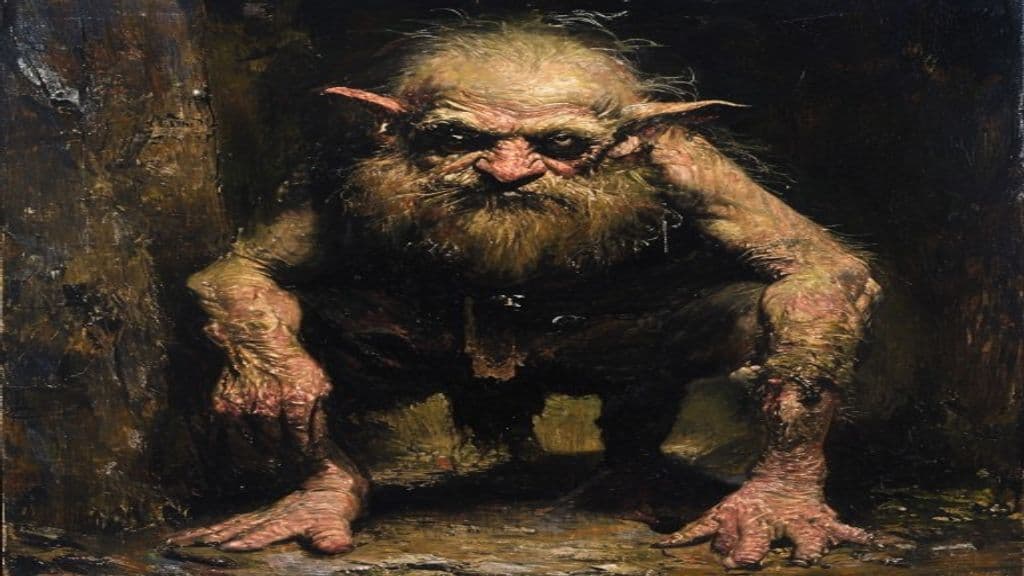
The English term derives from medieval Anglo-Norman and Old French gobelin and Medieval Latin gobelinus, attested in sources such as Orderic Vitalis's 12th-century Historia ecclesiastica which mentions a demon called Gobelinus in Évreux. Folkloric scholarship traces goblin-type figures to a broader category of 'little folk' and household spirits (brownies, kobolds, lutins) that were variously reinterpreted over time; some domestic protector spirits were later framed as dangerous or demonic under changing religious and cultural influences.
Accounts emphasize small stature and often grotesque or shaggy appearance: diminutive humanoids sometimes described as very short (around 30 cm in some traditions), shaggy-haired and raggedly dressed. Regional variants present distinct imagery—e.g., squat, iron-shod redcaps of Anglo-Scottish border lore—while other related little‑folk types display horned or hairy forms in their own traditions.
Goblins and goblin-like beings exhibit a wide behavioral spectrum in the sources: performing nocturnal domestic labor for small offerings (brownie-like), playing pranks and misdirecting travelers (púca-like), shapeshifting into animals or objects (boggart-like), and in some local legends acting violently or lethally (redcaps). Comparative summaries also note capacities attributed to analogous figures elsewhere—invisibility or physical threat (tokoloshe), rule-bound contests and rewards (dokkaebi)—but treat those as similar or comparable roles rather than identical powers.
Weaknesses
- conditionWithdrawal when given clothing (household-helper variants leave if presented with clothing)
- symbolConsecrated objects repel certain violent variants (e.g., redcaps flee consecrated items)
- conditionPhysical elevation defeats short-statured attacking analogue (e.g., raising beds on bricks is used against the tokoloshe in comparative accounts)
Wards
- ritualHousehold offerings/reciprocity
- symbolConsecrated objects
- conditionStructural elevation (analogue)
Boggart
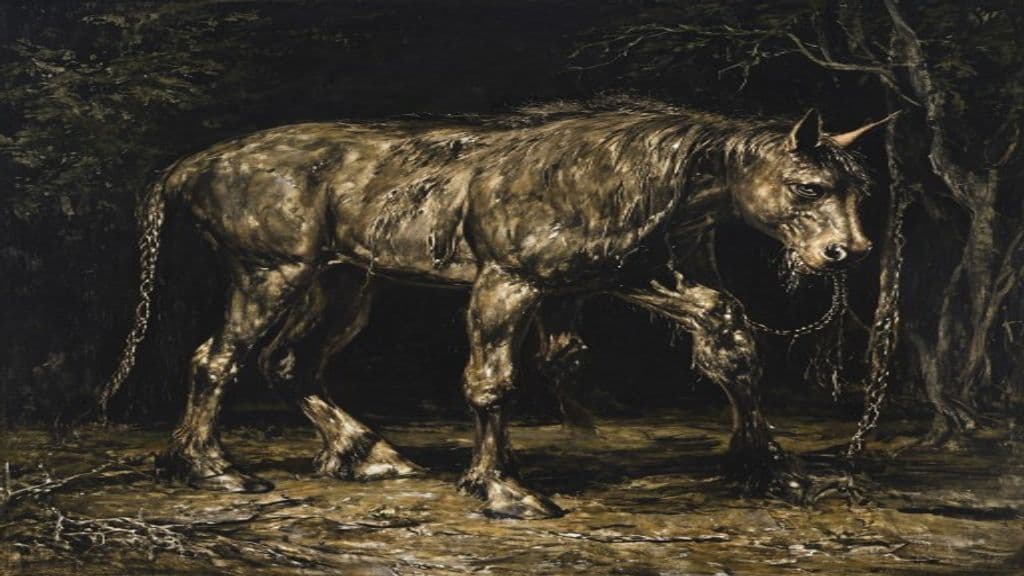
A polyvalent supernatural being in north‑west English and adjacent dialect traditions, the boggart can be a household spirit attached to a family or dwelling or a localized landscape spirit tied to a particular place. Accounts vary widely by locality, recording mischievous, malicious, and sometimes frightening behaviours rather than a single fixed form.
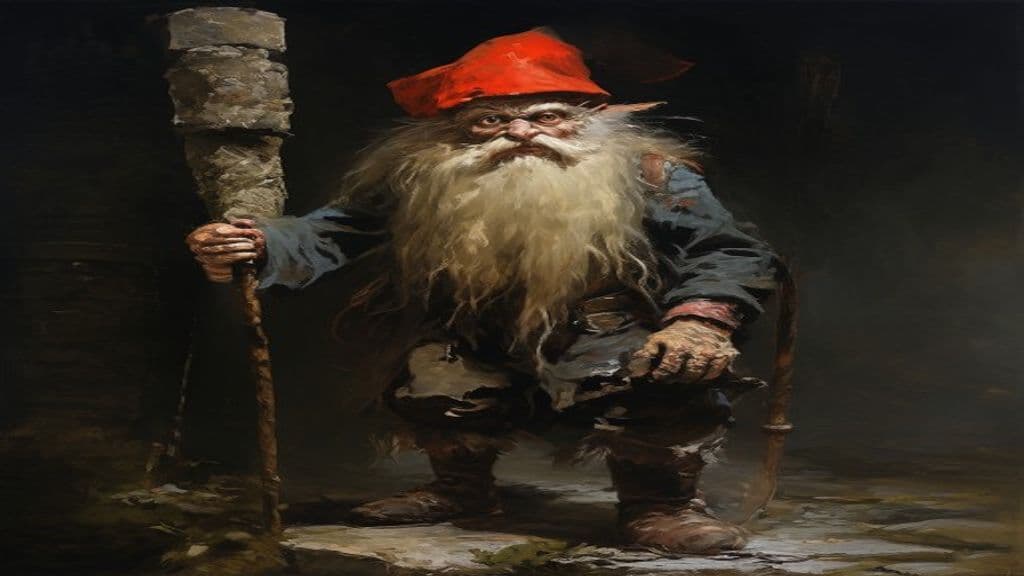
Redcap
A malevolent small household/house-ruin spirit attested in Anglo-Scottish border folklore, described as dwelling in ruined towers and castles and attacking trespassers; tradition emphasizes a blood‑stained red cap as its identifying emblem and records Christian symbols or Scripture as effective repellents.
Kobold
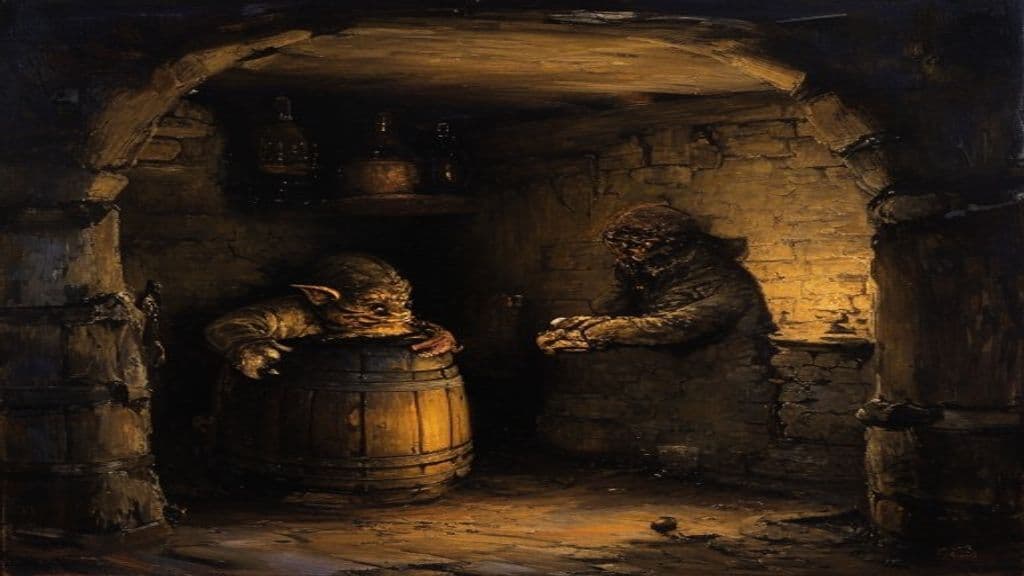
The German household and mine spirit — a mischievous but potentially helpful small being who attaches to a household, bringing luck or disaster depending on how it is treated.

Tokoloshe (Tokolosh)
A diminutive non-human spirit in Nguni and broader Bantu-speaking Southern African traditions, frequently portrayed as a dwarf-like, sometimes hairy water spirit used by malicious people to harass, frighten, or harm others. It functions both as a bogeyman for social discipline and as an explanatory agent for unexplained illness and death, and communities invoke traditional healers or pastors with an apostolic calling to counter it.

Dokkaebi
Dokkaebi (도깨비) are legendary supernatural beings in Korean folklore associated with nature, household objects, and trickster behavior; they can be mischievous or benevolent, rewarding virtue and punishing greed in folktales.
Aos Sí
Aos Sí are a broad class of supernatural beings in Gaelic (Irish and Scottish) folklore associated with the mounds and liminal places of the landscape. They are variously described as descendants or later forms of the Tuatha Dé Danann, ancestral or nature spirits, or otherworldly folk who coexist with humans and can be helpful or dangerous when offended.
Bauchan
A household-associated hobgoblin from Scottish Highland folklore, the bauchan is portrayed as ambivalently belligerent and helpful; in at least one recorded tale it accompanies a human household across the Atlantic and can shapeshift into a goat.
Beithir
In Scottish Gaelic tradition the beithir is a very large snakelike creature—often called a serpent or dragon—associated with mountains, corries and bodies of water. It is portrayed as venomous and deadly in local tales, linked in etymology and interpretation to lightning/thunderbolt imagery, and classed among water-associated monsters (fuath).
Biasd Bheulach
A named monster or spirit reported in Scottish folklore as haunting the Odal (Odal) Pass on the Isle of Skye. Attested primarily as a place‑bound uncanny being in modern summaries and lists of Scottish folk creatures, the entity is recorded with very limited detail in the cited sources.
Billy Blind
Billy Blind is a named household spirit from English and Lowland Scottish ballad tradition who appears as an advising helper in Child ballads, providing information, revelation, and stratagems that enable protagonists to resolve enchantment, identity, and childbirth crises. Attestations are narrative (ballads) and later literary/television adaptations draw on his advising role.
Black Dog (folklore)
A class of supernatural canine apparition in British vernacular folklore, often associated with liminal places and regarded as an omen-bearing or guardian hound. Local named forms (Black Shuck, Barghest, Gurt Dog, Gallytrot) show a range from malign, death-portending hellhounds to benevolent guide-figures.
Blunderbore
Blunderbore is a stock giant of English and Cornish folklore, appearing as a corporeal monstrous antagonist in tales such as Jack the Giant Killer and regional variants like Tom the Tinkeard. He is depicted through his actions—kidnapping, highway obstruction, and violent strength—and is typically overcome by a human folk-hero who frees captives and reasserts social order.
Bodach
A Gaelic folkloric personage literally meaning "old man" (Old Irish botach) who functions variously as a trickster, bogeyman, household figure and — in some accounts — an omen of death (Bodach Glas). The term also carries historical social meanings (tenant/peasant) and is sometimes identified with higher mythic figures (e.g., Manannán mac Lir) in specific tales.
Brown Man of the Muirs
A moorland guardian figure from Anglo-Scottish Border folklore. In a field account he appears as a solitary dwarf who reproves hunters and claims custodianship of upland animals; in later fairy-tale literature he appears as (or is related to) a tribe—the Brown Men of the Moors and Mountains—associated with stronger, more violent motifs and a compulsion-incantation.
Brownie
A household spirit from Scottish and related British traditions that performs nocturnal domestic labour in return for small offerings left by the hearth. Brownies are protective, place-tied domestic beings who work while humans sleep and will depart or become mischievous if offended.
Bugbear
A folkloric scare-figure historically invoked to frighten disobedient children, classed among boogeyman-type beings. Medieval descriptions in English sources portray it as a creepy, bear-like lurker in woods; modern popular culture and gaming have reimagined it as a large goblinoid monster.
Cap-o'-Rushes
Cap-o'-Rushes is the title and heroine of an English folktale collected by Joseph Jacobs. The story is classed among international folktale types (principally ATU 510B) and opens with the 'Love Like Salt' motif; it tells of a daughter who disguises herself in a garment of rushes, works as a kitchen maid, attends secret balls, causes recognition by hiding a ring in a dish, and engineers reconciliation by ordering a saltless wedding feast so her father remembers his earlier words.
Community Record
- [1]Goblin. Wikipedia: 'Goblin' article (summarizing medieval etymology, types such as brownies, boggarts, redcaps; comparative analogues; Orderic Vitalis reference).wiki
- [2]Goblin (Wikidata). Wikidata entry linked to the Wikipedia article and its identifiers.other
- [3]Orderic Vitalis, Historia ecclesiastica (as cited). Medieval Latin gobelinus appearing c.1140 in Orderic Vitalis's Historia ecclesiastica (as referenced in the Wikipedia summary).folk