
In the Old English epic Beowulf (preserved in the Nowell Codex, c. 700–1000 AD) she appears only within the narrative as the mother of Grendel and as part of the poem's catalogue of Cain-descended foes. After Beowulf kills Grendel, she attacks the mead-hall Heorot in revenge for her son. Beowulf pursues her to a cave beneath a lake, engages her in fierce combat, and ultimately kills her with an old/ancient sword found in her lair. The poem does not give her a personal name beyond the relational designation “Grendel's mother,” and scholarly commentary emphasizes ambiguity in the manuscript epithets attached to her (notably ides and aglæcwif), which have produced varied readings of her status as monstrous, supernatural, or a kin-avenger acting within heroic norms.
The poem provides no detailed, canonical physical description. The manuscript applies Old English epithets (notably ides and aglæcwif/æglæca) whose meanings are debated: ides is cognate with Old Norse dís and can mean “lady” or a type of supernatural female figure, while aglæcwif/æglæca has been variously translated as monster, demon, or warrior/hero in different contexts. Later artistic and modern cultural depictions exist but are post-medieval and not evidence for the poem's original physical portrayal.
Within the poem she is capable of purposeful vengeance (attacking Heorot after her son's death), of fierce physical combat (she nearly kills Beowulf in her lair), and of dwelling in an underwater cave which Beowulf must enter to confront her. The narrative records no explicit supernatural powers beyond these martial and situational capacities; she is ultimately slain by Beowulf who uses an ancient/gifted sword found in her hall.
Weaknesses
- otherkilled in martial combat by Beowulf using an ancient/giant sword found in her lair
Wards
- otherNone attested in the poem
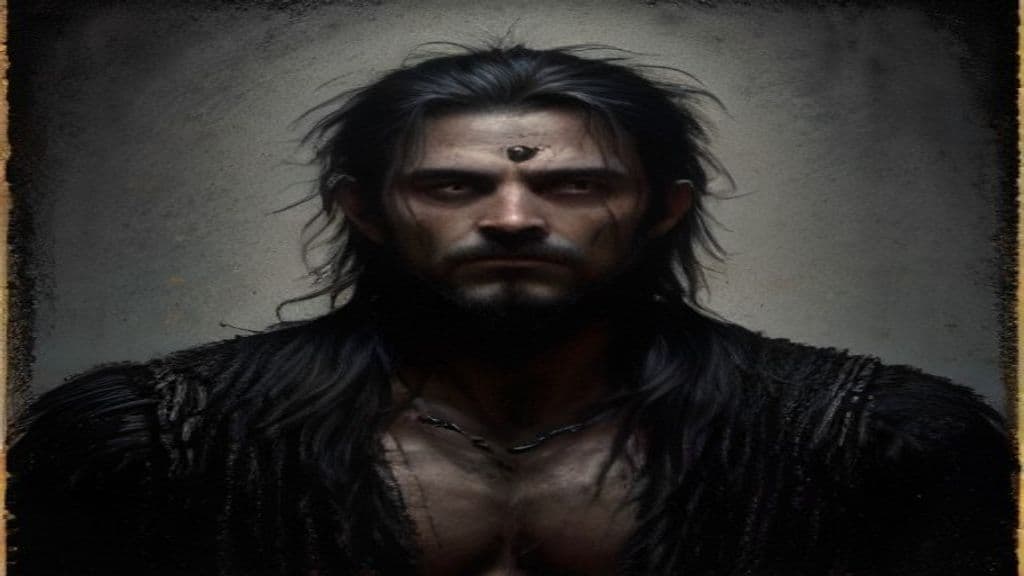
Grendel
A hostile supernatural figure from the Old English epic Beowulf who raids King Hroðgar’s mead‑hall Heorot. Presented as a night‑dwelling, exiled being variously classified with Germanic eotenas/þyrs and described in the poem as descended from the Biblical Cain; his defeat by Beowulf restores communal order.

Dragon (Long)
Long (龍, "dragon") is a pervasive cultural and artistic motif that appears in Taoist sacred-geographical contexts, Chinese literature, and modern exhibitions; the provided sources treat it as part of the broader mythic imagery present around Taoist sites and ritual scenes rather than as a single, consistently described doctrinal entity.
Eotenas
Eotenas (Old English eotenas) are a race-class of other-than-human beings attested in Anglo-Saxon poetic contexts, notably Beowulf, where they appear among a catalogue of hostile or monstrous stocks. Philological traditions link the term to Old Norse jötnar/ettins (often rendered "giants" in modern summaries), but primary Old English lines give little concrete physical description.
Hygd
Hygd is a legendary queen of the Geats attested in the Old English epic poem Beowulf. In the poem she functions as an ideal hostess and cup-bearer and as a wise political counselor who models queenly virtues and intervenes in a succession crisis following King Hygelac's death.
Green Tara
Green Tara (Tārā, Ārya Tārā, Jetsün Dölma) is a central female buddha/bodhisattva figure in Mahāyāna and especially Vajrayāna Buddhism, venerated as a liberator who grants swift assistance, removes obstacles, and functions as a meditation deity (yidam) embodied in green form.
Green monkey
A biological species of Old World monkey (Chlorocebus sabaeus) native to parts of West Africa and introduced to several Atlantic islands and Caribbean locations. Descriptions in the provided sources are zoological — covering appearance, behavior, distribution, and social structure — with no material treating it as a supernatural entity.
Gremlin
A modern machine-age folkloric creature, first attested in Royal Air Force slang in the 1920s, invoked by airmen to personify and explain inexplicable mechanical malfunctions in aircraft and other machinery. Gremlins function socially as scapegoats that reduce interpersonal blame and bolster morale in high-stress technical settings; later popularized in fiction by authors such as Roald Dahl.
Gremory
Gremory (also attested as Gemory in the supplied corpus) is named in at least one modern reference as a demon listed in demonological grimoires. The supplied materials identify the name within the Western grimoire tradition but do not provide further primary grimoire details in this dossier.
Grendel
A hostile supernatural figure from the Old English epic Beowulf who raids King Hroðgar’s mead‑hall Heorot. Presented as a night‑dwelling, exiled being variously classified with Germanic eotenas/þyrs and described in the poem as descended from the Biblical Cain; his defeat by Beowulf restores communal order.
Grey Gargoyle (Paul Pierre Duval)
A Marvel Comics supervillain whose right hand was permanently transformed into living stone by an industrial chemical accident; he can transmute touched matter to stone temporarily and can convert his whole body into living stone, acting as a recurring antagonist to superheroes such as Thor. He has at times been amplified by cosmic events (e.g., becoming Mokk during Fear Itself) and has been reverted or contained through a variety of tactical and magical interventions.
Grey Hulk
A distinct persona/alter of Bruce Banner within mainstream American comic-book continuity and adaptations, identified by grey skin in many iterations and a temperament that differs from other Hulk personae. The Grey Hulk is an internal, emergent identity that manifests during Banner's transformations rather than an external spirit or traditional folkloric being.
Grey wolf (mythology)
The Grey wolf is both the biological species Canis lupus and a mythic/symbolic animal in several Eurasian traditions. In Turkic, Mongolian, and broader Altaic contexts it is described as a sacred animal and national symbol; in other Eurasian mythic corpora wolves also appear as powerful mythic figures (e.g., Norse Fenrir) though those are distinct literary entities.
Griffin
The griffin (also griffon, gryphon) is a composite legendary creature combining the body, tail, and hind legs of a lion with the head, wings, and often taloned forelegs of an eagle. In classical and medieval Eurasian traditions it functions chiefly as a majestic guardian figure associated with rulership and the protection of treasure, and appears widely across artistic vocabularies rather than as a single codified religious being.
Griflet
Griflet is a human narrative figure of the Arthurian literary tradition, appearing across medieval romances and later retellings as a loyal young squire who rises to become a knight of the Round Table. He is a recurring martial attendant of King Arthur, notable in sources for battlefield service, frequent captures and rescues, and variant fates at the end of the cycle.
Community Record
- [1]Grendel's mother — Wikipedia. Wikipedia, article 'Grendel's mother' (summary of Beowulf material and scholarly discussion)wiki
- [2]Grendel's mother — Wikidata. Wikidata entry for Grendel's motherwiki
- [3]List of artistic depictions of Grendel's mother — Wikipedia. Wikipedia, compilation of post-medieval cultural depictions (not canonical to the poem)wiki
- [4]Archive: Mountain Goats Live at Tellus360 on 2021-09-21. Archive.org listing referenced in source list (post-medieval cultural item)other
- [5]Beowulf — supplemental summaries and references. Online summary resource cited among provided materials summarizing Beowulf narrativeother