
Hồn ma are not described as arising from a single mythic progenitor but rather as the result of particular social and circumstantial conditions surrounding a person's death. The sources emphasize that deaths that are violent, unnatural, or occur away from home increase the likelihood that a soul will fail to be transformed into an honored ancestor and instead remain in a wandering state. The doctrine therefore links the origin of hồn ma to lapses in funerary procedure, absence of proper burial or continued offerings, and broader failures of filial or communal responsibility.
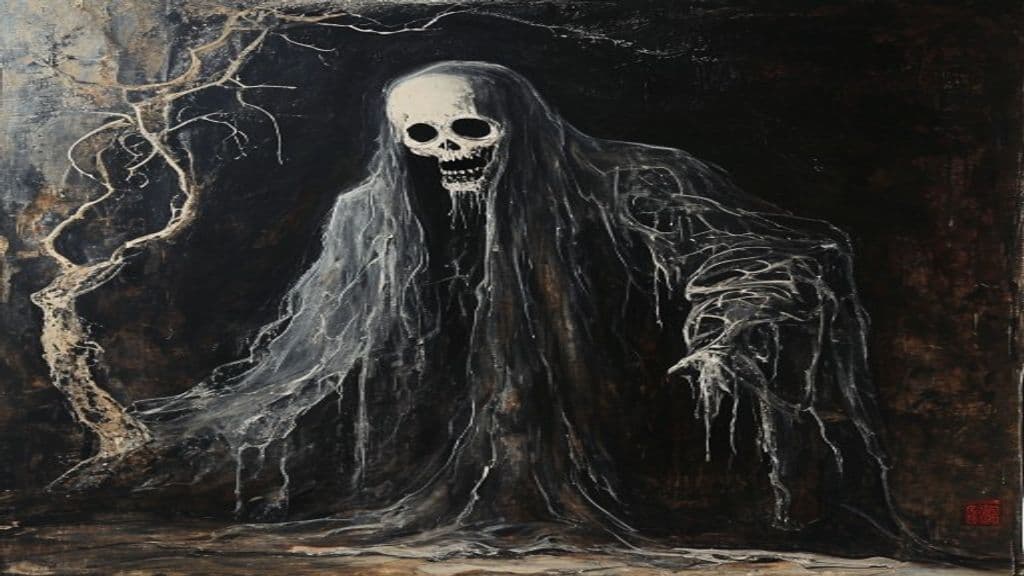
The available source material does not record a consistent canonical physical form for hồn ma. Descriptions in popular accounts and folk narratives vary, and the summarized material indicates these spirits 'take diverse forms' in stories and everyday belief rather than possessing a single fixed appearance. Because the documentary source lacks detailed visual descriptions, accounts focus on functional and relational features (a soul separated from ritual integration) rather than an agreed‑upon bodily image.
Hồn ma are believed to influence the living and daily life rather than perform cosmically transformative feats. The sources report that wandering souls can interfere with fortunes, be implicated in narratives of theft (some described as 'hungry ghosts' or 'supernatural thieves'), and affect spirit mediums and fortune‑tellers. Families consult mediums and ritual specialists to communicate with, locate, or redirect these souls; in modern history such practices have been used to search for missing soldiers. The emphasis in the material is on social and psychological agency—affecting families' ritual behavior, motivating searches, and sometimes causing nuisance or harm—rather than on a catalogue of spectacular supernatural powers.
Weaknesses
- conditionintegration through proper funerary rites, burial, and ongoing ancestor offerings
Wards
- ritualancestor worship and regular offerings (incense, prayers)
- ritualspecialist-led rites performed by spirit mediums or ritualists to make the ghost leave or to effect integration
- substanceburning incense (as part of offerings and prayer)
Bà Chúa Xứ (Lady of the Realm)
Bà Chúa Xứ, also called Chúa Xứ Thánh Mẫu, is a localized tutelary and prosperity goddess in Vietnamese folk religion centered at Vĩnh Tế village at the foot of Sam Mountain, An Giang province. She is worshipped as a protector of business, health, and the Vietnamese border and attracts pilgrimages and a major three-day festival beginning on the 23rd day of the fourth lunar month.
Cá Ông (Whale spirit / Whale God)
Cá Ông is the Vietnamese folk-religious spirit associated with large whales, venerated as a guardian of fishing communities. Coastal communities perform funerary burials for beached whales and hold festivals in the whales' honor, reflecting a protective, reciprocal relationship between fishermen and these whale-spirits.
Ma (Vietnamese ghost)
Ma are wandering souls or spirits of the dead in Vietnamese cultural belief who, depending on ritual treatment, may become protective ancestors or remain restless ghosts that affect the living's luck and daily life. They are embedded in practices of ancestor worship, domestic offerings, and the work of spirit mediums.
Ma Da (ma đói) — Vietnamese "hungry ghost"
The supplied source corpus does not contain ethnographic or textual descriptions of Ma Da (ma đói) in Vietnamese tradition. Only two relevant fragments appear: the Vietnamese name for the Nīlakaṇṭha Dhāraṇī (Chú đại bi / Đại bi tâm đà la ni) and a note that auspicious/inauspicious days are recognized in Vietnam. No direct sourced information about ma đói’s attributes, rituals, or role is present in the provided materials.
Mụ bà (Mười hai Bà mụ)
A collective of twelve female tutelary figures in Vietnamese folk religion who act as midwives and household guardians of newborns, responsible for teaching infants early life skills and auspicious traits. They are ritually acknowledged in some regions at a special ceremony when a baby is one month old.
Thánh Gióng
Thánh Gióng is a legendary Vietnamese culture-hero and sainted warrior celebrated as a symbol of national courage and patriotism. Remembered as one of the canonical 'Four Immortals' of Vietnamese spirit, he functions in folk religion and public memory as a miraculous martial figure honored in festivals and communal veneration.
Thánh Trần
Vietnamese venerated ancestor spirit and national hero associated with bravery, loyalty, protection, and national pride. (Note: - Power tier: Minor Spirit (as it is an ancestor spirit and not a deity) - Abilities: add that these qualities are believed to be bestowed upon people through his worship, such as protection from harm)
Ông Trời
In Vietnamese tradition, Ông Trời is a high-ranking deity associated with the divine realm and later merged with the Jade Emperor. (Note: 1. The power tier should be Primordial, not Ancient, since Ông Trời is described as one of the most important gods in Vietnamese cosmology. 2. Add information about Ông Trời's appearance, abilities, s)
Ông Táo (Kitchen God)
Ông Táo is the Vietnamese household/kitchen deity who serves as the family's advocate before higher gods and as an emissary between heaven and earth, especially salient in New Year (Tết) ritual contexts.
Hārūn ibn ʿImrān (Aaron in Islam)
Hārūn ibn ʿImrān is a prophetic figure in Islamic scripture and tradition, presented as the brother and companion of Mūsā (Moses). The Qurʾān and later Muslim commentators portray him as an eloquent, divinely guided leader who was entrusted with authority among the Israelites and who is commemorated in tomb‑site traditions and Miʿrāj narratives.
Hīnakipākau-o-te-rupe
An ancestral voyaging canoe in Māori tradition, used by the first Polynesian migrants to settle New Zealand. (Note: 1. The power tier should be Primordial, not Greater, since it's described as one of the great ocean-going canoes used in the migrations that settled New Zealand. 2. There is no information about its a)
Iah
Iah (Ancient Egyptian jꜥḥ, Coptic ⲟⲟϩ) is the personification of the Moon in ancient Egyptian religion. Initially an independent lunar deity attested from the Middle Kingdom, Iah was later increasingly identified with other lunar and related gods such as Thoth (Djehuty), Khonsu, and at times assimilated with Osiris.
Community Record
- [1]Ghosts in Vietnamese culture (Hồn ma / wandering spirits). Wikipedia, 'Ghosts in Vietnamese culture' (summary of beliefs about hồn ma, ritual integration, spirits and mediums).wiki