Sources present Hypate as one member of a small triad of Muses associated specifically with the lyre, worshipped at Delphi. This triad (Hypate, Nete, Mese) is treated in some accounts as comparable to the older triad Aoide, Melete, Mneme, and in alternative local traditions the three are named Cephisso, Apollonis, and Borysthenis and portrayed as daughters of Apollo. These variant identifications indicate that Hypate's placement and genealogy vary across sources and local cultic frames rather than a single fixed birth-narrative.
No surviving iconographic or bodily description of Hypate is preserved in the sources consulted. Attestations emphasize her function and name (which also labels a musical pitch/string) and her cultic placement at Delphi rather than a visual depiction.
Attested functions are literary and technical: Hypate is named as a Muse associated with the lyre and, as a musical term, denotes the first (lowest) note of the first tetrachord and the tallest string of the lyre. In Plutarch's harmonic cosmology (as reported in the sources), Hypate is assigned care of the fixed stars within a tripartite division of the cosmos. Beyond these role‑assignments in musical theory and symbolic cosmology, the sources do not describe behaviors such as interaction with individuals, possession, or malign action.
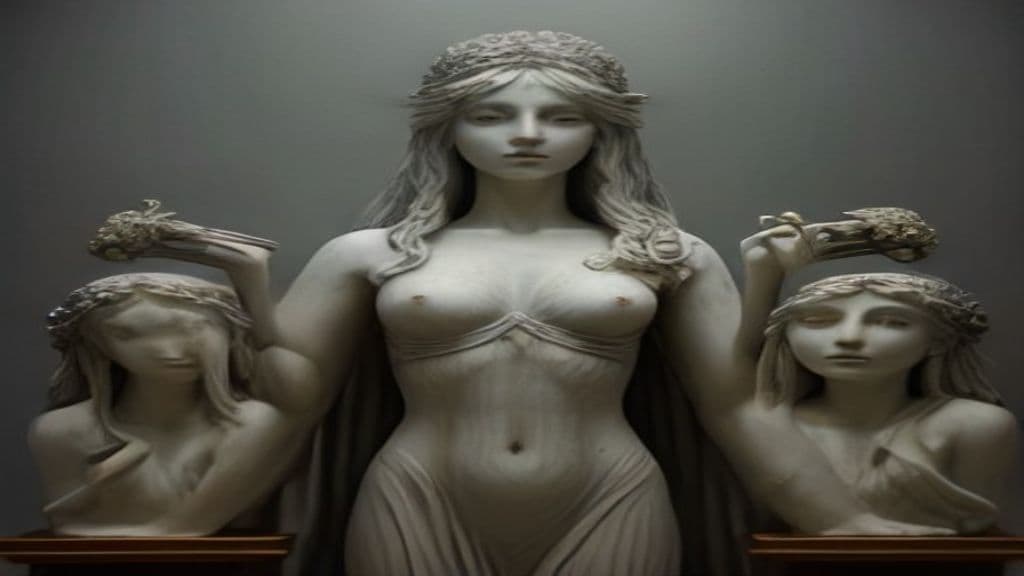
Cephisso
Cephisso is attested in classical-era lists as one of a triad of Muses described in some local Greek traditions as daughters of Apollo and associated symbolically with lyre-string names. She appears in brief encyclopedic and mythographic notices rather than in extended mythic narratives.
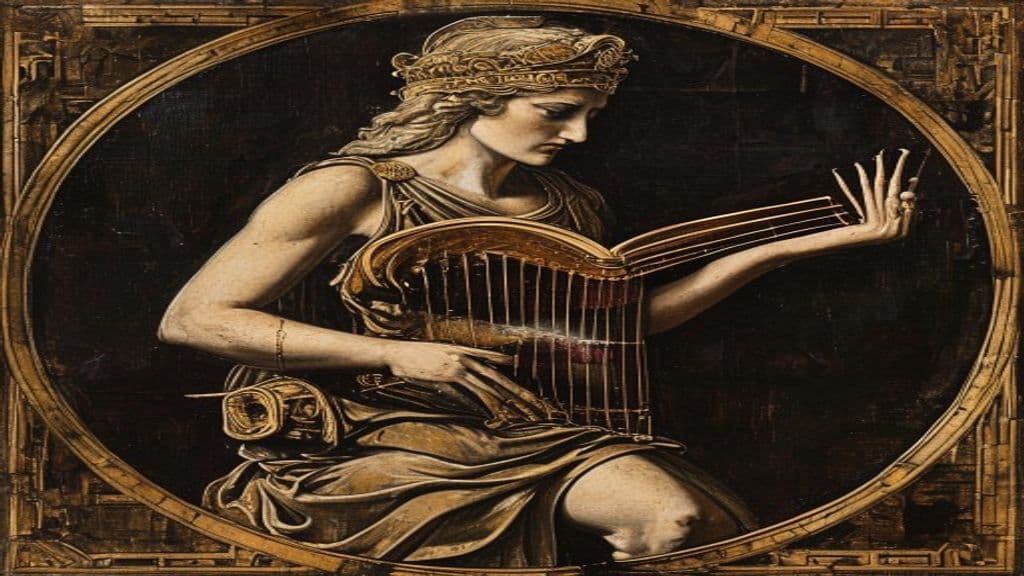
Apollonis
Apollonis is an Ancient Greek name associated both with a local Muse (one of the Apollonides, daughters of Apollo worshipped at Delphi) and with a Hellenistic royal woman, Apollonis of Cyzicus, who received posthumous civic cult and a temple in the 2nd century BCE.

Borysthenis
Borysthenis (Ancient Greek Βορυσθενίς) is a theonym recorded in Greek discourse with two distinct usages: (1) as the name of one of a localized triad of Muses described as daughters of Apollo (sisters Apollonis and Cephisso), and (2) as an epithet applied to the Scythian earth-and-water goddess Api, indicating her status as 'daughter of the god of the Borysthenēs (Dnipro) river.'
Community Record
- [1]Hypate — Wikipedia. Wikipedia contributors. "Hypate." Wikipedia, The Free Encyclopedia.wiki
- [2]Hypate — Wikidata. Wikidata entry Q5957283.wiki
- [3]The Greek Aulos; a study of its mechanism and of its relation to the modal system of ancient Greek music. Schlesinger, Kathleen. The Greek Aulos; a study of its mechanism and of its relation to the modal system of ancient Greek music. (Archive.org)academic
- [4]Plutarch (summary as cited). Summary of Plutarch's harmonic cosmology assigning Hypate care of the fixed stars (reported in the Wikipedia entry on Hypate).literary