
In Mesopotamian mythic texts the Igigi are presented as a younger rank of heavenly beings who serve the senior gods (Anunnaki). In the Atrahasis narrative they are assigned manual labor—digging irrigation or watercourses—for the higher deities. When the work becomes intolerable they protest and rebel; the myth frames their rebellion as a problem within the divine household that ultimately motivates the creation of humankind as laborers in their stead. The name is attested in Sumerian spellings (i-gi4-gi4; later í-gì-gì) and scribal orthography allows numerical wordplay (additive readings to 7 or multiplicative readings to 600), but the ultimate lexical origin is recorded as unknown in the supplied sources.
Surviving ancient texts summarized in the supplied sources do not provide a consistent corporeal or detailed physical description of individual Igigi; they are described functionally as laboring heavenly beings rather than pictured in a standard physical form. Later modern fictional works sometimes reimagine Igigi as monstrous or corporeal agents, but such portrayals are modern creative inventions and are not attested in the ancient mythic summaries provided.
In the primary narrative context cited (Atrahasis) the Igigi's documented capacities are social and functional: they perform manual labor (notably digging irrigation/watercourses) on behalf of higher gods and are capable of collective action, including protesting and rebelling against imposed toil (the Atrahasis summary records them 'setting fire to their tools and surrounding Enlil's great house by night'). The supplied materials do not record a catalog of magical powers, possession-magic, or other supernatural abilities for the Igigi in the ancient attestations; more active predatory or parasitic capabilities appear only in later fictional reinterpretations.
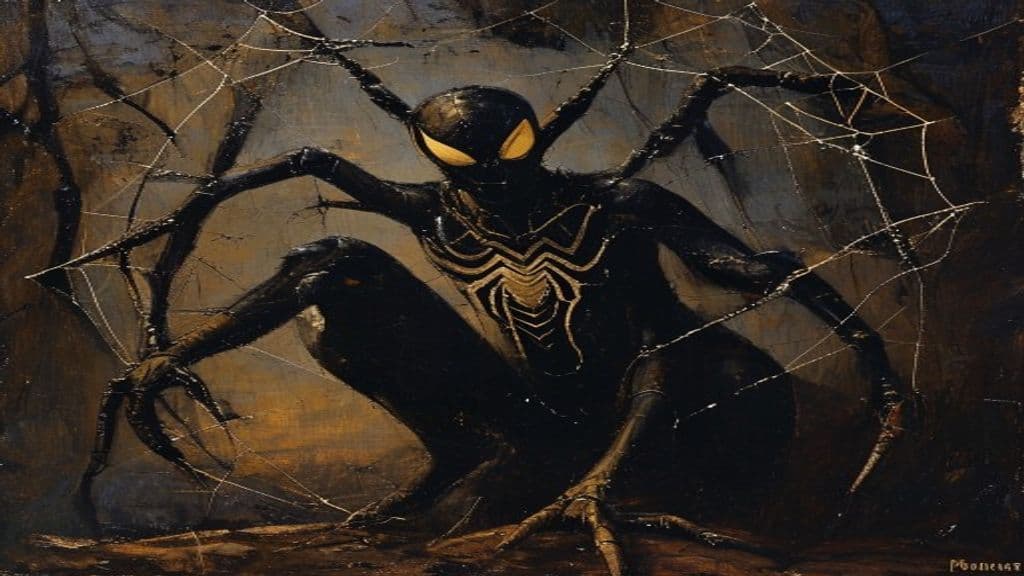
Anansi
The spider trickster god of Akan folklore — cunning, mischievous, and wise. Keeper of stories and teacher of human beings, brought through the slave trade into Caribbean and African-American tradition.
Anansi
The spider trickster god of Akan folklore — cunning, mischievous, and wise. Keeper of stories and teacher of human beings, brought through the slave trade into Caribbean and African-American tradition.
Anansi
The spider trickster god of Akan folklore — cunning, mischievous, and wise. Keeper of stories and teacher of human beings, brought through the slave trade into Caribbean and African-American tradition.
Abu
Abu is a poorly understood Mesopotamian god attested in modern reference summaries. Secondary literature tentatively links him with vegetation and snakes and records that he was often paired with a deity written gu2-la2, but primary details about his cult, iconography, and myths are lacking in the cited sources.
Alammuš
Alammuš is a Mesopotamian deity who functioned as the sukkal (attendant or court-official deity) of the moon god Nanna (Akkadian Sin). He is attested in offering lists, god-lists, oath formulas, legal and seal texts, and in Mesopotamian astronomical lists where he is paired with Ningublaga as the 'Little Twins.'
Alla
Alla (Alla‑gula) is a Mesopotamian underworld‑associated deity attested in Ur III and Old Babylonian texts. He functions in sources as the sukkal (attendant) of Ningishzida and is grouped with lamentation literature’s ‘dying gods’; many details of his character remain fragmentary and debated.
Amasagnudi
Amasagnudi is a late-attested Mesopotamian divine attendant (nin-sukkal) associated with the sky-god Anu. She appears primarily in lexical and god-list texts and was integrated into the Seleucid-period reorganization of Uruk's pantheon, where she is paired with the male attendant Papsukkal.
Antu
Antu (Antum) is a Mesopotamian goddess traditionally regarded as the feminine counterpart and spouse of the sky god Anu. Attestations range from Early Bronze Age references to a marked elevation of her cultic profile in Achaemenid and Seleucid-period Uruk, and in some late theological texts she is equated with earth or primordial and underworld figures.
Asalluhi
Asalluhi (also Asarluhi, Asarluhe, Asaralimnuna, Asaralim, Asalim, Asarnuna) is a Mesopotamian deity primarily associated with incantations and exorcism. He is described in some sources as a son of the god Enki and is likely identical with an earlier figure called Asar attested from the third millennium BCE.
Ea (Enki)
Enki (Akkadian Ea) is a major Mesopotamian deity associated with wisdom, crafts, fresh subterranean waters (the Abzû/Apsu), magic, and incantations. He functions as a benefactor of humankind and rulers, a source of ritual and healing authority, and the divine ruler of the subterranean freshwater domain called the Abzû.
Edimmu
In Mesopotamian religious tradition the edimmu are a type of utukku — restless, wind-like spirits of the improperly buried who can be vengeful, possessive, and life-draining; later popular media reinterprets them as vampire- or undead-styled monsters in games and fiction.
Erragal
Erragal (also Errakal, Errakalkal, Errakar, Erkal) is a Mesopotamian deity attested from the Isin‑Larsa through Neo‑Babylonian periods. He is polyvalent in function: identified with a star in the MUL.APIN tradition and invoked apotropaically in incantation series, associated in some texts with storm/destructive power and, in some contexts, linked to the underworld; scholarly opinion differs on whether he is distinct from, derived from, or an epithet of Erra.
Gibil (Girra)
Gibil (Akkadian Girra) is a Mesopotamian deity personifying fire in its constructive (furnaces, metallurgy, ritual purification) and destructive (lightning-set conflagrations, burning fields) aspects. He is attested in city cults (Shuruppak, Eridu, Nippur) and invoked in ritual and incantation literature (Maqlû, Šurpu, namburbi) for purification and counter-magic purposes.
Ilaba
Ilaba is a Mesopotamian deity attested from the Sargonic (Akkadian) period as the city god of Akkad and a tutelary war-god for Akkadian rulers. He is associated with a mace as his emblem, invoked in royal inscriptions, treaties, curse-formulae and continued to appear in post‑Akkadian cultic contexts.
Imzuanna
Imzuanna (also attested as Ninzuanna) is a Mesopotamian city goddess attested from the Ur III through Neo‑Babylonian periods. She functions mainly as the consort of Marad's tutelary god Lugal‑Marada, appears in offering lists, lamentation literature, and ritual corpora (notably Šurpu), and is otherwise sparsely attested in the surviving record.
Community Record
- [1]Igigi — Wikipedia. Wikipedia contributors. 'Igigi.' Wikipedia, The Free Encyclopedia. https://en.wikipedia.org/wiki/Igigiwiki
- [2]Igigi — Wikidata. Wikidata entry Q557735 'Igigi'. http://www.wikidata.org/entity/Q557735wiki
- [3]Archive items referencing modern uses (examples included in supplied materials). Archive.org item cited in supplied materials (modern/creative reuse examples). https://archive.org/details/youtube-NjN7AUsf2o8other