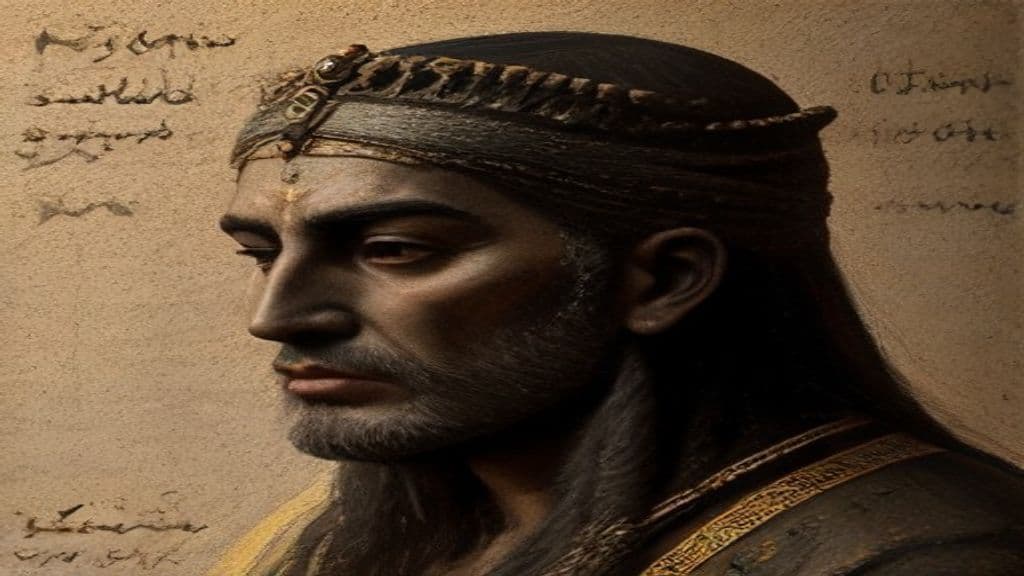
No mythic birth narrative for Ilaba survives in the cited sources. Ilaba first appears in the textual record in the Sargonic period where he functions as the city god of Akkad and as a personal/tutelary deity of rulers such as Sargon of Akkad; later rulers including Naram‑Sin and Shar‑Kali‑Sharri invoke him in inscriptions, treaties, curse-formulae and year names (for example a year name of Shar‑Kali‑Sharri recording the building of a temple to Ilaba in Babylon). Scholarly discussion in the sources debates whether Ilaba represented an independent deity or a deified ancestor/clan protector, but the primary inscriptional evidence consistently presents him as a divine figure tied to kingship and warfare.
The sources do not preserve a detailed anthropomorphic portrait of Ilaba; the consistent attested visual/functional marker is his association with a mace, reflecting his warlike character. Texts describe him as armed with a mace and present him in military and royal contexts; some inscriptions link him with Annunitum in cultic/ritual contexts, but no iconographic description beyond the mace and his martial associations is recorded in the provided materials. There are no pre‑Sargonic visual attestations in the cited sources.
Cuneiform inscriptions and later god lists portray Ilaba as a warlike tutelary deity of Akkadian rulers: Sargon names Ilaba as his personal god; Naram‑Sin and other rulers invoke him in conquest narratives, treaties, and curse‑formulas. An inscription claims Ilaba’s weapon enabled triumphs in battle (one text says Ilaba’s weapon let his devotee triumph over fifty rulers), and another passage reports that Ilaba received his mace from Enlil, indicating divine investiture. Ilaba is invoked in contexts asserting territorial/imperial claims and in formulas requiring conquered peoples to perform service for his cult. Beyond these royal and military functions, later texts record continued cultic attention (offerings, temple foundations, and clergy) in various cities.

Enlil
Enlil is a principal deity of ancient Mesopotamia, originally preeminent in the Sumerian pantheon as a supreme lord who orders the world by separating heaven (An) from earth (Ki). His principal cult center was the E-kur temple at Nippur, and his cult practices focused on daily offerings and priestly care of his cult statue; mythic traditions portray him as both benefactor and punisher in the administration of cosmic and social order.
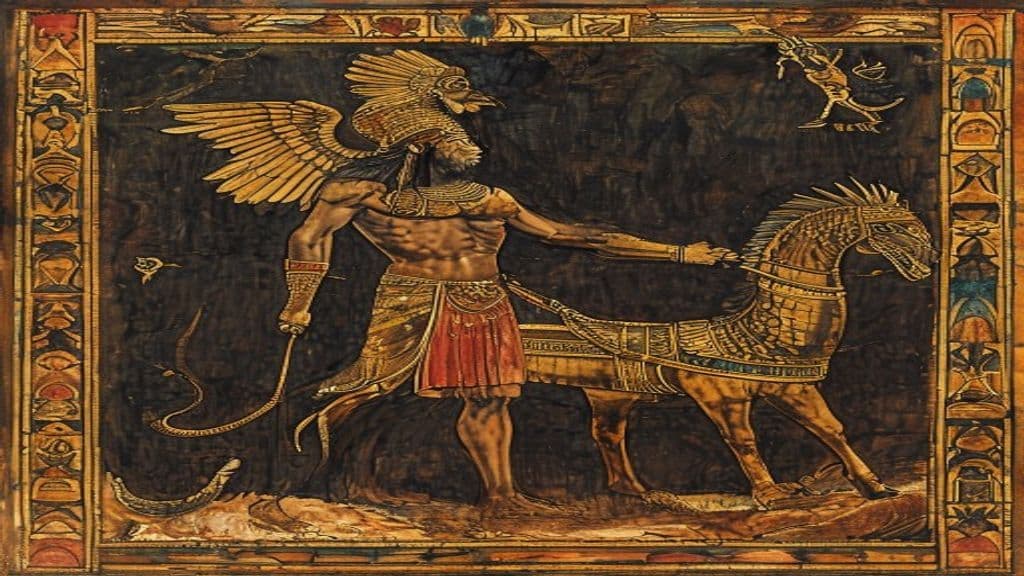
Ninurta
Ninurta is a major deity of ancient Mesopotamia (Sumerian–Akkadian–Assyrian–Babylonian) whose roles include agriculture, healing/exorcism, law and scribal authority, and martial champion of the gods. He is attested from the mid-third millennium BC onward and was venerated at city cult-centers such as Nippur (Eshumesha), Girsu/Lagash (as Ninĝirsu), and later in Assyrian Kalhu.
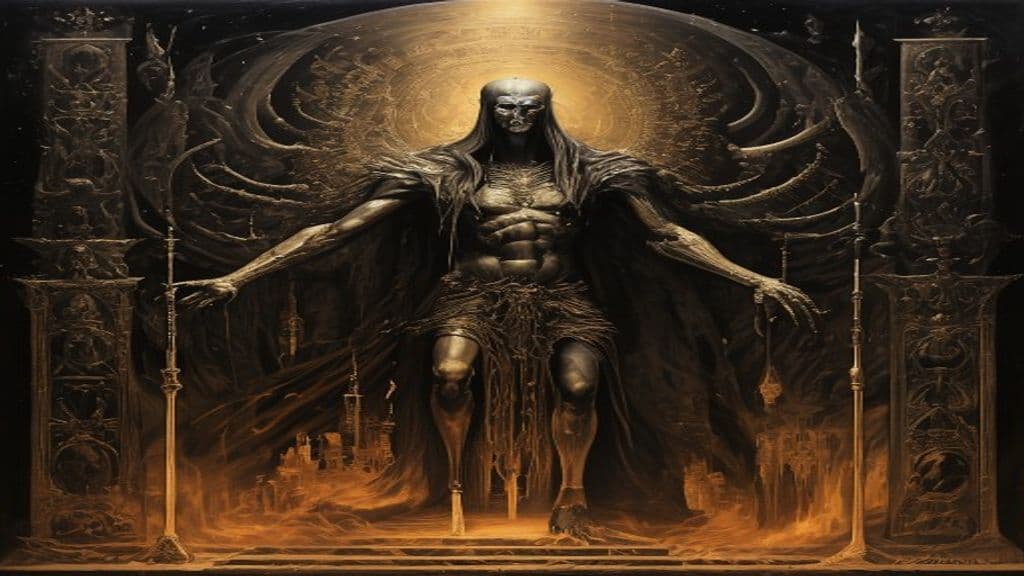
Nergal
Nergal is a major Mesopotamian deity associated with war, disease, inflicted death, and rulership of the underworld. Principal cult center at Kutha (temple E‑Meslam), he appears in hymns and myths (e.g., the Epic of Erra, "Nergal and Ereshkigal") and is sometimes equated with or called Erra or Meslamtaea.

Shamash (Utu)
Shamash (Akkadian šamaš; Sumerian Utu) is the ancient Mesopotamian sun god, a principal deity responsible for the visible sun and for juridical, protective, and divinatory functions. He is venerated especially at Sippar and Larsa, appears in major myths as an ally of heroes, and is regarded as the divine witness whose sight underwrites justice and truth.
Abu
Abu is a poorly understood Mesopotamian god attested in modern reference summaries. Secondary literature tentatively links him with vegetation and snakes and records that he was often paired with a deity written gu2-la2, but primary details about his cult, iconography, and myths are lacking in the cited sources.
Alammuš
Alammuš is a Mesopotamian deity who functioned as the sukkal (attendant or court-official deity) of the moon god Nanna (Akkadian Sin). He is attested in offering lists, god-lists, oath formulas, legal and seal texts, and in Mesopotamian astronomical lists where he is paired with Ningublaga as the 'Little Twins.'
Alla
Alla (Alla‑gula) is a Mesopotamian underworld‑associated deity attested in Ur III and Old Babylonian texts. He functions in sources as the sukkal (attendant) of Ningishzida and is grouped with lamentation literature’s ‘dying gods’; many details of his character remain fragmentary and debated.
Amasagnudi
Amasagnudi is a late-attested Mesopotamian divine attendant (nin-sukkal) associated with the sky-god Anu. She appears primarily in lexical and god-list texts and was integrated into the Seleucid-period reorganization of Uruk's pantheon, where she is paired with the male attendant Papsukkal.
Antu
Antu (Antum) is a Mesopotamian goddess traditionally regarded as the feminine counterpart and spouse of the sky god Anu. Attestations range from Early Bronze Age references to a marked elevation of her cultic profile in Achaemenid and Seleucid-period Uruk, and in some late theological texts she is equated with earth or primordial and underworld figures.
Asalluhi
Asalluhi (also Asarluhi, Asarluhe, Asaralimnuna, Asaralim, Asalim, Asarnuna) is a Mesopotamian deity primarily associated with incantations and exorcism. He is described in some sources as a son of the god Enki and is likely identical with an earlier figure called Asar attested from the third millennium BCE.
Ea (Enki)
Enki (Akkadian Ea) is a major Mesopotamian deity associated with wisdom, crafts, fresh subterranean waters (the Abzû/Apsu), magic, and incantations. He functions as a benefactor of humankind and rulers, a source of ritual and healing authority, and the divine ruler of the subterranean freshwater domain called the Abzû.
Edimmu
In Mesopotamian religious tradition the edimmu are a type of utukku — restless, wind-like spirits of the improperly buried who can be vengeful, possessive, and life-draining; later popular media reinterprets them as vampire- or undead-styled monsters in games and fiction.
Erragal
Erragal (also Errakal, Errakalkal, Errakar, Erkal) is a Mesopotamian deity attested from the Isin‑Larsa through Neo‑Babylonian periods. He is polyvalent in function: identified with a star in the MUL.APIN tradition and invoked apotropaically in incantation series, associated in some texts with storm/destructive power and, in some contexts, linked to the underworld; scholarly opinion differs on whether he is distinct from, derived from, or an epithet of Erra.
Gibil (Girra)
Gibil (Akkadian Girra) is a Mesopotamian deity personifying fire in its constructive (furnaces, metallurgy, ritual purification) and destructive (lightning-set conflagrations, burning fields) aspects. He is attested in city cults (Shuruppak, Eridu, Nippur) and invoked in ritual and incantation literature (Maqlû, Šurpu, namburbi) for purification and counter-magic purposes.
Igigi
A class of younger heavenly beings in ancient Mesopotamian myth, the Igigi are attested chiefly as a subordinate, laboring cohort of gods contrasted with the higher-ranking Anunnaki; in the Atrahasis narrative they perform manual tasks for senior deities and at one point rebel from forced toil. The name is attested in Sumerian orthography (i-gi4-gi4, later í-gì-gì) and its ultimate lexical origin is unknown, though scribal spellings invite numerical wordplay.
Imzuanna
Imzuanna (also attested as Ninzuanna) is a Mesopotamian city goddess attested from the Ur III through Neo‑Babylonian periods. She functions mainly as the consort of Marad's tutelary god Lugal‑Marada, appears in offering lists, lamentation literature, and ritual corpora (notably Šurpu), and is otherwise sparsely attested in the surviving record.
Community Record
- [1]Ilaba — Wikipedia. Ilaba (Wikipedia entry); summarizes cuneiform writing, Akkadian-period attestations, royal associations, mace attribute, temple foundations, and scholarly debate.wiki
- [2]Ilaba — Wikidata. Wikidata entry for Ilaba, indexing identifiers and linked statements corresponding to encyclopedia summaries.wiki
- [3]Research notes and compiled summaries (provided). Compiled research notes supplied with citations to Sargonic and post‑Sargonic inscriptions, year names (Shar‑Kali‑Sharri), Susa offering texts, and secondary scholarly discussion (e.g., Åke W. Sjöberg's reading, comparisons with Ugaritic Ilib, and remarks by Andrew R. George and Paul‑Alain Beaulieu).other