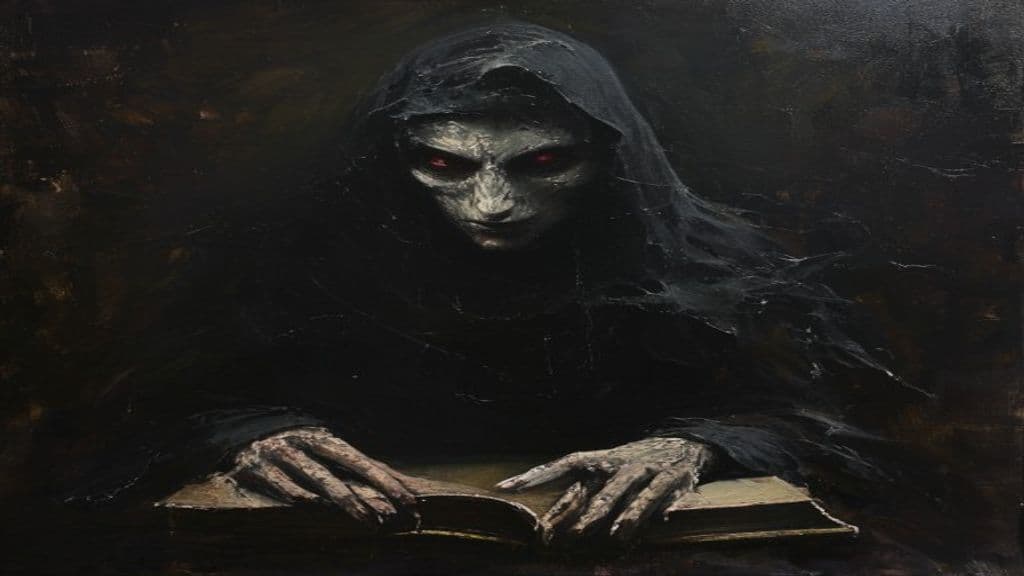
No origin story for Jakhin is present in the provided source. The archival fragment contains no mythological material or narratives relating to this name.
No physical description of Jakhin is present in the provided source.
No information about abilities, powers, or behaviors of Jakhin is present in the provided source.
Jaddua
Jaddua is presented in post‑exilic Jewish sources as a human high priest (kohen gadol) of Jerusalem who exercised top priestly authority, adjudicated priestly discipline, and—according to later historiographical traditions—received a divine dream that shaped a communal ritual response at the approach of Alexander the Great.
Jade
Jade is a material and cultural concept referring to two distinct groups of ornamental rocks—nephrite and jadeite—valued across many societies (not a supernatural being). It has deep historical, ritual, and symbolic significance especially in East Asia and Mesoamerica, and carries folk associations with health and social status.
Jadis (the White Witch)
Jadis, commonly called the White Witch, is a fictional antagonist created by C. S. Lewis who rules Narnia as a sorceress-queen and whose magic enforces the prolonged 'Hundred Years Winter.' She is the principal opposing force in The Lion, the Witch and the Wardrobe (1950) and is a central figure in The Magician's Nephew (1955).
Jagaddhātrī
Jagaddhātrī is a name used in Bengali cultural production and, in one classificatory source, identified as an aspect of the Hindu goddess Durga. In the supplied materials the term appears in bibliographic records of Bengali-language books and as the title of a contemporary Bengali television series; the sources do not provide ritual, iconographic, or narrative detail about the figure.
Jah (Yah)
Jah or Yah (Hebrew: יָהּ, Yāh) is the short form of the Tetragrammaton (יהוה, YHWH), the personal name of the God of Israel (commonly vocalized as Yahweh). It functions as an abbreviated theonym appearing in Hebrew scripture and liturgical formulas (notably hallelujah) and is used in prayer, praise, and religious study rather than as an independent folkloric being.
Jahangirnama (Qasim Madih Harawi)
Epic poem written in Persian, detailing the story of Jahangir son of Rostam, composed in Herat and published in Mumbai. (Note: - Power tier: Primordial (given its cosmic scope and ancient origin) - Origin story: The source material provides the information on its origin, stating it was composed in Herat. - Appearance: Not app)
Jambavan
Jambavan is a long-lived rājā of the bears in Hindu epic tradition who acts as warrior, strategist, and wise elder; he aids avatars of Vishnu (notably Rama and Krishna), appears across multiple yugas, and is associated with narrative episodes such as the Kishkindha counsel to Hanuman and the Syamantaka gem combat with Krishna.
James Bartley (whale story)
A late-19th-century maritime wonder tale circulated in newspapers claiming a whaler named James Bartley was swallowed whole by a sperm whale and later found alive in its stomach; later investigation and archival evidence cast significant doubt on the historicity of the incident. The story functions culturally as a 'modern Jonah' sea yarn rather than as an account of a supernatural being.
Jan Turpin
No folkloric supernatural entity named Jan Turpin is attested in the provided sources. The corpus contains two human-name references (Jordan Turpin; Benny Turpin) and a single terse Wikidata label linking a phrase 'giant of Nieuwpoort, Belgium' to an item associated with the label; these materials do not establish a coherent folkloric figure.
Janaka
Janaka is a legendary and dynastic king of Videha (capital Mithila) who functions in Indic sources as an exemplar of ideal kingship and spiritual realization—a ruler who combines political authority, patronage of Vedic learning, and non-attachment. The name is used both as a regnal title for Videha's kings and as the personal/regnal name of the famous monarch who is the adoptive father of Sītā in the Rāmāyaṇa.
Jangsanbeom (Jangsan tiger / Jangsan spirit)
The name Jangsanbeom (often rendered in English as 'Jangsan tiger' or 'Jangsan spirit') appears in a contemporary South Korean cultural product (the 2017 film The Mimic). The single provided source references only the film and does not supply traditional folkloric details about the entity; further research into primary folkloric materials is required to determine whether Jangsanbeom is an established traditional being or a modern invention for the film.
Jangseung (Korean tradition)
A physical object serving as a guardian or tutelary deity for Korean villages, typically made of wood and placed at village edges. (Note: * Power tier: Minor Spirit (a Greater entity would have more significant abilities) * Abilities: The jangseung is not believed to ward off evil spirits/demons, but rather serves as a deterrent and a r)
Community Record
- [1]CIA Reading Room document: cia-rdp91-00403r000200720030-3 (archival fragment). CIA Reading Room. Document identifier cia-rdp91-00403r000200720030-3. Archival bibliographic/technical fragment. Accessed via Archive.org.other