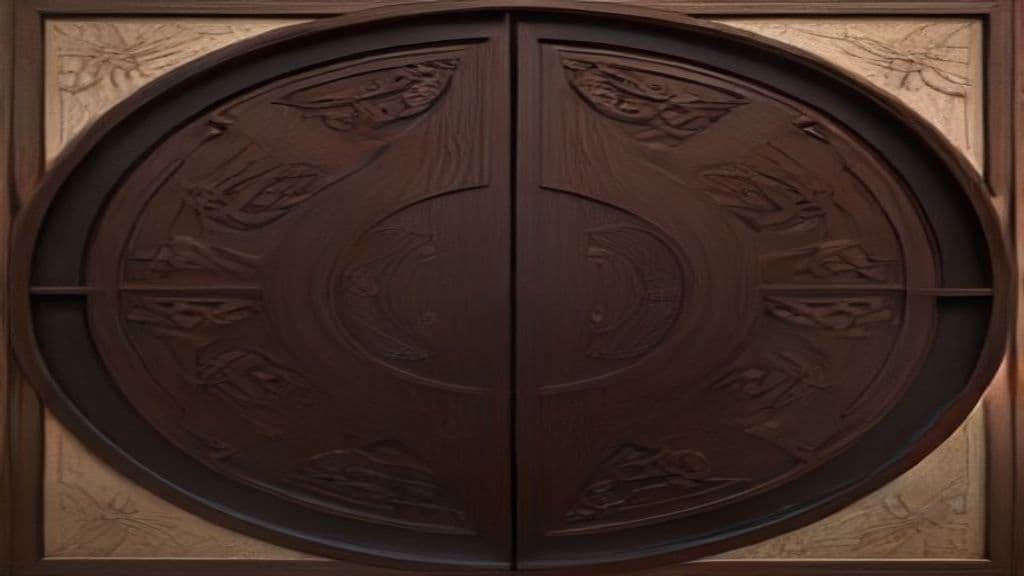
Jiaotu does not have a recorded classical birth narrative in the supplied sources. Instead, he appears as one named member in the conventional listing of the Nine Sons of the Dragon — a classificatory motif in Chinese mythic-symbolic practice whereby each son is attributed particular temperaments and suited decorative uses. The available materials present Jiaotu as part of this repertory rather than as a biographical offspring with a single originating text (Wikidata; BlackDrago; ninesons.txt).
The sources do not record a fixed biological description; instead Jiaotu's depiction is primarily functional and architectural. A traditional simile recorded in a short folklore list describes him as "as tight-lipped as a mussel or a snail," and that image is carved on doors. Other accounts emphasize that his image is used in door and threshold ornamentation rather than providing a standard corporeal portrait (ninesons.txt; BlackDrago; The Nine Dragon Scroll).
Rather than documented supernatural feats, sources attribute character-associations and symbolic functions to Jiaotu: secretive and self-contained temperament ("tight-lipped"), reclusive disposition described as living behind high walls and refusing to leave or come to the door (modern site summaries), and an association with guarding thresholds through door-carving motifs. Secondary modern glosses describe him as "arrogant, but fiercely loyal to the few he considers under his protection," presented as character-association used in contemporary retellings rather than as recorded magical powers in primary traditional texts (ninesons.txt; BlackDrago; Made by Meghan).
Weaknesses
None recorded.
Wards
- symboldoor carving of Jiaotu
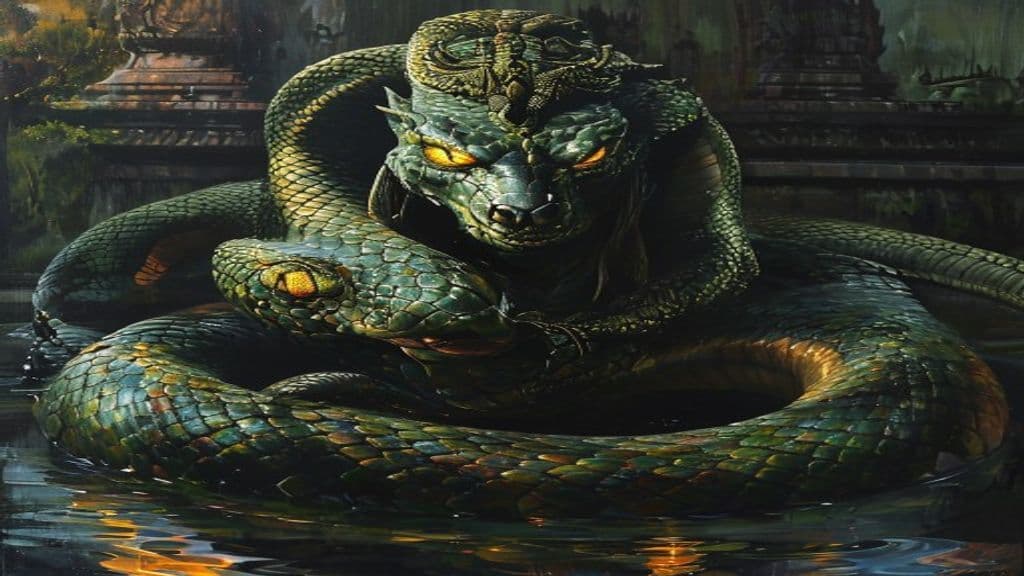
Naga
Divine serpent beings of Hindu, Buddhist, and Jain cosmology — powerful guardians of water, earth, and underground treasures. Revered as deities in South and Southeast Asia.
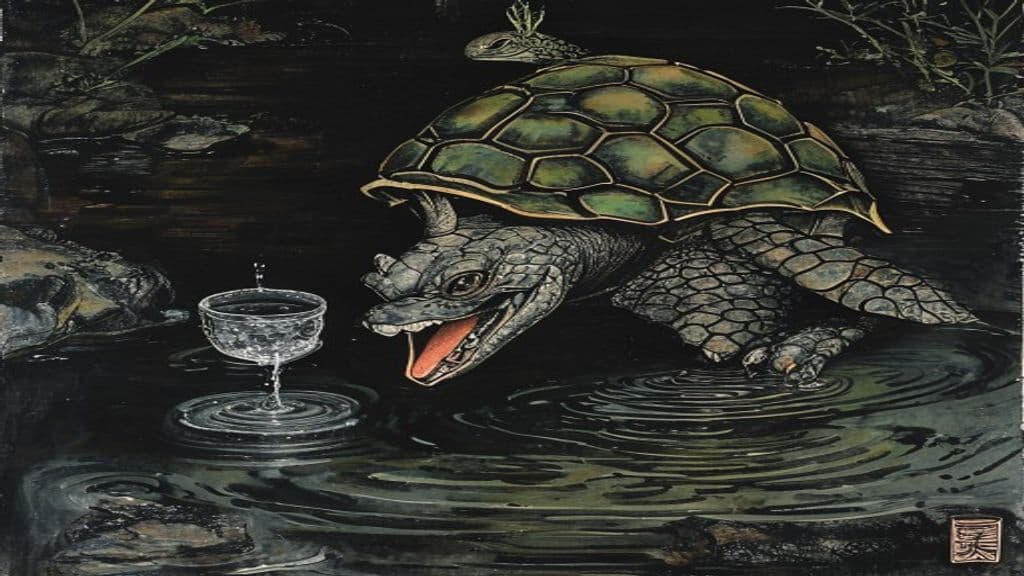
Kappa
A water-dwelling imp of Japanese folklore with a bowl of water on its head. Mischievous but bound by strict codes of politeness; dangerous near rivers.
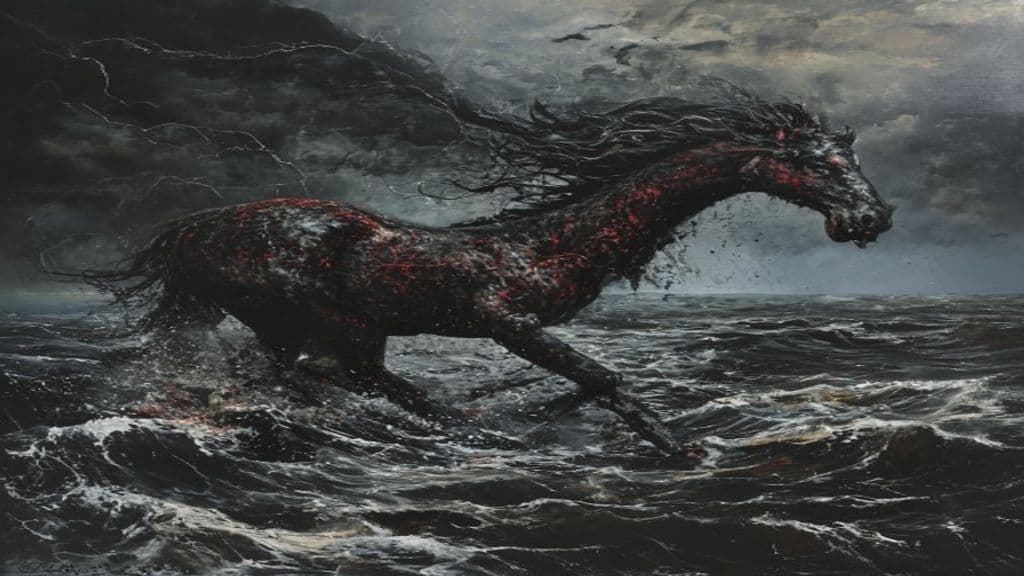
Nuckelavee
The most terrifying creature of Orcadian folklore — a skinless, horse-headed demon of the sea whose breath spreads plague and whose presence causes crops to wither. It cannot cross fresh water.
Nian (Year Beast)
A folkloric monstrous beast in modern Chinese popular accounts that is said to emerge annually at the turn of the year to raid villages. The legend functions as an etiological explanation for many Chinese New Year customs—fireworks, red decorations, loud noises, and the lion dance—though explicit references to a named creature called nian in older textual sources are scarce.
Nü gui (female ghost)
A concept in Chinese and comparative folklore of a dead person—often referenced as a female in English-language discussions—who returns after an unjust, cruel, or unnatural death or after being denied proper funerary rites, remaining an 'unhappy' or vengeful spirit that may afflict the living.
Jhakar / Phansigar (no attestation as supernatural being)
The names 'Jhakar' (and variants like 'Jhakari') appear in available sources as toponyms and a personal/surname in Indian records; the supplied materials contain no folkloric or ethnographic attestation of a forest or guardian spirit called Jhakar or Phansigar. This entry documents what the sources do and notes the absence of any supernatural description.
Jhary-a-Conel
Jhary-a-Conel is a recurring companion figure in Michael Moorcock’s Eternal Champion multiverse, acting as advisor, intermediary and aide to champions (notably Corum). He travels across planes and times with champions and is commonly accompanied by a winged cat named Whiskers.
Jherek Carnelian
Jherek Carnelian is a fictional character created by Michael Moorcock who appears in the Dancers at the End of Time sequence. He is cited in connection with the novel The End of All Songs and identified on at least one edition as the subject of an adventure in that volume.
Jhākri
Jhākri is the Nepali term for a shamanic practitioner or diviner found among several Himalayan ethnic groups (notably Tamang, Gurung, Magar) and in adjacent Indian regions (Sikkim, West Bengal). In the documented sources Jhākri are human ritual specialists who may act as channels or mediums (dhaamee) for Hindu gods or goddesses to provide answers and solutions to devotees.
Jiangshi (hopping corpse)
A jiangshi (jiāngshī, 僵尸) is a reanimated human corpse in Chinese popular belief and media that moves with a stiff, hopping gait and is commonly depicted in modern sources as subject to control or containment by Taoist priests using talismans and ritual implements. The contemporary image is heavily shaped by Hong Kong cinema, which standardizes visual motifs (Qing robes, yellow fulu, glutinous rice) and priestly intervention.
Jibito
The Jibito are an indigenous people of Peru. Historical references note first contact with Franciscan missionaries in 1676 near the Huallaga River and later settlement in villages on the river's western bank after conversion to Catholicism.
Jibril
Jibril (Arabic جبريل) is the Arabic form of the angel Gabriel as referenced in Abrahamic scriptures. In the provided sources Jibril/Gabriel is described primarily as an archangel whose function is to announce God's will to humankind and is mentioned in the Hebrew Bible, the New Testament, and the Quran. The token Jibril also exists widely as an Arabic male given name borne by many modern persons and cultural items in the supplied material.
Jij (word / acronym)
No folkloric or supernatural entity named "Jij" is attested in the provided sources. The string "jij" appears in Dutch as the informal second-person pronoun and as an acronym or proper name in various modern, non-folkloric contexts.
Jill Pole
Jill Pole is a fictional English schoolgirl created by C. S. Lewis who appears as a protagonist in The Silver Chair and The Last Battle of The Chronicles of Narnia. In the narrative she is called by Aslan into Aslan's Country and sent to Narnia to undertake a quest and later to take part in the final events of Narnia.
Jin (Malay/Javanese spirit)
No information about a Malay or Javanese spirit called 'jin' is present in the provided source. The supplied material discusses Malaysian Malay ethnicity and does not contain data on supernatural beings, their appearance, abilities, rituals, or cultural role.
Community Record
- [1]Wikidata: Jiaotu (Q758047). Wikidata entry for Jiaotuwiki
- [2]Jiaotu | Dragons of Fame | The Circle of the Dragon. BlackDrago, "Jiaotu" profilefolk
- [3]The Nine Dragon Scroll | Dragon History | The Circle of the Dragon. BlackDrago, overview of Nine Dragons and sons in decorative traditionfolk
- [4]Nine Sons of the Dragon (ninesons.txt). "JIAOTU Jiaotu is as tight-lipped as a mussel or a snail. His image is carved on doors." — ninesons.txtfolk
- [5]Made by Meghan – blog excerpts. Made by Meghan blog summaries describing character associations (e.g., "Secretive and self-contained. Arrogant, but fiercely loyal...")other
- [6]Yu-Gi-Oh! card: Jiaotu, Darkness of the Yang Zing (modern reuse). Modern popular-culture reuse of the name (card guide)other