
The narrative first appeared in print as a 1968 piece cited as 'The Hand' by N. B. Shein in the Insect Trust Gazette; a widely cited, more detailed and embellished retelling followed in 1972 by Tim Craig (Studio International), which added biographical and performance specifics. Subsequent circulation through fanzines, gallery texts, music collaborations (eg. Coil/Nocturnal Emissions references) and exhibition projects treated 'the estate of John Fare' as a curatorial or fictional device. Institutional responses (notably Avrom Isaacs/Isaacs Gallery) deny Fare's historicity; the corpus treats him as a mythic persona used to explore questions about bodily sacrifice and authenticity rather than a verified historical individual.
Accounts that form part of the legend provide fleshed‑out biographical and theatrical details (e.g., birth in 1936 in Toronto, study in London and Copenhagen) and theatrical trappings (a birth certificate displayed under glass at gallery entrances). One emulative performance report describes an eccentric stage appearance—zippered trousers and a brain diagram tattoo on a shaved scalp—but sources mark such costume details as derived from later emulations or embellishments rather than independently corroborated factual description of a historical person.
Within the circulated narratives Fare's defining 'ability' is performing extreme self‑mutilatory works using mechanical or 'robotic' surgical apparatus: progressive staged amputations (lists of specific removals appear in the embellished accounts), preservation of removed parts in alcohol, and an alleged onstage beheading in one version. These actions are elements of the legend and of emulative performances that invoke the Fare story; institutional and archival sources deny their factual occurrence, and the tale functions primarily as a conceptual touchstone in debates around body art and martyrdom.
Weaknesses
- conditioninstitutional refutation/archival clarification
Wards
- ritualgallery correspondence and public denial
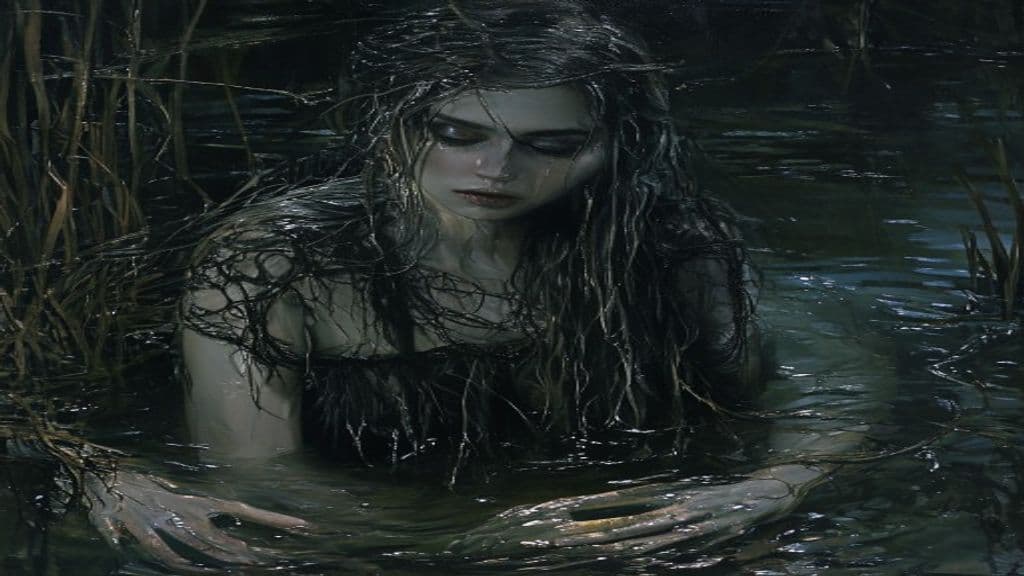
Rusalka
Water spirits in Slavic folklore — the spirits of young women who died by drowning or suicide, bound to rivers and lakes. Beautiful and dangerous, they can bewitch men to their deaths.
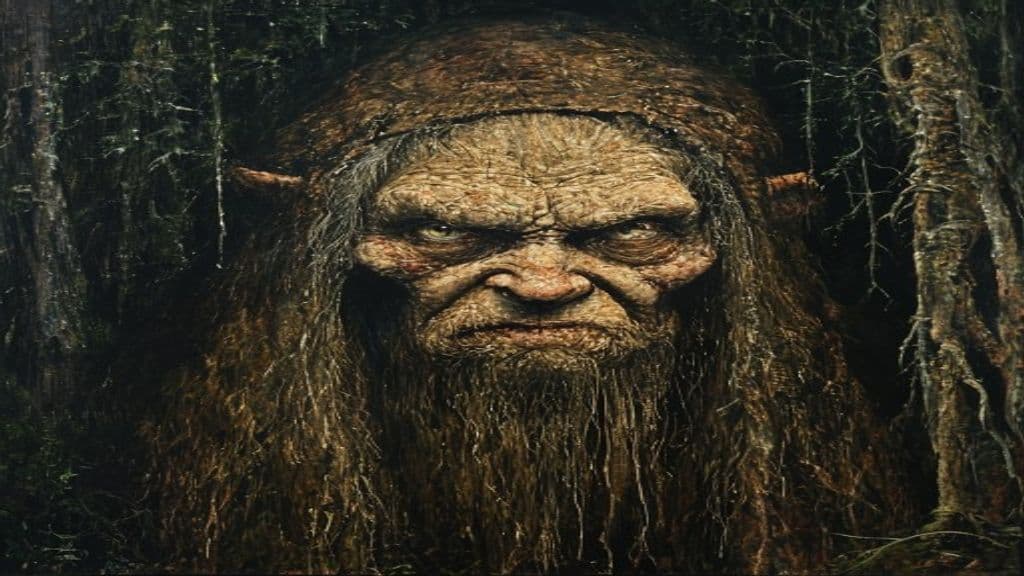
Baba Yaga
Baba Yaga is an ambivalent female figure of East Slavic folktale tradition, depicted variously as a fearsome, child-eating crone or as a helpful, maternal donor. She is associated with the deep forest, a hut described as standing on chicken legs, and the motific accoutrements of a mortar and pestle.
Joazar ben Boethus
Joazar ben Boethus was a member of the priestly Boethus family who served as High Priest in the late Second Temple period (late 1st century BCE / early 1st century CE). He is presented in the sources as a historical, institutional figure involved in priestly succession and Roman-era politics rather than a supernatural being.
Jobar
Jobar (Arabic: جَوْبَر, romanized Jawbar) is primarily a historic village/neighbourhood on the outskirts of Damascus, Syria, noted for its long-standing Jewish synagogue and gardens; in a few modern, derivative contexts the name has been applied to fictional or rhetorical 'monster' figures, but those uses are uncorroborated in the supplied sources.
Joe Bush (tradition)
A name label that appears on a disambiguation listing including several real-world persons and a terse bibliographic mention of an American legend titled "The Legend of Joe Bush"; the supplied sources do not contain the legend's narrative, traits, or ritual material.
Johanan (High Priest) (tradition)
The supplied sources do not document a supernatural or priestly entity named Johanan; instead they treat Yohanan/Johanan as a Hebrew male given name (יוֹחָנָן / יְהוֹחָנָן) meaning "YHWH is gracious." Modern media references to individuals named Johanan (e.g., Johanan Diaz) appear in archive listings but do not present the name as a mythic being.
Johann Georg Faust
Johann Georg Faust is a historically attested itinerant early modern practitioner — variously an alchemist, astrologer, physician, teacher and performer — whose life and unusual death were rapidly mythologized in chapbooks and later literature (notably Marlowe and Goethe). Documentary records show a learned background and contested reputation; later pamphlet tradition transformed him into the legendary 'Faust' figure associated with diabolism.
John Dough
John Dough is a fictional life-sized gingerbread man created by L. Frank Baum in his 1906 children's fantasy novel John Dough and the Cherub. Brought to life when an immortality elixir is accidentally mixed into his batter, he functions as an animate confection with social agency who travels, befriends companions, sacrifices for others, and ultimately becomes a king within Baum's Oz-adjacent imagined world.
John Hyrcanus
John Hyrcanus (Yoḥānān Hurqanos) was a historical Jewish high priest and Hasmonean ruler of Judea (born c.164 BCE; reigned 134–104 BCE) who combined religious and secular authority, expanded Hasmonean territory, and negotiated with Hellenistic powers. He is presented in the sources as a human political and cultic leader rather than a supernatural being.
John Ryker
John Ryker is a fictional, non‑superpowered antagonist in Marvel Comics who functions as a high‑ranking U.S. Army general and later corporate executive. He uses military, scientific, and corporate resources to hunt, experiment on, and attempt to weaponize gamma‑irradiated individuals (notably the Hulk and related subjects).
John the Evangelist
A central figure in Christian tradition identified as the authorial persona behind the Gospel of John and as an authoritative apostolic witness to Jesus. Traditions variously equate him with John the Apostle, John of Patmos, or John the Presbyter; modern scholarship disputes a single authorship for all Johannine writings. He is venerated as a saint, commemorated liturgically, and appears widely in Christian art and hagiography.
Johnny Cage
Johnny Cage (Jonathan "John" Carlton) is a fictional character from the Mortal Kombat video game franchise: a Hollywood action-film star and skilled martial artist who serves as one of Earthrealm's champions in inter-realm tournaments and wars. Though a mortal human in the fiction, his narrative repeatedly intersects with supernatural forces that kill, resurrect, or manipulate him.
Jokhini
A female supernatural predator of Assamese folklore — the Jokhini appears as a beautiful woman to lure men, but also as a hideous crone to devour them. She is associated with the dense forests of the Brahmaputra valley and is one of the most feared night entities in Assamese village belief.
Jonakr's sons (Hamdir, Sörli, Erpr)
Three brothers—Hamdir (Hamðr), Sörli (Sǫrli), and Erpr—of the Völsung lineage in Germanic heroic legend who, at their mother Guðrún's urging, attempt to avenge their half‑sister Svanhildr by attacking King Jörmunrekr/Ermanaric. Their deed and tragic deaths are attested across Norse poetic and saga sources and continental chronicles.
Community Record
- [1]John Fare. Wikipedia article 'John Fare' (accessed source corpus)wiki
- [2]The Last Piece by John Fare — GB Agency (exhibition page). GB Agency exhibition page for 'The Last Piece by John Fare' (used as curatorial/fictional device)other
- [3]Four Compositions for an imaginary performance by the legendary John Fare | Nocturnal Emissions. Nocturnal Emissions release invoking John Fareother
- [4]1964 - Performance Artist using Robotic Props - John Fare (Canadian). Cyberneticzoo entry discussing Fare narrative in robotic/artist contextsother
- [5]John Fare archive page. Earthly Delights page compiling material on John Fare and related itemsother