
In Purāṇic and Devi-centred narratives (notably the Devi Mahatmya and related appendices), the gods beseech Parvati/Uma/Gauri for help against the asura brothers Shumbha and Nishumbha. From the sheath (kosha) of Parvati a female power issues forth — Kaushiki — who functions as an autonomous śakti to confront and slay the asuras. Pancharatra material (e.g., Lakshmi Tantra) also presents Kaushiki as a Kevala-Avatāra of Lakshmi who descended from Gauri to slay the demons. In Jain sources the term Kauśikīvidyā names one of the sixteen vidyās, understood there as an esoteric power used by Kauśikīpūrvaka Vidyadharas, whose efficacy is conditioned by correct ethical behaviour toward Jinas and ascetics.
Classical Purāṇic appendices describe an eight-armed manifestation bearing weapons (arrow, pestle, spear, discus/chakra, conch/śaṅkha, bell, ploughshare, and bow). Some sources portray Kaushiki as white- or bright-complexioned (contrasted in the episode with a dark/fierce goddess such as Chamunda/Kali); agamic passages (e.g., an Ajitāgama citation) describe Kaushiki as seated on a lion. Textual recensions vary on details such as complexion and exact attributes.
Kaushiki’s principal function in the textual corpus is martial: she manifests weapons and a retinue (including the Matrikas) and defeats the asura kings Shumbha and Nishumbha, restoring cosmic order. As a śakti she embodies protective and generative divine power in the sense of being an emanation of the supreme feminine principle; in Pancharatra material she is framed as an independent avatāra of Lakshmi who descends to protect the world. In Jain literature Kauśikīvidyā denotes an esoteric power usable by Vidyadharas, with the further behavioural constraint that practitioners lose these abilities if they disrespect Jinas, harm ascetics, or commit grave crimes.
Weaknesses
- otherNo specific vulnerabilities recorded in the cited sources
Wards
- mantraRecitation of Kaushiki's names (Rudrayāmala-Uttaratantra note: Kaushiki listed among thousand names of Kumāri whose recital grants spiritual reward)
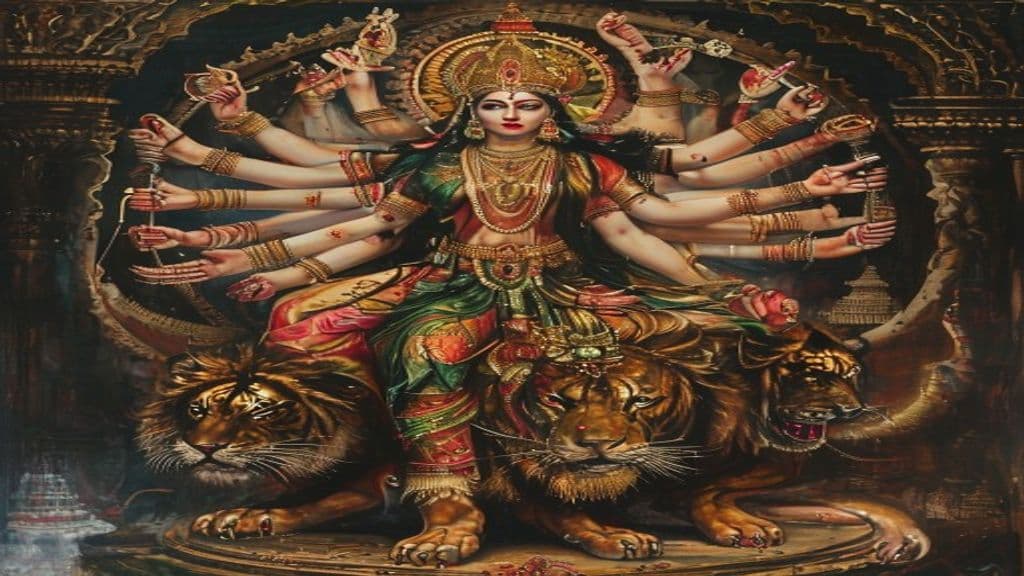
Durga
Durga is a major Hindu goddess, central to the Shakta tradition as an aspect of the Divine Feminine (Mahadevi). She is venerated as a protective, martial mother-goddess who combats demonic forces (notably Mahishasura) to uphold dharma, and is celebrated in major festival cycles such as Navaratri and Durga Puja.
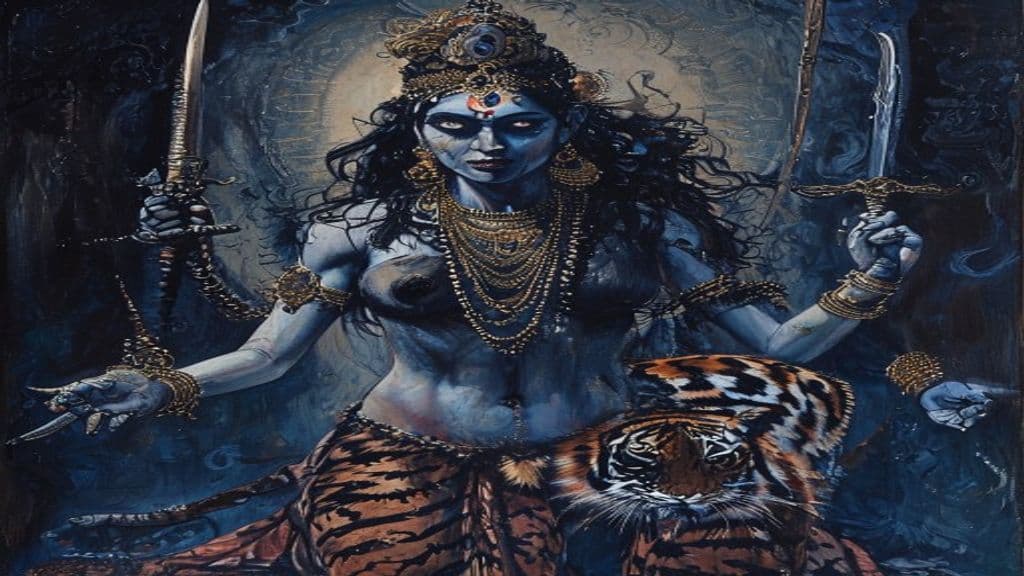
Kali
Kali is a major Hindu goddess associated with time (kāla), death, destruction, and also with liberating knowledge; she appears in Puranic and Tantric texts as a fierce battlefield power and as a protective Divine Mother (Kali Mātā).
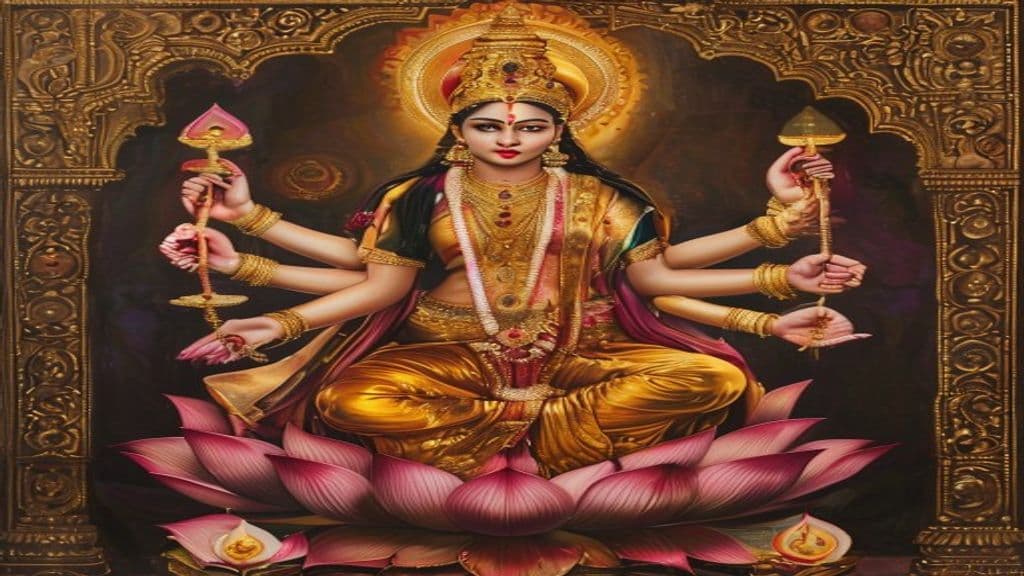
Lakshmi
Lakshmi is a principal Hindu goddess who personifies śrī (auspiciousness) and is revered as the giver of fortune, wealth, prosperity, beauty, fertility, sovereignty, and abundance. She is the consort and shakti of Vishnu in Vaishnavism, part of the Tridevi with Parvati and Sarasvati, and is the focus of popular devotional and festival practices such as Lakshmi Puja during Deepavali and Navaratri.
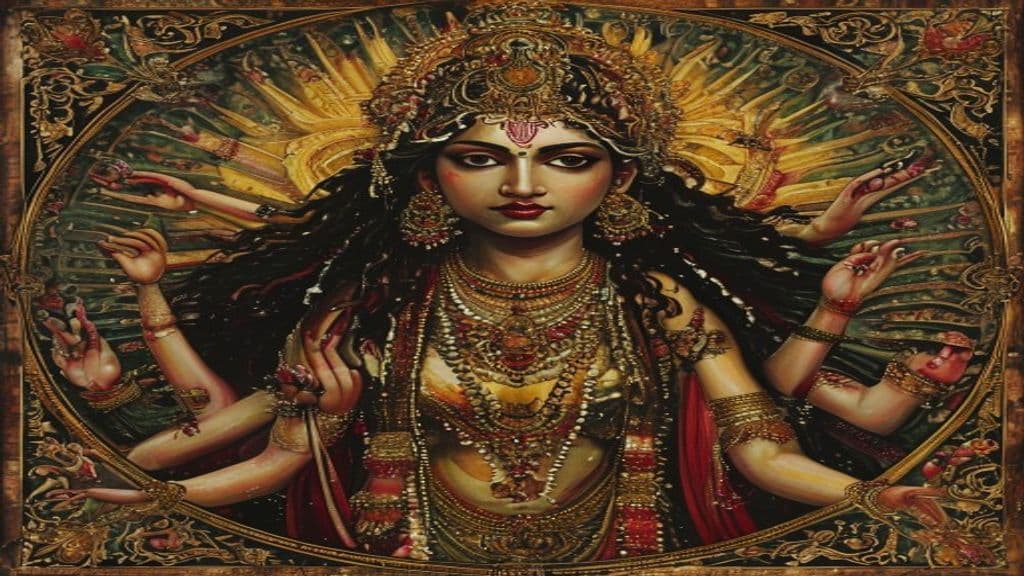
Parvati
Parvati is a principal goddess in Hindu tradition, worshipped as the consort of Shiva and as his shakti (divine power). She embodies a range of roles — devoted wife and mother, fertility and nourishment-giver, and in other manifestations a ferocious protector who destroys evil.
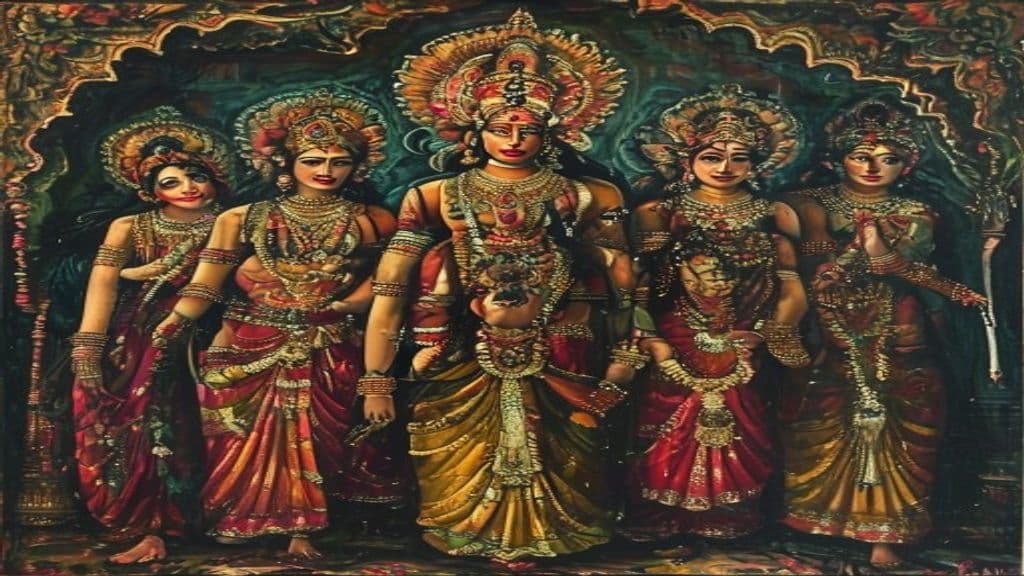
Matrikas
Matrikas (Sanskrit: mātṛkā, 'mothers') are a group of related mother-goddess figures in Hindu tradition, commonly rendered as seven (Saptamatrikas) or eight (Ashtamatrikas). They function ambivalently as protectors and as dangerous female powers tied to fertility, child mortality, disease, and martial activity, and were incorporated into temple and tantric/Shakta practice by the Kushana–Gupta and early medieval periods.
Community Record
- [1]Kaushiki (Wikipedia). Wikipedia: Kaushikiwiki
- [2]Ajitāgama (quoted passage). Ajitāgama, Kriyāpāda 53/7-8 (quoted in research notes)literary
- [3]Devi Mahatmya (appendices summary). Devi Mahatmya appendices (weapon list and narrative of emergence) (summarized in research notes)literary
- [4]Lakshmi Tantra (Pancharatra summary). Lakshmi Tantra (Pancharatra) — Kaushiki as Kevala-Avatāra of Lakshmi (summary in research notes)literary
- [5]Rudrayāmala-Uttaratantra (name-recitation note). Rudrayāmala-Uttaratantra (Kaushiki listed among thousand names of Kumāri; recital efficacy) (summarized in research notes)literary
- [6]Trishashtishalakapurushacaritra (Hemachandra) — Kauśikīvidyā. Jain Trishashtishalakapurushacaritra (Kauśikīvidyā and ethical constraints on Vidyadharas) (summarized in research notes)literary
- [7]Valmiki Ramayana — Bala Kanda Sarga 34 (Kaushiki river mention). Valmiki Ramayana, Bala Kanda, Sarga 34 (reference to a Kaushiki river) (provided in research notes)literary