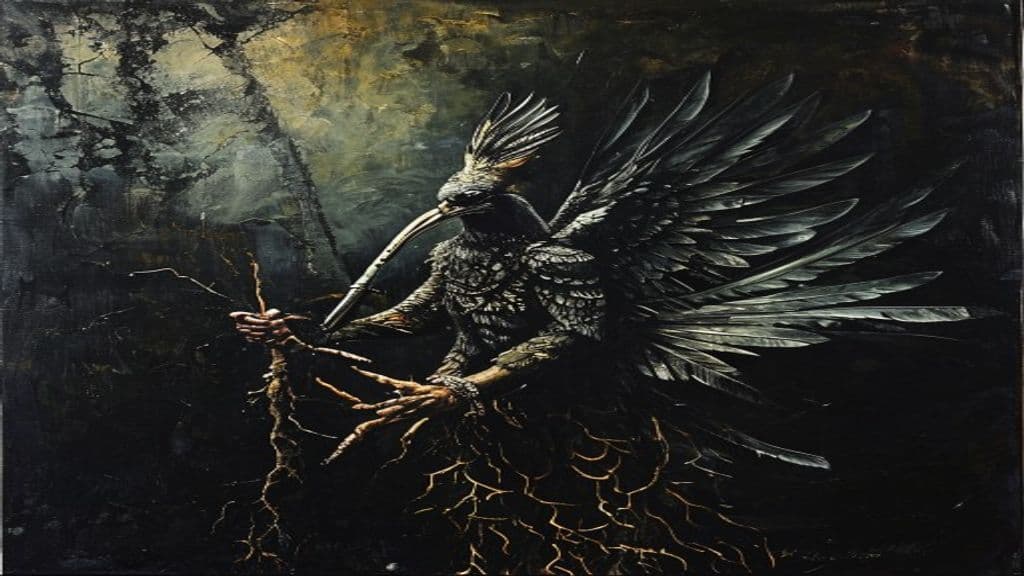
The Kumulipo was recorded in the 18th century, but its origins are likely much older, having been passed down orally for generations.
There is no physical entity of the Kumulipo; it exists solely as a written or oral text.
The Kumulipo's 'power' lies in its ability to recount history and genealogy, but it does not possess supernatural powers or abilities.
Cinderella
A widespread folktale protagonist and narrative archetype: a young woman who endures neglect or obscurity and is unexpectedly elevated to recognition and higher social status, typically by marriage. The motif appears in many cultures and historical periods and functions as a moral and social narrative about identity, tokens of recognition, and social mobility rather than as a supernatural being.
Kapu (Hawaiian culture)
In ancient Hawaiian society, Kapus were a system of laws and regulations governing lifestyle, gender roles, politics, and religion, with breaking one equivalent to a capital offense. (Note: - Power tier should be Ancient (deity-level) rather than Primordial, as breaking a Kapu resulted in capital offense and was closely tied to spiritual power and mana. - Summary is partially accurate bu)
Kullervo
Kullervo is a tragic heroic figure from Finnish and Estonian runic-song tradition and the Kalevala epic: a surviving scion of a destroyed clan whose life is marked by enslavement, mistreatment, latent magical powers, vengeance, and self-destruction.
Kumakatok
The Kumakatok are a trio of robed, hooded door‑knockers in Philippine popular belief who visit houses at night; their knock is regarded as an omen of imminent death for the household, typically affecting the eldest member or someone already ill. Reports situate them chiefly in Luzon and the Visayas and record a vernacular practice of painting white crosses on doors to keep them away.
Kumbhakarna
Kumbhakarna is a gigantic rakshasa featured in the Hindu epic Ramayana as a younger brother of Ravana, famed for prodigious size, an enormous appetite, great martial prowess, and a supernatural sleep pattern produced by a divine curse/boon; he recognizes Rama's divinity but fights out of loyalty and is slain by divine weapons during the war.
Kumbhāṇḍa
Kumbhāṇḍas are a class of dwarfish, misshapen lesser deities or spirit-entities in Buddhist cosmology, commonly listed among the retinues of the Four Great Kings and placed under the Guardian of the South (Virūḍhaka). Their name and traditional imagery link them to gourd- or pot-like bodily forms.
Kumu-Honua
The first man in Hawaiian creation myth, considered a divine or semi-divine figure. (Note: 1. Power tier should be Primordial, as it's a creator figure and not explicitly described with deity-level powers. 2. Abilities section needs to be rewritten or deleted since there are no specific des)
Kumush
Kumush is attested in the supplied source as a creator god in Modoc cosmology. The available documentation for this entry is limited to that classificatory label; no further attributes, myths, or local traditions are recorded in the provided source.
Kunekune
Kunekune is a modern Japanese urban-legend apparition, first circulated online, described as a slender white, paper- or fabric-like humanoid that continuously wriggles in open fields on hot summer days. It functions as an Internet-born contemporary folk apparition rather than a traditional ritual spirit, with debate in sources about mundane explanations such as scarecrows, wick drains, fog, or heat-induced hallucination.
Kung Jin
Kung Jin is a modern fictional character from the Mortal Kombat video game franchise (debuting in Mortal Kombat X, 2015). He is presented as a Shaolin-trained archer and relative of Kung Lao who joins a new generation of Earthrealm defenders; he is a human narrative character created by NetherRealm Studios, not a traditional spirit or folkloric entity.
Kung Lao
Kung Lao is a fictional Shaolin monk and human warrior character from the Mortal Kombat video game franchise, introduced in Mortal Kombat II (1993). He is presented as one of the last descendants of the Great Kung Lao, a protector of Earthrealm and ally of Liu Kang, notable for his wide razor-brimmed hat used as a weapon and for participating in inter-realm Mortal Kombat tournaments.
Kunthunātha
Kunthunātha (also spelled Kunthunath or Kuntunatha) is the seventeenth Tirthankara of the present half time cycle (Avasarpini) in Jain tradition. He is described in canonical lists as having become a siddha (a liberated soul) and is also recorded as the sixth Chakravartin and the twelfth Kamadeva of the current half-cycle.
Community Record
- [1]