
According to the cited epigraphic and secondary literature, Ix Uhu'l Chan Lem was born in 704 and died in 751. The modern literature identifies her as originating from Dzibanche and bearing the high-status designation described as a 'Kalo'mte' of the East, which the sources use to explain her arrival at Yaxchilan as part of a political marriage alliance. She is presented in scholarship as a secondary wife of King Itzamnaaj Bʼahlam III (also called Shield Jaguar the Great) whose dynastic position and foreign origin link her to the Kaan (Calakmul/Dzibanche) political sphere. Modern English nicknames such as 'Lady Eveningstar' and 'Lady Ik' Skull' are scholarly labels applied in secondary literature and are not presented in the provided materials as literal translations from the glyphic record.
The provided sources do not supply a descriptive iconographic or physical portrayal of Ix Uhu'l Chan Lem. Epigraphic references associate her with monumentary text—specifically a monument referred to as stela 35—yet the excerpts given do not include any sculptural or painted description of her attire, features, or visual representation. Thus, no primary-source iconographic description is documented in the supplied materials.
The sources attribute political and dynastic roles rather than supernatural abilities. She is identified as a wife of Itzamnaaj Bʼahlam III, called a 'Kalo'mte' of the East in the secondary literature cited, and is hypothesized by some scholars to have acted as a regent or exercised authority during an interregnum (proposed ca. 742–751) until her son Yaxun Bʼalam IV succeeded in 752. The literature treats her possible rulership as a scholarly interpretation of the epigraphic record rather than as an unequivocal statement of fact.
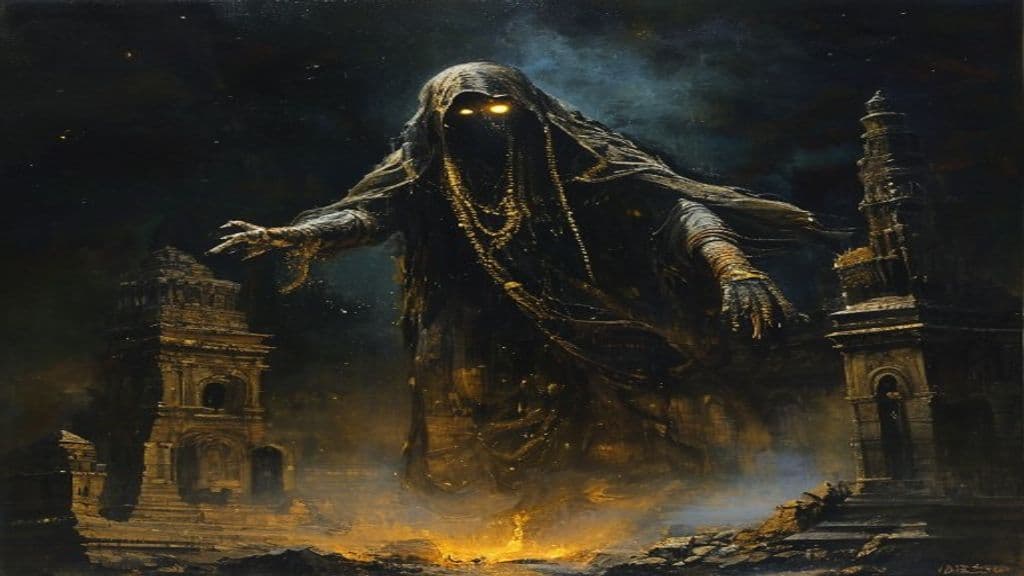
Brahmarakshas
The most learned and terrible of spirits — the ghost of a Brahmin who misused his scriptural knowledge in life and was condemned after death to be both demon and scholar, haunting places of learning.
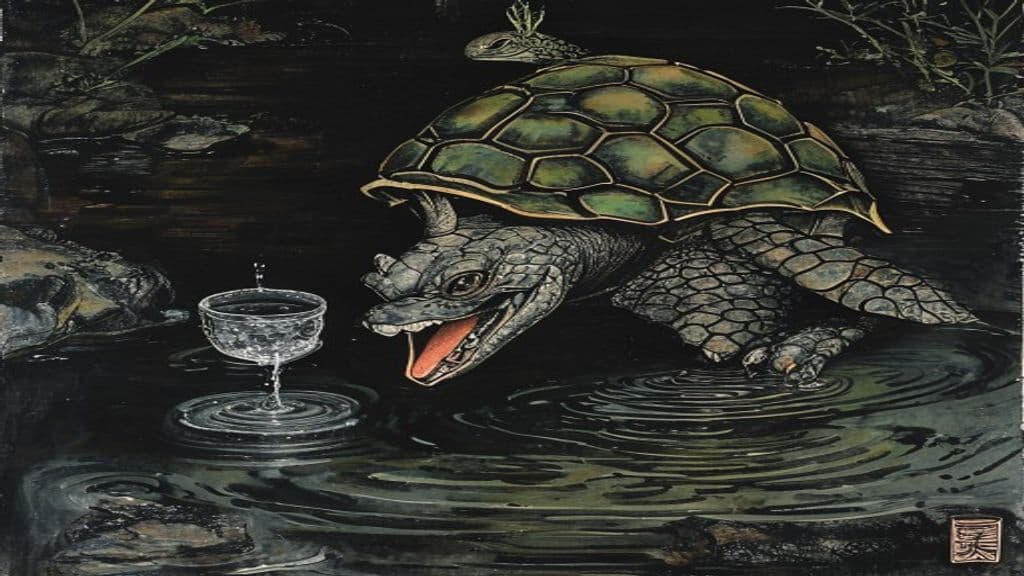
Kappa
A water-dwelling imp of Japanese folklore with a bowl of water on its head. Mischievous but bound by strict codes of politeness; dangerous near rivers.
Labasu
Labasu is a Mesopotamian malignant spirit or demon of disease attested in Sumerian–Akkadian textual tradition. It appears in medical, astrological and anti-witchcraft corpora as a named etiological agent for fever and related illnesses and commonly occurs alongside Lamashtu and Ahhazu in ritual lists and expulsions.
Labdacus
Labdacus (Ancient Greek: Λάβδακος, Lábdakos) is a legendary/mythic king of Thebes in Greek tradition. He is chiefly significant as a dynastic ancestor — grandson of Cadmus, son of Polydorus, and father of Laius — and appears in variant accounts that place his brief rule and early death within the genealogical history that leads to Oedipus.
Lacedaemon
Lacedaemon (Lakedaimon, Lacaedemon) is a mythic eponymous king in classical Greek tradition: the legendary founder whose name is given to the region and polis of Lacedaemon/Sparta. He is presented genealogically as a son of Zeus and the Pleiad Taygete and as husband of Sparta, serving an etiological function linking the city to divine ancestry.
Lacritus
Lacritus (Ancient Greek: Λάκριτος) is attested in classical sources as a historical sophist from Phaselis, best known from a forensic speech of Demosthenes brought against him concerning a disputed loan; he was a pupil of Isocrates and tutor of Archias of Thurii.
Lacus Curtius
The Lacus Curtius is a mysterious, possibly supernatural feature of the Forum Romanum in ancient Rome, characterized by a pit or pool with uncertain origins and significance. (Note: 1. Power tier should be "Primordial" since it's an enigmatic feature with unclear origins, possibly even a natural wonder that predates Roman era. 2. Abilities section should be removed or rephrased, )
Ladon
Ladon is listed in the provided sources as "one of the dragons in Greek mythology." The available materials are disambiguation-style and also show the name Ladon applied to other, distinct referents (a husband/father figure, a hunting-dog, rivers, and a French commune); the supplied excerpts contain no narrative details about the dragon Ladon.
Lady Kʼabʼal Xook (Lady Xoc)
Lady Kʼabʼal Xook (Lady Xoc) is a historical Late Classic Maya royal woman of Yaxchilán, principal wife and aunt of King Itzamnaaj Bʼalam III (Shield Jaguar). She is best known from three carved lintels (24–26) over the doorway of Structure 23 that depict her performing elite bloodletting rituals that invoke ancestral and supernatural visions used to legitimate dynastic authority.
Lady Meng Jiang
Lady Meng Jiang (孟姜女; Mèng Jiāng Nǚ) is a legendary Chinese heroine whose sincere mourning for a husband conscripted to build a wall is said in tradition to have caused a portion of the wall to collapse and reveal his remains. Originating in early anecdote and moral-biographical literature, the tale evolved across centuries into popular balladry, temple cult, and local commemorative practices tied to sections of the Great Wall.
Lady Midday (Poludnitsa)
Poludnitsa, often called Lady Midday or Noonwraith in English, is a Slavic field spirit personifying the dangers of the hottest part of summer days. She is associated with grain fields and midday heat and appears in diverse regional tales as a young woman, hag, or girl who harasses or injures people working or resting at noon.
Lady in Red (tradition)
The supplied sources do not document a folkloric or supernatural entity called the "Lady in Red." The materials reviewed are a Wikipedia disambiguation page and modern cultural items (a song entry and archive recordings) that use the phrase as titles or labels, not as a recorded traditional spirit or ghost.
Lady of Itzan
A historical 7th-century noblewoman associated with the Classic Maya polity of Dos Pilas; recorded in modern scholarship as a woman born in Itzan who married Bʼalaj Chan Kʼawiil and was mother to subsequent Dos Pilas kings. The supplied sources treat her as a dynastic/historical figure rather than a supernatural being.
Lady of the Green Kirtle
A fictional witch and antagonist in C. S. Lewis's novel The Silver Chair who rules an underground realm, enslaves Prince Rilian and gnomes by witchcraft, and intends to use them to conquer Narnia. She employs hypnotic illusion and shape‑shifts into a gigantic green serpent before being slain.
Community Record
- [1]Lady Eveningstar. Wikipedia: 'Ix Uhu'l Chan Lem, previously nicknamed Lady Eveningstar or Lady Ikʼ Skull (704-751), was a Maya queen and possible regent, wife of Itzam Kokaaj Bʼalam III...'; mentions origin from Dzibanche, Kalo'mte' title, stela 35, proposed regency and dates.wiki
- [2]Yaxun B'alam IV (Bird Jaguar IV). Wikipedia entry on Yaxun Bʼalam IV noting his reign from 752–768 and his relation as son of Itzamnaaj Bʼahlam III; used in secondary literature to contextualize the succession.wiki
- [3]Wikidata entry for Lady Eveningstar. Wikidata item providing structured metadata that aligns with identification of Ix Uhu'l Chan Lem as a noblewoman and politician associated with Calakmul/Dzibanche and Yaxchilan.other