
Lavanasura is described as the son of the asura king Madhu and his wife Kumbhini. Madhu, who is portrayed as kind to brahmanas and friendly with devas and who had been granted a trident by Shiva, established his realm called Madhupuri. Lavana, however, inherited the martial legacy and the trident, developing characteristics opposite to his father: violent, predatory, and hostile to sages and kings. In the narrative he continues to harass sacrificial rites and local rulers during the reign of Rama, prompting the sages to seek royal intervention. The epic account culminates with Shatrughna, acting on Rama's counsel and with Rama's weapon, confronting and killing Lavana and restoring proper kingship at Madhupuri.
Primary sources summarized in the provided material do not furnish a detailed physical description (coloration, number of limbs, monstrous features). Narratives emphasize his great physical strength and combat behavior — for example uprooting and hurling trees in battle — and his habitual wielding of a trident (trishula) inherited from his father Madhu. Childhood cruelty is narrated (he beat, killed, and ate playmates), conveying a ferocious and dangerous corporeal presence rather than specific morphological traits.
Lavanasura is presented as a violently aggressive and destructive being who routinely attacks sacrifices and terrifies sages and people within his domain. He defeated multiple kings and used the trident inherited from Madhu to devastating effect (the weapon is treated in the story as effectively invincible or devastating while he held it). In combat he demonstrates superhuman strength — uprooting and throwing trees — and is characterized as a predatory hunter who habitually went out hunting for food. His possession of the trident and his pattern of disrupting ritual and political order mark him as a potent local threat within the epic cosmology.
Weaknesses
- conditionOpposed or deprived of possession of the trident (narrative tactical condition)
- otherVulnerable to a divinely empowered arrow supplied by Rama (narrative weaponic vulnerability)
Wards
- conditionRoyal intervention and martial campaign under Rama's authority (narrative remedy)
- otherNeutralizing or ensuring Lavana does not hold the trident during combat (Rama's counsel to Shatrughna)
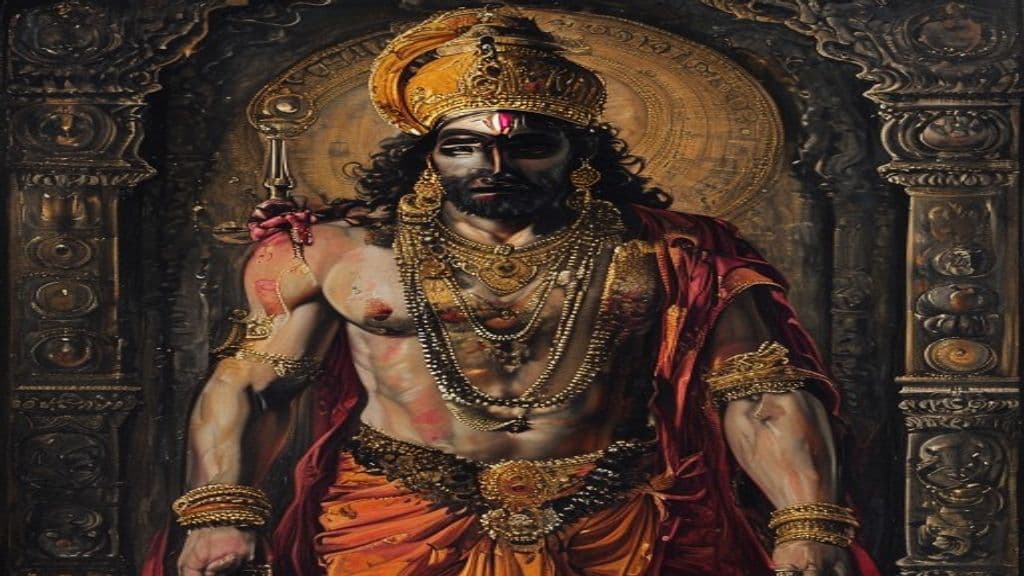
Lasya (Hindu divine dance)
Lasya is a divine dance form innovated and performed by the goddess Parvati in Hindu mythology, embodying feminine, creative, and nurturing qualities. (Note: - Power tier should be Primordial (supported) but clarify that it's more about its divine and mythical origins rather than literal cosmic power. - Origin story and Abilities are accurate based on sour)
Latarak
Latarak (Lātarāk) is a Mesopotamian apotropaic deity chiefly invoked as a guardian of doorways and thresholds, a subduer of hostile powers, and a protector against disease and witchcraft. He appears in ritual corpora (Maqlû, Bīt mēseri, Šēp lemutti) and in cult contexts across Mesopotamian cities, frequently paired or equated with Lulal and allied apotropaic figures.
Latis
Latis is a theonym attested in two Roman-period votive inscriptions from Roman Britain (Cumbria). The name appears in one dedication as Dea Latis (found at Birdoswald) and in a separate, single inscription as Deus Latis (found at Aballava/Burgh-by-Sands). Each form is attested only once in the surviving epigraphic record.
Latreus
Latreus is a named Thessalian centaur warrior who appears in accounts of the Centauromachy; he kills the Emathian Halesus, fights the Lapith Caeneus, and is slain in the wedding-battle recounted in Ovid's Metamorphoses and related retellings.
Lauma
Lauma (Lithuanian laumė; Latvian Lauma) is an Eastern Baltic female supernatural figure classed variously as an ancient sky-born goddess and as a fairy-like guardian spirit. She and her kin (laumės, plural) are associated with childbirth, mothers, children, women's crafts (weaving/spinning), liminal landscapes and atmospheric phenomena such as rain, hail and rainbows.
Lava (Ramayana)
Lava is the younger of the twin sons born to Rama and Sita in the Ramayana tradition. Raised at the hermitage of the sage Valmiki alongside his brother Kusha, he is taught the epic, recites it publicly, takes part in the ashvamedha yajna episode, and in later traditions is credited with rulership or city-founding in northern Kosala/Lavapuri.
Lavinia
Lavinia is a figure from Roman literary and legendary tradition, presented primarily as the daughter of King Latinus and the wife of Aeneas whose marriage and omen-centered story link Trojan and Latin lineages and give the eponym for the town Lavinium. The name also survives as a female given name and as the title/protagonist in later literary works.
Law of Abode (Greek tradition)
Supernatural principle governing behavior and fate in Greek mythology, particularly regarding interactions with the underworld realm of Hades. (Note: - Power tier should be Ancient (a Primordial would have a more fundamental role in shaping reality) - The ability to dictate someone's fate through consumption of food/drink while in Hades suggests i)
Laḫmu
Laḫmu (Laḫamu for the feminine counterpart) is an apotropaic Mesopotamian supernatural being attested both as a class of protective attendants in ritual contexts and as an individual primordial figure in some theogonies (notably variants of the Enūma Eliš). Generally regarded as protective household and temple guardians, Laḫmu are also incorporated in certain mythic genealogies.
Laṣ
Laṣ is a Mesopotamian goddess attested as the spouse and intercessory consort of the god Nergal, worshiped in cult centers such as Kutha (E‑Meslam) and Tarbiṣu. She appears in god lists, offering and administrative documents, and is invoked among underworld deities and as a guarantor in treaties.
Leak (Leyak)
Leak (also spelled Leyak or Leák) is a malignant witch-figure in Indonesian — especially Balinese — popular belief and horror storytelling, portrayed as a feared supernatural sorcerer who preys upon pregnant women and newborn infants. It appears in modern media and folklore summaries but ethnographic documentation in the supplied materials is fragmentary.
Lebadus
Lebadus (also Lebadeus/Lebados) is a mythic eponymous founder associated with the Boeotian city Lebadeia. Recorded chiefly in Pausanias, he functions as a legendary ancestor whose name explains the place-name and who is said to have come from Athens and led inhabitants down into the plain where the town took his name.
Community Record
- [1]Lavanasura — Wikipedia. Wikipedia contributors, 'Lavanasura,' Wikipedia, https://en.wikipedia.org/wiki/Lavanasurawiki
- [2]Lawdasura (Wikidata entry Q17007574). Wikidata Q17007574 (label: Lawdasura)other
- [3]Lonar Research Published (archive) — reinterpretation of Skanda Purana Lavanasura episode. Archive: Lonar Research Published, 'Mythological narratives from the Skanda Purana... episode of Lavanasura and Vishnu...' (modern interpretive study)other
- [4]Shatrughna — Wikipedia (context on Shatrughna and related narrative). Wikipedia contributors, 'Shatrughna,' Wikipedia, https://en.wikipedia.org/wiki/Shatrughnawiki
- [5]Archive: Mathura Yatra The Advent Place Of Lord Krishna. Archive item cited in research notes (contextual material)other