
In the Baltic folkloric corpus Lauma/laumė is described as originally a sky spirit who descended to earth; sources state that her compassion for human suffering brought her down from the clouds. In Lithuanian accounts Laumės are also framed as some of the oldest goddesses, imagined as dwelling in a cloudy sky-court (tradition includes images such as a throne in the clouds). Over time these divine figures were folk-transformed into local fairy-like beings inhabiting lakes, meadows and forests.
Descriptions vary across tales. Laumės are often female and may appear anthropomorphic or as hybrids and animal forms: women with bird-claws for feet; women with the head or lower body of a female goat; half-human/half-dog or half-mare forms; or as mares, female goats, bears or dogs. Folklore sometimes depicts them with a single eye. They are also described in celestial terms as beautiful cloud-dwelling goddesses; narrative motifs include exaggerated breasts with stone-like nipples (folkloric identification of belemnite fossils as 'Laumės nipples'). Laumės commonly appear in groups, frequently in threes, and are associated with dancing in circles that leave rings in grass.
Laumės occupy an ambivalent moral role. Beneficially, they are guardians of birth, mothers, children and orphans; they are skilled in women's crafts (weaving and spinning) and help or reward the industrious (tales include returning an abandoned child unharmed and bestowing treasure). They are also portrayed as atmospheric or weather-affecting beings: their singing and dancing may cause rain, hail or storms and they are linked to rainbow motifs. Dangerously, some tales portray them as lethal to women who are targeted for their hair or body parts (if a laumė loses yarn she may take women's hair, entrails or veins, first killing them), and as predators of men—luring men with lust, exhausting them to death and then eating their bodies (a motif compared in sources to the Greek Lamia). They also pronounce or foretell newborns' fates in folklore. Laumės are said to fear iron.
Weaknesses
- substanceiron (tools made from iron)
Wards
- substanceiron (displaying or carrying iron tools)
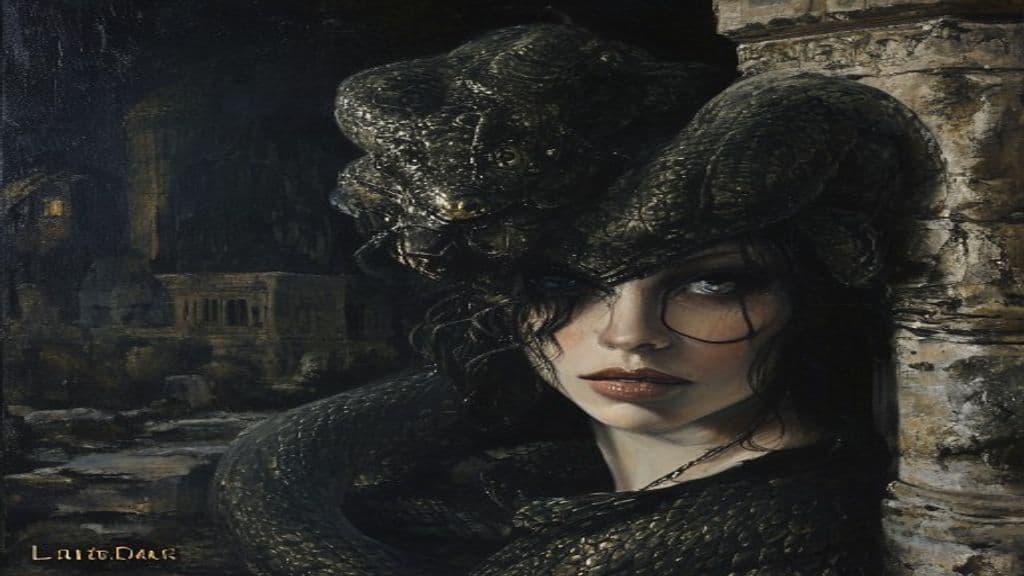
Lamia
A child-devouring demon of Greek mythology — once a queen of Libya and lover of Zeus, driven mad by Hera's destruction of her children and transformed into a monstrous hunter of other women's children.
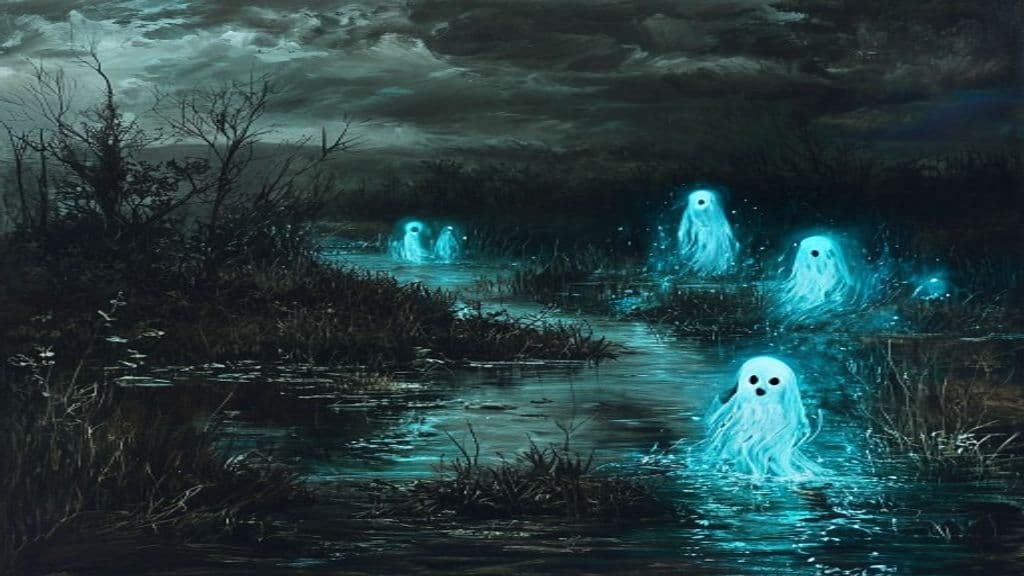
Will-o'-the-Wisp
A wandering light seen over marshy ground at night, leading travellers astray into bogs and fens. Possibly a spirit, possibly the soul of the unbaptised dead, possibly the devil himself.
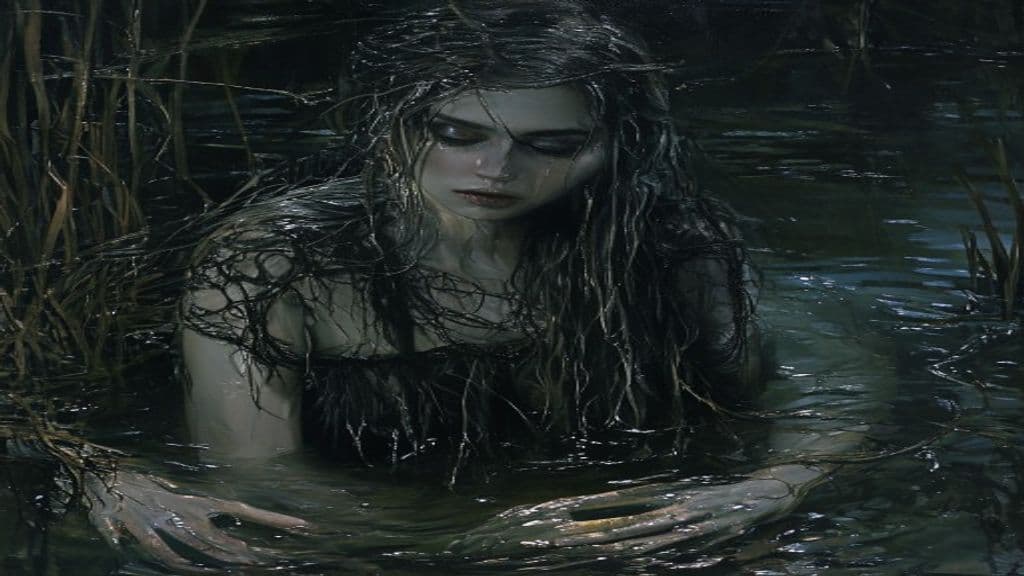
Rusalka
Water spirits in Slavic folklore — the spirits of young women who died by drowning or suicide, bound to rivers and lakes. Beautiful and dangerous, they can bewitch men to their deaths.
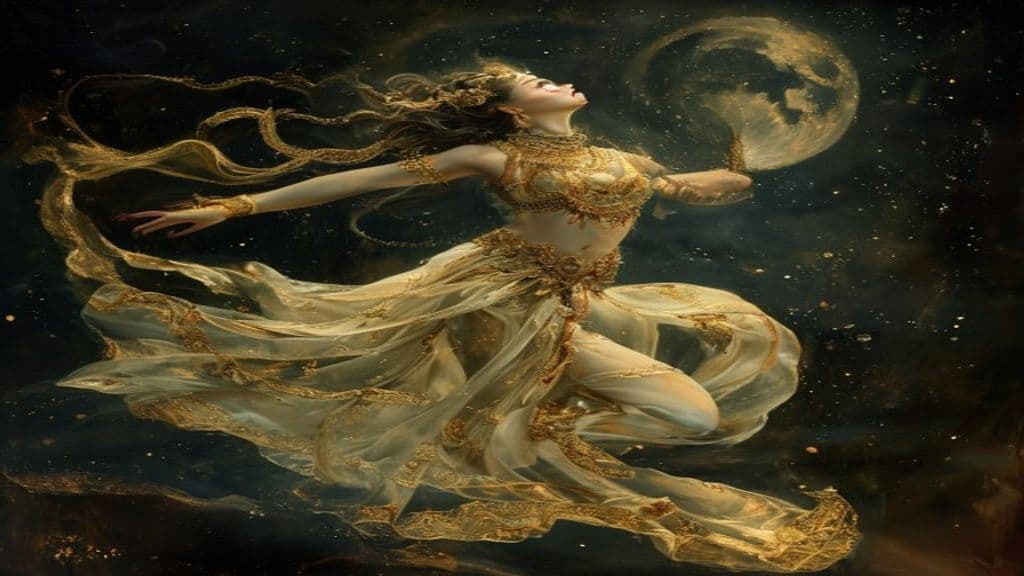
Apsara
Celestial dancers and water nymphs of Hindu cosmology — beautiful semi-divine beings who dance at the court of Indra and, by his command, descend to earth to distract sages from excessive asceticism.
Ašvieniai
Ašvieniai are the paired divine twins of Baltic (particularly Lithuanian) tradition, horse-associated celestial beings who pull the chariot of Saulė (the Sun) across the sky and appear as protective little horses used as apotropaic motifs in vernacular architecture and household objects.
Bangpūtys
Bangpūtys is a reconstructed masculine sea-and-storm deity from Lithuanian mythology. Known from very scanty sources, modern mythologists portray him as an austere, vindictive master of winds and the sea and as the reconstructed father-figure of the cardinal wind-gods.
Žaltys
A household spirit in Lithuanian mythology embodied by the grass snake; sacred to the sun goddess Saulė, kept near the stove as a guardian of the home and a symbol of fertility, and believed to bring good harvest and wealth while bringing misfortune if killed.
Lastikman
Lastikman is a Filipino popular‑culture superhero created by Mars Ravelo with artist Mar T. Santana, introduced in Aliwan Komiks #56 (December 7, 1964). Across multiple comics, films and a television series he is depicted as a human or human‑derived figure whose defining ability is extreme elasticity and shapeshifting, used to fight crime and protect people in urban Philippine settings.
Lasya (Hindu divine dance)
Lasya is a divine dance form innovated and performed by the goddess Parvati in Hindu mythology, embodying feminine, creative, and nurturing qualities. (Note: - Power tier should be Primordial (supported) but clarify that it's more about its divine and mythical origins rather than literal cosmic power. - Origin story and Abilities are accurate based on sour)
Latarak
Latarak (Lātarāk) is a Mesopotamian apotropaic deity chiefly invoked as a guardian of doorways and thresholds, a subduer of hostile powers, and a protector against disease and witchcraft. He appears in ritual corpora (Maqlû, Bīt mēseri, Šēp lemutti) and in cult contexts across Mesopotamian cities, frequently paired or equated with Lulal and allied apotropaic figures.
Latis
Latis is a theonym attested in two Roman-period votive inscriptions from Roman Britain (Cumbria). The name appears in one dedication as Dea Latis (found at Birdoswald) and in a separate, single inscription as Deus Latis (found at Aballava/Burgh-by-Sands). Each form is attested only once in the surviving epigraphic record.
Latreus
Latreus is a named Thessalian centaur warrior who appears in accounts of the Centauromachy; he kills the Emathian Halesus, fights the Lapith Caeneus, and is slain in the wedding-battle recounted in Ovid's Metamorphoses and related retellings.
Lava (Ramayana)
Lava is the younger of the twin sons born to Rama and Sita in the Ramayana tradition. Raised at the hermitage of the sage Valmiki alongside his brother Kusha, he is taught the epic, recites it publicly, takes part in the ashvamedha yajna episode, and in later traditions is credited with rulership or city-founding in northern Kosala/Lavapuri.
Lavanasura
Lavanasura (Sanskrit: लवणासुर, Lavaṇa-asura) is an asura figure in the Ramayana cycle who terrorizes sages and kings from his seat at Madhupuri. Armed with a trident inherited from his father Madhu, he is ultimately slain by Shatrughna by means of a special arrow given through Rama, after which Shatrughna is installed as king of Madhupuri.
Lavinia
Lavinia is a figure from Roman literary and legendary tradition, presented primarily as the daughter of King Latinus and the wife of Aeneas whose marriage and omen-centered story link Trojan and Latin lineages and give the eponym for the town Lavinium. The name also survives as a female given name and as the title/protagonist in later literary works.
Law of Abode (Greek tradition)
Supernatural principle governing behavior and fate in Greek mythology, particularly regarding interactions with the underworld realm of Hades. (Note: - Power tier should be Ancient (a Primordial would have a more fundamental role in shaping reality) - The ability to dictate someone's fate through consumption of food/drink while in Hades suggests i)
Community Record
- [1]Lauma — Wikipedia. Wikipedia: 'Lauma' article (lead and sections on appearance, abilities, dwellings and customs)wiki
- [2]Blue Moon Fiber Arts product description — Lauma. Product description referencing Latvian Lauma as 'guardian of birth, mothers and children' and 'a sky spirit brought to earth by her compassion'.other
- [3]Research notes and collected quotations (provided corpus). Compiled research notes supplied by requester summarizing attested folklore motifs (appearance, behaviors, ritual absence, time markers, locations, cultural context).folk