
According to the Ramayana tradition, Lava is born to Rama and Sita while Sita is staying at the hermitage of the sage Valmiki after her exile. He and his twin brother Kusha are raised and instructed there, becoming disciples of Valmiki. Their origin is narrated within the epic’s later episodes (Uttara Kanda and connected retellings) where their parentage is eventually recognised in the ashvamedha yajna narrative and they are incorporated into the dynastic lineage in various traditions.
Sources consistently describe Lava as resembling his father Rama; later summaries note a fair or Rama-like complexion though precise phrasings vary across extracts. The Valmiki text and later accounts emphasize the twins' visible resemblance to Rama when they appear in assemblies, and surviving summaries indicate a generally noble/royal appearance appropriate to princely sons.
Lava is depicted as a human prince trained in the hermitage context: he is taught literature and the Ramayana by Valmiki, becomes a capable reciter and transmitter of the epic, and receives training in martial skills. In the ashvamedha yajna episode he and Kusha capture the sacrificial horse and in some versions defeat or repel Rama's warriors, demonstrating competence in combat. Later traditions describe him assuming rulership (e.g., northern Kosala or Lavapuri) and participating in dynastic succession, but the sources do not ascribe supernatural powers.

Valmiki
Valmiki is a legendary maharṣi (great sage) and poet in the Hindu textual and cultural tradition, traditionally credited as the author of the Rāmāyaṇa and revered as Ādi Kavi ('first poet'). He is a canonical literary-religious figure and cultic exemplar rather than an adversarial supernatural being.
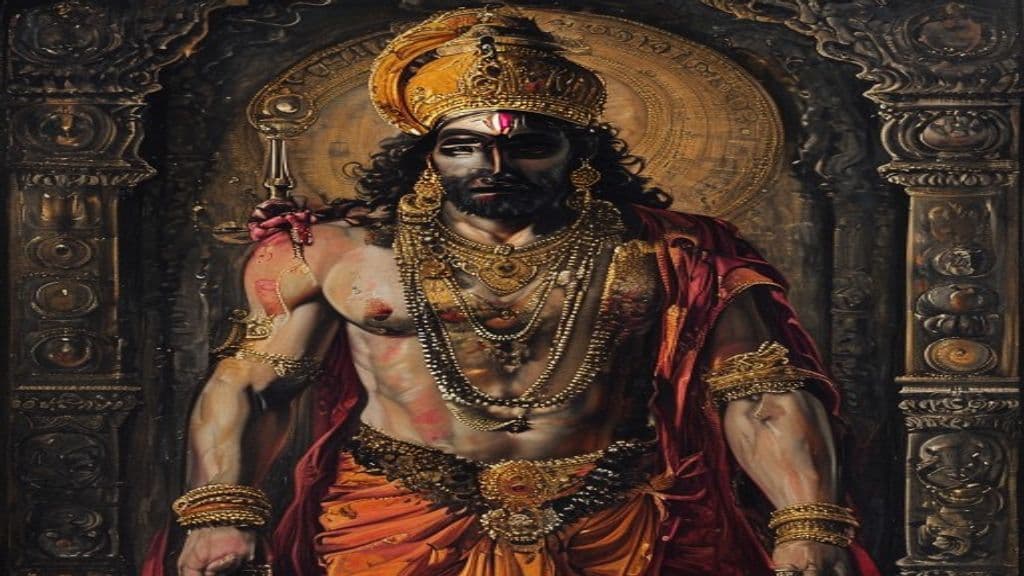
Rāma
Rāma is a major divine-hero in Hindu tradition, worshipped as the seventh avatar of Viṣṇu and the central protagonist of the Ramayana. He is portrayed both as the ideal man (maryāda puruṣottama) and, in Rama-centric sects, as the Supreme Being; his life-story (birth in Ayodhyā, 14-year exile, Sītā's abduction, and the defeat of Rāvaṇa) functions as a primary exemplar of dharma.
Maricha
Maricha (Sanskrit: मारीच, Mārīca) is a rakshasha in the Ramayana narrative who, with his family, terrorizes sages and sacrificial rites and later takes the form of a golden deer to help Ravana abduct Sita. He is variously depicted as a cursed forest-dweller, a shape‑changer, a sorcerer, and — after an encounter with Rama — briefly as an ascetic devotee.
Lastikman
Lastikman is a Filipino popular‑culture superhero created by Mars Ravelo with artist Mar T. Santana, introduced in Aliwan Komiks #56 (December 7, 1964). Across multiple comics, films and a television series he is depicted as a human or human‑derived figure whose defining ability is extreme elasticity and shapeshifting, used to fight crime and protect people in urban Philippine settings.
Lasya (Hindu divine dance)
Lasya is a divine dance form innovated and performed by the goddess Parvati in Hindu mythology, embodying feminine, creative, and nurturing qualities. (Note: - Power tier should be Primordial (supported) but clarify that it's more about its divine and mythical origins rather than literal cosmic power. - Origin story and Abilities are accurate based on sour)
Latarak
Latarak (Lātarāk) is a Mesopotamian apotropaic deity chiefly invoked as a guardian of doorways and thresholds, a subduer of hostile powers, and a protector against disease and witchcraft. He appears in ritual corpora (Maqlû, Bīt mēseri, Šēp lemutti) and in cult contexts across Mesopotamian cities, frequently paired or equated with Lulal and allied apotropaic figures.
Latis
Latis is a theonym attested in two Roman-period votive inscriptions from Roman Britain (Cumbria). The name appears in one dedication as Dea Latis (found at Birdoswald) and in a separate, single inscription as Deus Latis (found at Aballava/Burgh-by-Sands). Each form is attested only once in the surviving epigraphic record.
Latreus
Latreus is a named Thessalian centaur warrior who appears in accounts of the Centauromachy; he kills the Emathian Halesus, fights the Lapith Caeneus, and is slain in the wedding-battle recounted in Ovid's Metamorphoses and related retellings.
Lauma
Lauma (Lithuanian laumė; Latvian Lauma) is an Eastern Baltic female supernatural figure classed variously as an ancient sky-born goddess and as a fairy-like guardian spirit. She and her kin (laumės, plural) are associated with childbirth, mothers, children, women's crafts (weaving/spinning), liminal landscapes and atmospheric phenomena such as rain, hail and rainbows.
Lavanasura
Lavanasura (Sanskrit: लवणासुर, Lavaṇa-asura) is an asura figure in the Ramayana cycle who terrorizes sages and kings from his seat at Madhupuri. Armed with a trident inherited from his father Madhu, he is ultimately slain by Shatrughna by means of a special arrow given through Rama, after which Shatrughna is installed as king of Madhupuri.
Lavinia
Lavinia is a figure from Roman literary and legendary tradition, presented primarily as the daughter of King Latinus and the wife of Aeneas whose marriage and omen-centered story link Trojan and Latin lineages and give the eponym for the town Lavinium. The name also survives as a female given name and as the title/protagonist in later literary works.
Law of Abode (Greek tradition)
Supernatural principle governing behavior and fate in Greek mythology, particularly regarding interactions with the underworld realm of Hades. (Note: - Power tier should be Ancient (a Primordial would have a more fundamental role in shaping reality) - The ability to dictate someone's fate through consumption of food/drink while in Hades suggests i)
Laḫmu
Laḫmu (Laḫamu for the feminine counterpart) is an apotropaic Mesopotamian supernatural being attested both as a class of protective attendants in ritual contexts and as an individual primordial figure in some theogonies (notably variants of the Enūma Eliš). Generally regarded as protective household and temple guardians, Laḫmu are also incorporated in certain mythic genealogies.
Laṣ
Laṣ is a Mesopotamian goddess attested as the spouse and intercessory consort of the god Nergal, worshiped in cult centers such as Kutha (E‑Meslam) and Tarbiṣu. She appears in god lists, offering and administrative documents, and is invoked among underworld deities and as a guarantor in treaties.
Community Record
- [1]Lava (Ramayana) — Wikipedia. Wikipedia: Lava (Ramayana)wiki
- [2]Valmiki Ramayana - Bala Kanda - Sarga 4 (verses and prose). Valmiki Ramayana, Bala Kanda Sarga 4 (translation/excerpts)literary
- [3]Valmiki Ramayana - Bala Kanda - Sarga 4 (prose). Valmiki Ramayana, Bala Kanda Sarga 4 (prose commentary/excerpts)literary
- [4]Sri Amritsar Yatra (archive). Archive material discussing regional traditions linking epic figures to sites near Amritsar (e.g., Lava and Lavapuri)other
- [5]Did Lava and Kusha found cities in Pakistan? (Hinduism StackExchange discussion). Discussion of traditional attributions of Lahore/Kasur to Lava and Kushaother
- [6]The Literature of Lava (article reference). Article discussing literary traditions about Lava and Kusha and their receptionother