
In Mesopotamian sources the lilu-class are conceived as spirits emerging from the unfulfilled dead — notably adolescents or adults who died before marriage or before conceiving children. Scholarship summarizes them as a category of spirits/demons causally linked to interrupted life-cycle rites; their social origin explains their role as agents acting upon the living, especially in sexual or illness-related ways.
Primary texts provide sparse physical description. In the Gilgamesh tradition a Sumerian term ki-sikil-lil-la-ke, understood in modern scholarship as equivalent to ardat-lilî, is described as dwelling in the trunk of the huluppu tree (rendered in translations as 'phantom maid', 'demon-maiden', or 'demon-girl'). Beyond such literary placements, direct bodily attributes are not supplied in the summarized sources.
Cuneiform and later scholarly summaries portray the lilu-class as nocturnal agents that afflict members of the opposite sex and are invoked in medical-magical explanations for illness. Modern scholarship (e.g., Scurlock & Andersen) situates references to lilû in treatments for neurological and mental disorders and, interpretively, in some contexts connected to sexually transmitted conditions; ancient texts treat them as causes of sickness, sexual danger, and other misfortune rather than cosmic or world-altering forces.
Weaknesses
- otheraddressed by incantations and apotropaic measures in Akkadian magical-medical corpus (specific formulas not supplied in provided sources)
Wards
- ritualmagical-medical rituals and protections recorded in Akkadian corpus (specific names, materials, and steps not given in provided summaries)
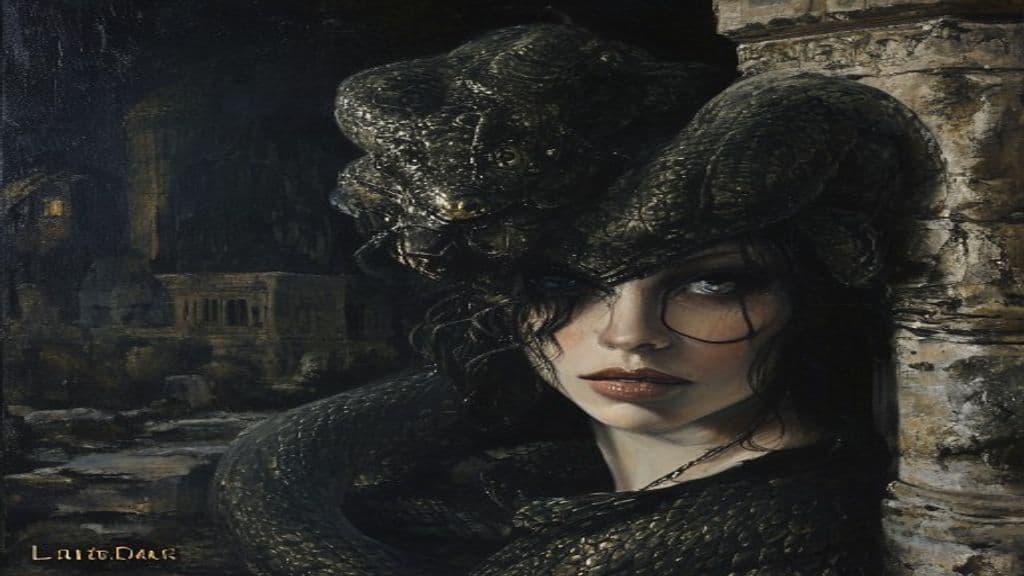
Lamia
A child-devouring demon of Greek mythology — once a queen of Libya and lover of Zeus, driven mad by Hera's destruction of her children and transformed into a monstrous hunter of other women's children.
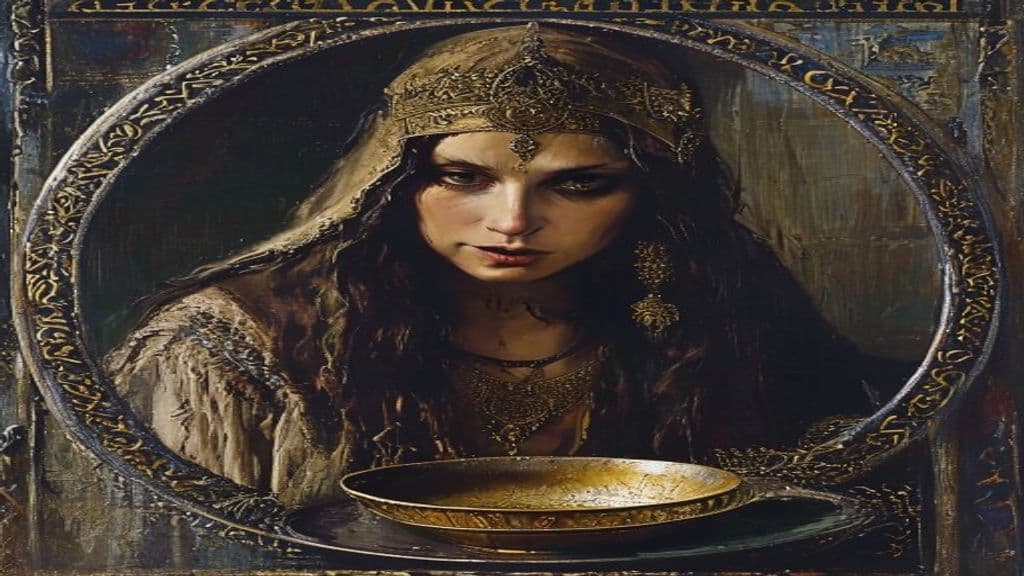
Lilith
Lilith is a feminine night‑spirit in Jewish mythic, magical, and folkloric traditions associated with harmful nocturnal activity, especially threats to sleeping people and infants. The figure appears both as a class of night‑spirits (lilit/lilītu) in Near Eastern demonologies and as an individualized dangerous woman in later medieval Jewish narratives and amulets.
Adapa
Adapa is a mythic figure from ancient Mesopotamian (Sumerian and Akkadian) literature: a mortal fisherman and temple sage of Ea at Eridu endowed with exceptional wisdom. He appears in a fragmentary tale in which he breaks the wings of the south wind and is summoned to the divine court; his name was later invoked in exorcistic and ritual contexts as an authoritative identity.
Akhkhazu
Akhkhazu (also Ahhazu; Sumerian Dimme-kur) is an Akkadian-era Mesopotamian malignant spirit described as a demon of jaundice who 'seizes' victims, brings fever and plagues, and is cited in later summaries as one member of a triad with Labasu and Labartu. Later popular summaries also describe her as preying on nursing infants while mothers slept.
Alû (Alu)
A named lemma attested in modern reference lists as 'ALU / Alu', but for which the supplied research corpus contains no substantive primary- or secondary-source information about nature, appearance, powers, or rituals in Mesopotamian tradition.
Amurru (Martu)
Amurru, Sumerian Martu, is a Mesopotamian deity who functions as the divine personification of the Amorites. Originating in Mesopotamian textual practice, he is associated with the steppe and mountains, depicted with a crooked staff, portrayed in hymnography as warlike and lightning-armed, and from the Old Babylonian period acquires a prominent exorcistic cultic role.
Anshar
Anshar is a Mesopotamian primordial deity whose name (Cuneiform AN.ŠÁR) literally means "whole sky" or "the whole heaven." He functions as an abstract ancestral figure in theogonic genealogies (not actively worshiped as a regular cult deity) and appears in literary contexts—most notably the Enūma Eliš—and in god lists where he legitimizes later supreme gods.
Anu
Anu (Sumerian An; Akkadian Anu/Anum) is the divine personification of the sky in ancient Mesopotamian religion, traditionally ranked at the top of god‑lists as the source of heavenly authority (anûtu/anuti) and the fount of legitimate rule for gods and kings. Though supreme in genealogies and astronomical schema, many periods portray him as a relatively passive or figurehead deity whose active cultic role is limited until a late Seleucid reinvention in Uruk.
Anunnaki
A variable collective of major deities in ancient Sumerian, Akkadian, Assyrian and Babylonian religious literature, described as offspring or descendants linked to the sky god An (Anu) and an earth/mother figure (Ki/Ninhursag). Texts portray them as participants in the divine assembly, decreers of human fate, and in some traditions a group of seven underworld judges; their number, membership, and functions vary across sources.
Anzû (Imdugud)
Anzû, also called dZû or Imdugud, is a large storm-associated bird-figure in Sumerian/Akkadian/Babylonian myth. Portrayed as a hybrid (commonly a massive bird with a lion's head or as a half-human storm-bird), Anzû is credited in mythic narratives with seizing the Tablet of Destinies and thereby challenging the authority of chief gods such as Enlil.
Apkallu (Abgal)
Apkallu (Akkadian; Sumerian: Abgal) are polyvalent Mesopotamian wisdom figures attested as mythic/semi-divine sages (notably a group of seven), as professional human experts (ummânu), and as apotropaic images used in household and cultic ritual. They are closely associated with the god Ea (Nudimmud) as transmitters of secret knowledge and are represented in diverse iconography including fish-man and bird-headed types.
Asakku
A class of Sumerian disease-demons born from the union of heaven and earth, who lodged themselves in people's bodies and caused wasting fevers and convulsions.
Asarluhi
Asarluhi (also Asalluhi, Asarluhe, Asaralimnuna, Asaralim, Asalim, Asarnuna) is a Mesopotamian deity primarily associated with incantations and exorcism who commonly operates alongside his father Enki. He is likely identical with an earlier deity attested from the third millennium BCE called Asar (Asaruludu in some modern datasets).
Atra-Hasis
Atra-Hasis is the eponymous human protagonist of an 18th-century BCE Akkadian epic. Presented as a priest whose name is glossed 'exceedingly wise', he functions as the human interlocutor in narratives of the Mesopotamian creation of mankind and the divinely-sent deluge, and is also listed in the Sumerian King List as a ruler of Shuruppak.
Community Record
- [1]Lilu (mythology) - Wikipedia. Wikipedia, 'Lilu (mythology)'wiki
- [2]Lilu - Wikipedia. Wikipedia, 'Lilu'wiki
- [3]Scurlock & Andersen (summary as cited in Wikipedia). Summary of Scurlock and Andersen (2005) as cited in the Wikipedia articleacademic
- [4]Gilgamesh Tablet XII (ki-sikil-lil-la-ke passage - summarized). Summary of Tablet XII (Gilgamesh) description of ki-sikil-lil-la-ke as given in secondary literature and summarized on Wikipedialiterary