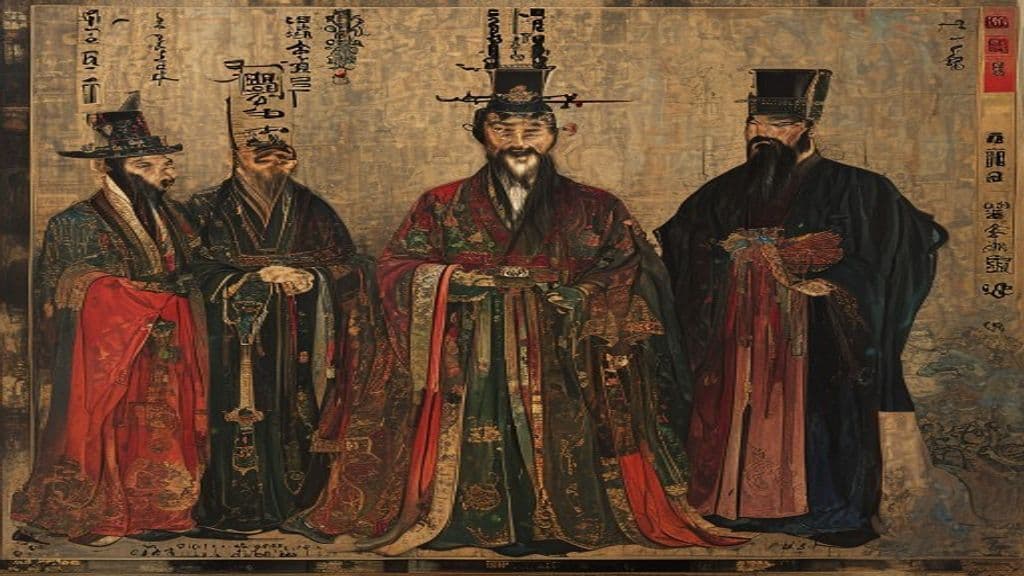
Considered descendants of Jizi, a legendary Chinese figure who introduced Chinese civilization to Korea. Their association with Jizi is considered an Early Modern fabrication.
No specific abilities or behaviors described.
Feronia
Feronia is an ancient Italic goddess of central Italy associated with fertility, the wild/nature, and certain civic-economic functions such as trade. Originating with Sabine and Faliscan practice and later incorporated into Roman religious listings, she possessed sanctuaries and a visible cult presence in the archaic and Republican periods.
Fetket
Fetket is a minor ancient Egyptian deity attested in modern secondary compilations as an attendant of the sun god Ra, described in some sources with the functional label 'butler' or 'cupbearer' to Ra. Surviving references record the name and this occupational role but provide no primary-text evidence, iconography, or ritual material in the supplied sources.
Feuermann
A German-language folkloric luminous apparition described as a "fire man" or "fiery ghost," known in regional dialects by several synonymous names that emphasize burning, glowing, or flickering qualities. The Feuermann is presented in the supplied sources primarily as a named class of luminous phenomenon rather than through detailed narratives, rituals, or functions.
Fext
A Fext is an undead revenant figure recorded in modern summaries of Central European/Slavic popular tradition associated with the Thirty Years' War; it is chiefly noted for practical invulnerability to ordinary weapons, with a single folkloric vulnerability to bullets made of glass.
Fiacha Cennfinnán
Fiacha Cennfinnán (modern spelling Fiacha Ceannfhionnán, 'Fiacha of the little white head') is a legendary Fir Bolg figure recorded in medieval Irish regnal lists and annals as a High King of Ireland who overthrew his great‑uncle Sengann, ruled for five years, and was later overthrown and killed by Rinnal, son of Genann.
Fiacha mac Delbaíth
Fiacha mac Delbaíth is a legendary figure of early Irish tradition presented as a member of the Tuatha Dé Danann who served as a High King of Ireland. Medieval compilations record his accession, a ten-year reign, and his death in battle as part of the narrative sequence of prehistoric rulers.
Ficus Ruminalis
In ancient Roman mythology, the Ficus Ruminalis is a wild fig tree associated with mythological events and protected by deities. (Note: * Power tier should be adjusted from Ancient to Lesser (due to lack of deity-level powers or abilities) * Origin story should be rephrased to clarify the Ficus Ruminalis is not an entity in itself, bu)
Fides
Fides is the Roman personification and goddess of trust, faithfulness, and good faith (bona fides). Treated both as an ethical virtue and a divine presence, she was cultivated in public religion through ceremonies and temples to uphold social and legal trust.
Fiery Flying Serpent
A metaphorical creature representing the Assyrian kingdom's power and destruction, used in Jewish tradition. (Note: * Power tier should be Greater, not Primordial, as it's a symbolic representation of a powerful regional entity (the Assyrian kingdom) rather than a cosmic or primordial force. * Abilities section nee)
Fiery Serpent (Slavic)
A supernatural entity from Slavic folklore, described as a manifestation of fire in the sky or air. (Note: 1. Power tier should be adjusted from Primordial to Ancient, as it appears to be a deity-level entity rather than a cosmic one. 2. Add sensory cues for sounds associated with the entity (e.g., roaring)
Figment
Figment is a fictional mascot character created by The Walt Disney Company to personify imagination for the Imagination! pavilion at Epcot. Introduced with the pavilion's Journey Into Imagination attraction, he functions as a narrative device and transmedia corporate character rather than a traditional folkloric or supernatural entity.
Filippo Argenti
Filippo Argenti is a historical 13th-century Florentine nobleman (Adimari family, Black Guelphs) who appears as a named damned soul in Dante Alighieri’s Divine Comedy (Inferno, Canto VIII), located among the wrathful in the river Styx. In Dante’s poem he functions as a recognizable moral exemplum of wrath: he accosts the pilgrim and is subsequently attacked by other wrathful souls.
Community Record
- [1]