
The Fiery Flying Serpent is a symbolic representation of the Assyrian kingdom's power and threat to Judah, as described in the Book of Isaiah.
No physical description of the creature is provided in the source material, focusing instead on its symbolic meaning.
The Fiery Flying Serpent does not possess abilities or behaviors, but rather serves as a metaphorical representation of destruction and chaos.
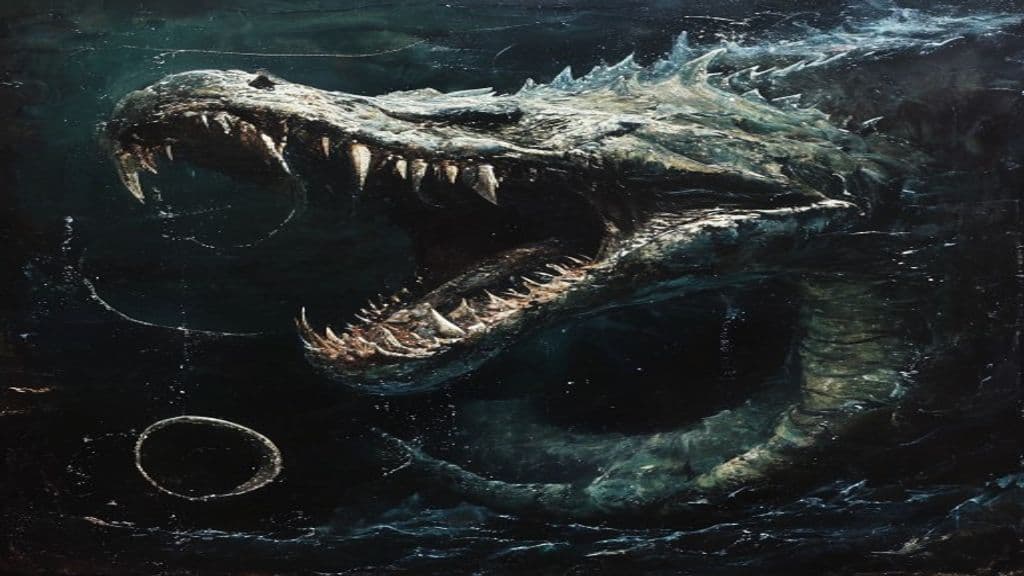
Leviathan
A giant sea serpent in Jewish mythology, embodying chaos and serving as a metaphor for a powerful enemy. (Note: - Power tier should be Ancient (Leviathan's abilities are often described as deity-level, such as threatening the damned after their lives are over and being annihilated) - Appearance is not mentioned)
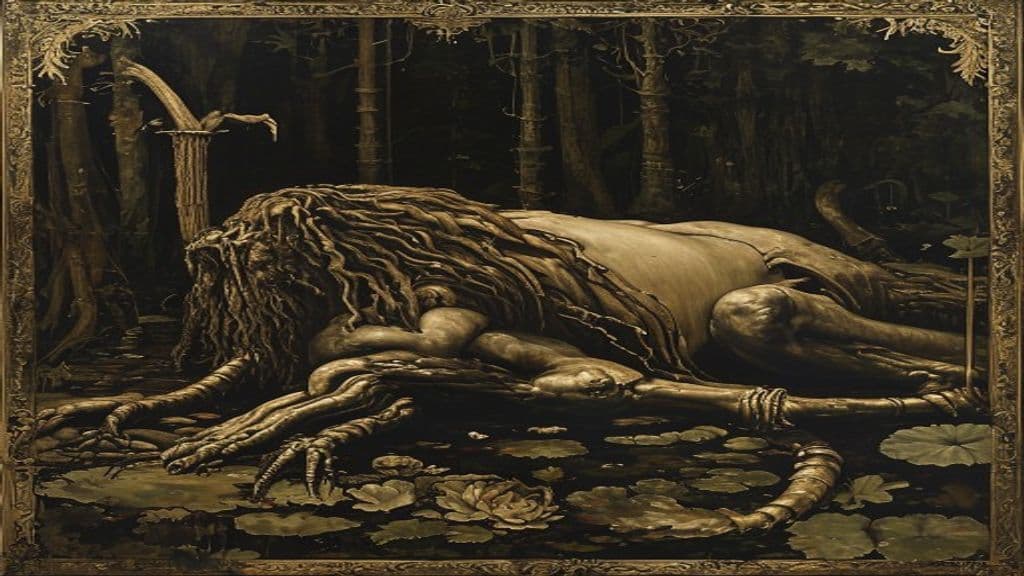
Behemoth
Primordial creature from Jewish tradition, representing chaos-monster or embodiment of primordial forces. (Note: - Power tier should be revised as Primordial is not an official power tier classification; however, given Behemoth's abilities and origin story, it can be re-classified as Ancient (deity-level). - App)
Cain (Jewish Tradition)
Biblical figure and symbol of sin and violence, human being with no supernatural abilities. (Note: 1. Power tier: Change to "Human" is correct. 2. Abilities: Specify that the abilities mentioned are a result of Cain's actions and decisions, not supernatural powers. 3. Weaknesses: Mention God's curs)
Qippoz
A supernatural entity mentioned in the Hebrew Bible, described as an 'arrow snake' or 'owl', but its nature and classification are uncertain. (Note: 1. Power tier should be Undetermined/Lesser, as it's associated with desolation and ruined cities in Edom, which suggests a local spirit or entity, but its nature is still uncertain. 2. Add sensory cu)
Succubus (Jewish Tradition)
Female demon that seduces male humans through dreams, potentially leading to a hybrid child and the man's decline. (Note: 1. Power tier should be Ancient, not Primordial (Primordial powers are cosmic, while Ancient powers are deity-level). 2. No information on physical appearance is missing because it's simply not mentio)
Fiacha Cennfinnán
Fiacha Cennfinnán (modern spelling Fiacha Ceannfhionnán, 'Fiacha of the little white head') is a legendary Fir Bolg figure recorded in medieval Irish regnal lists and annals as a High King of Ireland who overthrew his great‑uncle Sengann, ruled for five years, and was later overthrown and killed by Rinnal, son of Genann.
Fiacha mac Delbaíth
Fiacha mac Delbaíth is a legendary figure of early Irish tradition presented as a member of the Tuatha Dé Danann who served as a High King of Ireland. Medieval compilations record his accession, a ten-year reign, and his death in battle as part of the narrative sequence of prehistoric rulers.
Fictitious Kings in Korean Genealogies
Entities appearing in 15th-16th century genealogies of Cheongju Han, Haengju Gi, and Taewon Seonu descent groups. (Note: - Power tier is Minor Spirit (but no description of abilities implies they might be lower still) - Origin story lacks clear indication that association with Jizi is an "Early Modern fabrication", inst)
Ficus Ruminalis
In ancient Roman mythology, the Ficus Ruminalis is a wild fig tree associated with mythological events and protected by deities. (Note: * Power tier should be adjusted from Ancient to Lesser (due to lack of deity-level powers or abilities) * Origin story should be rephrased to clarify the Ficus Ruminalis is not an entity in itself, bu)
Fides
Fides is the Roman personification and goddess of trust, faithfulness, and good faith (bona fides). Treated both as an ethical virtue and a divine presence, she was cultivated in public religion through ceremonies and temples to uphold social and legal trust.
Fiery Serpent (Slavic)
A supernatural entity from Slavic folklore, described as a manifestation of fire in the sky or air. (Note: 1. Power tier should be adjusted from Primordial to Ancient, as it appears to be a deity-level entity rather than a cosmic one. 2. Add sensory cues for sounds associated with the entity (e.g., roaring)
Figment
Figment is a fictional mascot character created by The Walt Disney Company to personify imagination for the Imagination! pavilion at Epcot. Introduced with the pavilion's Journey Into Imagination attraction, he functions as a narrative device and transmedia corporate character rather than a traditional folkloric or supernatural entity.
Filippo Argenti
Filippo Argenti is a historical 13th-century Florentine nobleman (Adimari family, Black Guelphs) who appears as a named damned soul in Dante Alighieri’s Divine Comedy (Inferno, Canto VIII), located among the wrathful in the river Styx. In Dante’s poem he functions as a recognizable moral exemplum of wrath: he accosts the pilgrim and is subsequently attacked by other wrathful souls.
Fimafeng
Fimafeng is a named serving-man in the hall of the sea-god Ægir in the Norse poem Lokasenna. He is praised for his skillful service at a divine feast and is suddenly slain by Loki, an act that provokes the gods to drive Loki out of the hall.
Community Record
- [1]Book of Isaiah. Isaiah 30:6, 29:5biblical