
Sources do not record a single origin myth for Mam. Rather, the term mam—literally 'grandfather' or 'grandson' in Maya kinship vocabulary—functions both as a social kinship label and as a category for venerable supernatural persons; in Classic inscriptions the element mam introduces ancestors or lineal relations, and in ethnography distinct local Mams are described as aged or ancestral deities embedded in lineage and landscape.
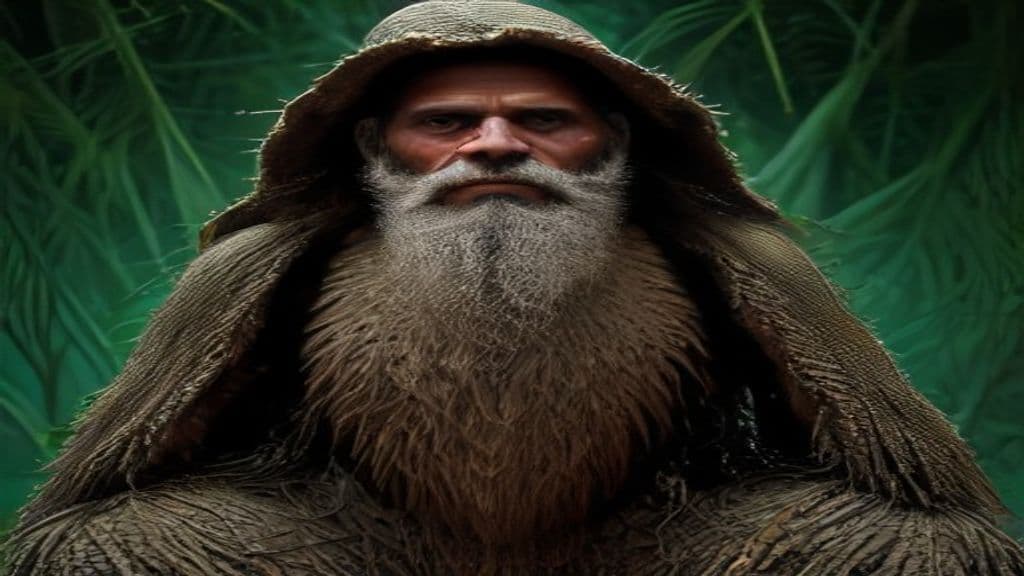
No single canonical appearance is described across sources. Local variants differ: a 16th‑century Yucatec Mam was represented as a straw puppet venerated during the Uayeb; the Tzutujil Mam Maximón appears in ethnography as a clothed human‑like cult figure or idol; Kekchi and mountain Mams are place‑bound mountain spirits without standardized bodily descriptions; Huastec Mamlabs are conceived as earth deities rather than as a single anthropomorphic form.
Mams function as elder ancestral powers tied to earthly and seasonal phenomena and to social domains. Specific attributions in the sources include: Kekchi mountain Mams (four Mams) associated with the four corners of the earth and, in Alta Verapaz, a Mam feared for links to earthquakes and inundations; the Huastec Mamlabs, including Muxiʼ, described as earth deities with Muxiʼ portrayed as the violent originator of the rainy season; and the Tzutujil Mam Maximón venerated as a deity of merchants, travellers, and witchcraft. The 16th‑century Yucatec straw Mam is ritually created and discarded during the five unlucky days (Uayeb), indicating a calendrical and liminal function.
Weaknesses
- ritualburial or disposal of the Mam image
Wards
- ritualsetting up and later discarding the straw Mam at the Uayeb (Yucatán straw puppet practice)
- ritualburial of a Mam image during Holy Week (Alta Verapaz practice)
Maliyadeva
Maliyadeva is a revered early Sri Lankan Buddhist monk and arahant preserved in Theravādin chronicle tradition. Credited in summaries of the Mahavamsa with arahantship and high psychic powers (abhiññā), he is associated in local tradition with specific meditation sites and modern commemorations in Sri Lanka.
Malkuth (מַלְכוּת)
Malkuth is the tenth sefirah on the Kabbalistic Tree of Life, the lowest sphere representing the manifest world or 'Kingdom'. It functions as the receiving endpoint of the divine emanations, the realm of material existence (the World of Assiah), and a symbolic locus for humility, embodied action, and the Shekhinah in Zoharic material.
Mallinātha
Two distinct historical/religious figures share the name Mallinātha in the supplied sources: (1) Mallinātha Sūri, a medieval South Indian Sanskrit commentator known for Sanjivani commentaries on the five mahākāvyas; and (2) Mallinātha (Mālliṇātha), the 19th tīrthaṅkara in Jain tradition, listed as a ford-maker born at Mithilā into the Ikshvaku lineage.
Mallku (mountain condor spirit)
The provided source does not describe a supernatural Mallku; it records Mallku as an epithet or name used by a modern Bolivian political figure, Felipe Quispe Huanca. There is insufficient information in the source to characterize Mallku as an entity within Inca or Andean cosmology.
Malphas
Malphas is a named infernal officer in early modern European grimoire tradition, described as a high-ranking Great President of Hell who commands forty legions and who appears to conjurers in ritual contexts, most commonly as a raven or, on request, as a hoarse-voiced man.
Malyavan
Malyavan is a rākṣasa elder-counsellor in the Rāmāyaṇa tradition, portrayed as a learned adviser versed in polity who urges Rāvaṇa to return Sītā and avoid war with Rāma. He is presented as a member of a leadership family of rākṣasas and later serves as chief counsellor to Vibhīṣaṇa after Rāvaṇa's death in some accounts.
Mama Huaco
Mama Huaco is an ancestral female figure in Inca origin narratives who emerges from the cave of Paqariq Tampu/Pacaritambo among the founding siblings; sources describe her as strong and skillful and record an act in which she hurled two golden staffs northward, an action tied to territorial marking in the origin cycle.
Mama Ipacura
A name that appears in some modern mentions as a feminine figure associated with Inca origin-cycle narratives; however, the supplied source set contains no primary descriptions or attestations of Mama Ipacura as a distinct, historically documented mythic personage. Most statements about her must therefore be treated as uncertain and extrapolated from the general category of Inca "Mama-" founding women.
Mama Killa (Mama Quilla)
Mama Killa (Quechua: Mama Killa / Mama Quilla, 'Mother Moon') is the Inca lunar goddess and a high-ranking divine figure whose cycles regulated time, ritual order, and aspects of women's social life. She is depicted as a moon-personified woman, served by priestesses, and figured in myths explaining lunar spots and eclipses.
Mama Ocllo
Deified mother and fertility goddess associated with the establishment of the city of Cusco and foundational power within Inca society. (Note: - Power tier: Primordial (due to her association with creation and foundational power) - Abilities: The text only mentions reproductive and maternal care powers, but it is likely that Mama Ocllo's abi)
Mama Ocllo Coya
Mama Ocllo Coya (fl. 1493) is recorded in the supplied sources as a princess and queen consort (Coya) of the Inca Empire, wife of Sapa Inca Topa Inca Yupanqui and mother of Huayna Capac. Described in historical and legendary accounts as politically active and influential, she is credited with a stratagem in a Chimor episode and with decisive action to secure her son's succession.
Mama Pacha
Mama Pacha (commonly Pachamama) is an Andean/Inca deity and cosmological principle representing space-time, a maternal force that sustains life, fertility, and nature. She is presented in sources as an omnipresent, generative principle within Andean worldview rather than a narrowly localized spirit.
Community Record
- [1]Mam (Maya mythology) - Wikipedia. Wikipedia contributors, 'Mam (Maya mythology)', Wikipedia, The Free Encyclopedia.wiki
- [2]Las dos cruces de Todos Santos : la religiosidad de un pueblo maya. Oakes, etc., Las dos cruces de Todos Santos: la religiosidad de un pueblo maya (archival source cited in research notes).academic
- [3]Encyclopedic and ethnographic summaries in research notes. Compiled ethnographic summaries and comparative notes as provided in research material.other