
In the origin-cycle traditions associated with the Incas, Mama Huaco is one of the ancestral figures who emerges from the cave of origin Paqariq Tampu (also spelled Pacaritambo) with a group of siblings. She is presented among the cohort of founders who wander the land of what is now Perú in the mythic time of origins. In the excerpts provided she is described as participating in foundation acts of the group; one source records that she "took two golden staffs and hurled them toward the north," an action framed in the material as connected to demarcation or mapping ancestral presence onto the landscape.
The supplied sources contain no physical or visual description of Mama Huaco. A database entry (Wikidata item Q27950066) indicates there exist artistic representations attributed to an anonymous painter, but the provided excerpts give no descriptive detail of her appearance.
The available texts describe Mama Huaco as "a woman exceedingly strong and skillful." Beyond this characterisation, a specific deed is recorded: she is said to have taken two golden staffs and hurled them northward. The sources do not elaborate additional supernatural powers or magical techniques; the emphasis in the excerpts is on strength, skill, and a symbolic/territorial act tied to the origin narrative.

Manco Cápac
Manco Cápac is the foundational ancestral figure and culture‑founder of the Inca (Quechua) tradition: remembered as the first ruler (Sapa Inca) and progenitor who, according to origin legends, established Cusco after emerging with Mama Ocllo from Lake Titicaca. Sources treat him variably as mythic ancestor, legitimizing founder, and a possibly historical early ruler.
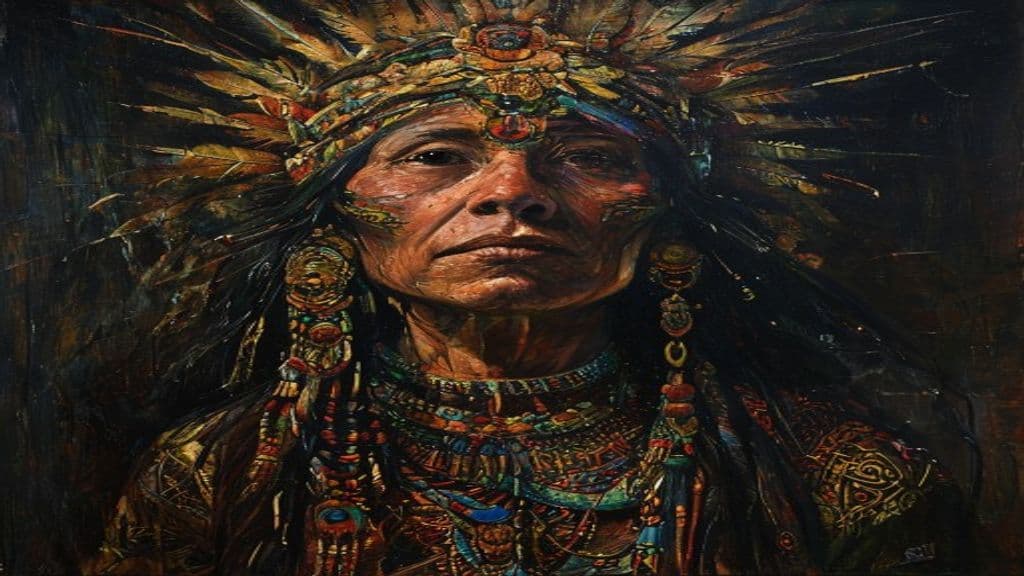
Mama Ocllo
Deified mother and fertility goddess associated with the establishment of the city of Cusco and foundational power within Inca society. (Note: - Power tier: Primordial (due to her association with creation and foundational power) - Abilities: The text only mentions reproductive and maternal care powers, but it is likely that Mama Ocllo's abi)
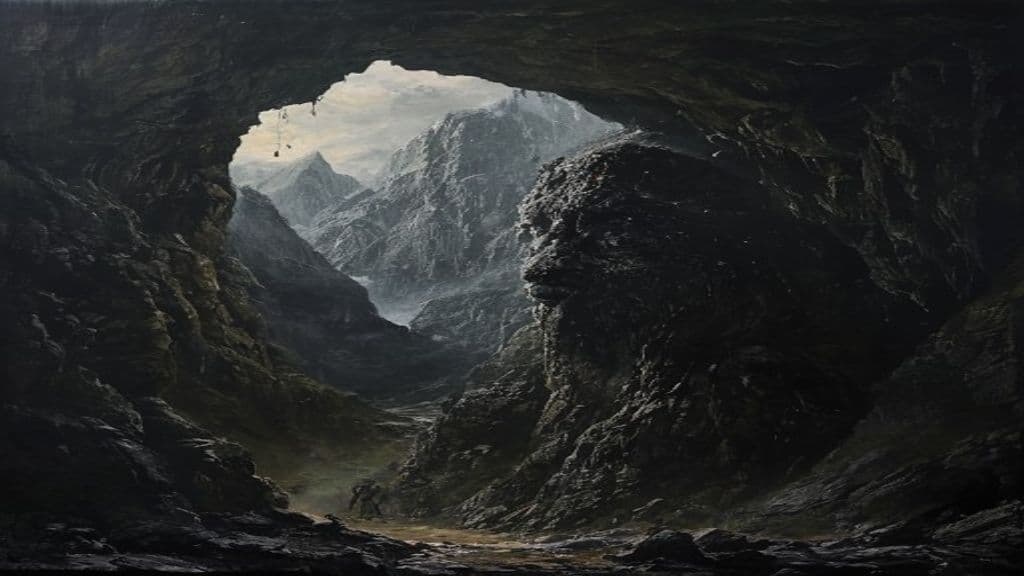
Ayar Cachi
In Inca mythology, Ayar Cachi is one of the brothers of Manco Cápac and a significant figure in the origin myth of the Incas. (Note: 1. Power tier: Lower to Ancient (deity-level) since Ayar Cachi is described as one of Manco Cápac's brothers and shares an origin myth, but does not appear to possess cosmic powers. 2. Abilities: The )
Apu
In Andean (Inca-era and continuing) belief, an apu is the spirit of a mountain or a solitary rock, conceived as a localized, often anthropomorphic guardian presence associated with a particular peak or notable stone in Peru, Ecuador, and Bolivia.
Ciqui Ollco
Ciqui Ollco is not documented in the supplied sources as a supernatural being; the materials reference historical Inca royals (notably Topa Inca Yupanqui and Mama Ocllo Coya). Any supernatural characterization of 'Ciqui Ollco' is unsupported by the provided research notes.
Inca Human Sacrifice Entity
A supernatural force in Inca tradition believed to demand human sacrifice, particularly children, as a form of placation. (Note: 1. The summary should mention that the entity demands appeasement, not just placation. 2. Power tier should be Ancient (deity-level) instead of Primordial (cosmic). 3. The source material does not sup)
Mama Qucha
Mama Qucha (Mama Cocha) is an Inca water mother deity, personifying the sea and other bodies of water. She functions as guardian of sailors and fishermen, provider of fish and calm seas, and is counted among the principal female elemental mothers in Inca cosmology.
Manco Cápac
Manco Cápac is the foundational ancestral figure and culture‑founder of the Inca (Quechua) tradition: remembered as the first ruler (Sapa Inca) and progenitor who, according to origin legends, established Cusco after emerging with Mama Ocllo from Lake Titicaca. Sources treat him variably as mythic ancestor, legitimizing founder, and a possibly historical early ruler.
Pacha Mama
Pacha Mama is an Andean/Inca mother-deity representing 'space-time' and a universal, life-sustaining principle tied to earth, fertility, and the totality of the cosmos. Revered across the Andes, she functions as a foundational generative presence from which major cosmological principles are said to trace their origin.
Sinchi Roca
Sinchi Roca (Sinchi Ruq'a) is presented in colonial-era and modern summaries as the second Sapa Inca of the Kingdom of Cuzco (mid-13th century). In the sources he appears as an early, possibly legendary, human ruler associated in tradition with administrative reforms, markers of nobility, and the early investiture trappings of imperial power.
Supay
Supay is an ambivalent subterranean spirit and regent of the Incan underworld (Uku Pacha / Hurin Pacha). In Quechua and Aymara tradition he embodies aspects of shadow, death, and chaos, functioning both as lord of the dead and as the archetype or progenitor of many dangerous local spirits; Spanish colonial sources later equated him with the Christian Devil.
Ukhu Pacha
Ukhu Pacha is the under- or inner-world layer in Andean (Quechua/Inca) tripartite cosmology. As a pacha it functions as a position in an integrated space–time ordering rather than as a single personal spirit or deity.
Viracocha
Viracocha (Quechua Wiraqucha, Huiracocha) is the principal creator and civilizing deity in pre-Inca and Inca mythology, portrayed as the originator of the universe, time, and human society who emerges from watery places to bring light, order, and knowledge.
Ñusta
Ñusta is a Quechua term used in Inca and Andean contexts to denote a high-status woman or noblewoman—often translated as "princess"—who occupied elite social, political, and ritual roles within the Inca imperial order and continued to be significant in colonial-era interactions with Spaniards.
Mam
Mam is a pan‑Maya kinship term used as a respectful appellation for aged ancestral powers and several local elder deities. It names a set of distinct local figures—mountain spirits, earth deities, a ritual straw effigy used during the Uayeb, and particular cult figures such as the Tzutujil Mam Maximón—each tied to specific places, seasons, or social domains.
Community Record
- [1]Inca mythology. Wikipedia, "Inca mythology" — contextual summary of Inca origin myths and cultural backgroundwiki
- [2]Mama Huaco, the first Coya of Peru – Veleda / Sourcememory. Sourcememory / Veleda — describes Mama Huaco as "a woman exceedingly strong and skillful" and records that she "took two golden staffs and hurled them toward the north."folk
- [3]Wikidata: Q27950066 (painting by anonymous painter). Wikidata item indicating an attributed painting exists for Mama Huaco (no descriptive detail in provided excerpt).other
- [4]Ayar Cachi. Wikipedia, "Ayar Cachi" — used in source material to indicate other named figures in the same origin-cycle corpus.wiki
- [5]History of the Incas. Wikipedia, "History of the Incas" — contextual material on the historical and mythic setting of Inca origin narratives.wiki