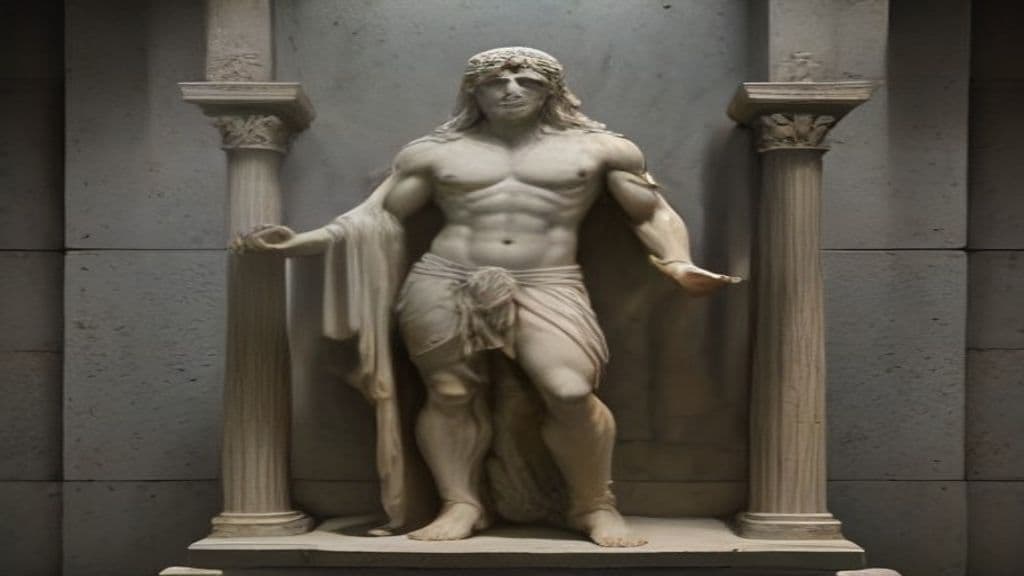
There is no single origin story for 'Medon'; the name appears for multiple distinct persons in Greek textual and inscriptional sources. In Homer (Odyssey, Book XXII) Medon is a herald of Odysseus' household, explicitly appealed to for mercy. Mythographic summaries list several mythic figures named Medon: a centaur present at the wedding of Pirithous and Hippodamia; a Dolionian killed by the Argonauts; participants in the Epigoni cycle (including a son of Eteoclus); and a son of Pylades and Electra. Separately, an Athenian honorific inscription (SEG 36.165) records a historical or civic Medon honored as son of a proxenos and benefactor. These attestations show the name circulating across epic, mythic, and civic registers rather than deriving from a single mythic origin.
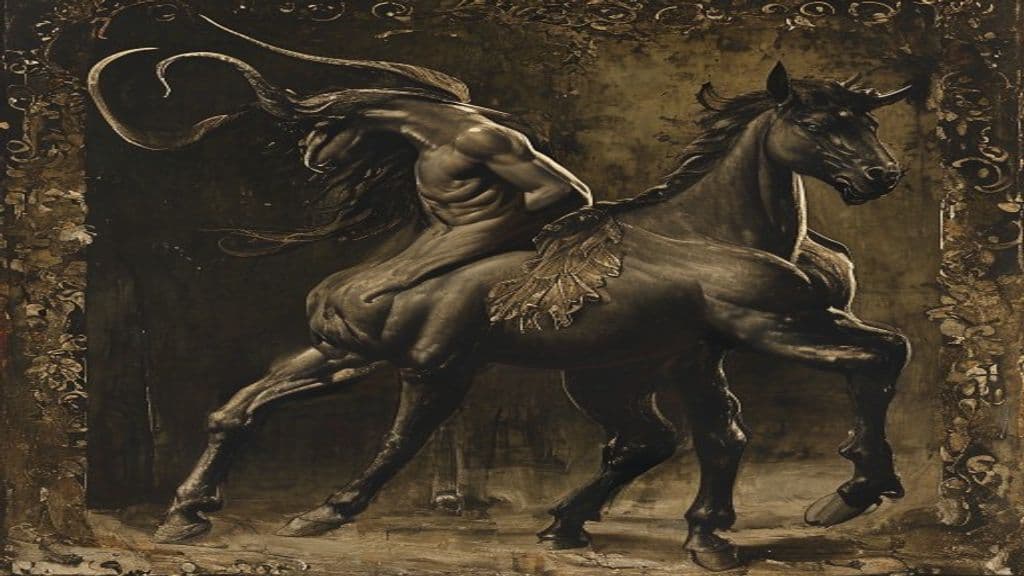
No consistent physical description attaches to 'Medon' across sources. The Homeric Medon is presented as a human household herald with no physical detail. Several mythic Medons are similarly unnamed in appearance beyond their social or narrative role (warrior, victim, son). One attestation identifies Medon explicitly as a centaur at the wedding of Pirithous and Hippodamia; that instance implies the conventional centaur morphology (half-man, half-horse) as used in Greek myth, but the provided summary offers no further particulars for that centaur's appearance.
Sources attribute no supernatural powers to persons named Medon. Their behaviors are those of mortal roles: the Homeric Medon functions as a loyal herald and caretaker of a household (appealed to in Odyssey XXII); other Medons act as warriors or casualties in heroic narratives (e.g., a Dolionian killed by the Argonauts; participants in the Epigoni). The centaur Medon, by virtue of being a centaur, belongs to the mythic class of centaurs, which in Greek myth are portrayed as strong, warlike, and potentially violent at the Pirithous–Hippodamia wedding episode, but no unique abilities specific to Medon are recorded in the supplied sources.
Acessamenus
Acessamenus (Ancient Greek: Ἀκεσσάμενος, Akessamenos) is attested in Greek sources as a mortal king of Pieria and the eponymous founder of a Macedonian place called Akesamenai. He appears in Homeric genealogy as the father of Periboea, whose union with the river-god Axius links Acessamenus into the ancestry of the hero Asteropaios.
Achaeans (Homer)
In Homeric epic, 'the Achaeans' (Ancient Greek: Ἀχαιοί, Akhaioí) is a collective ethnonym used to refer to the Greek peoples as a single grouped human contingent—the army of Greeks in the Trojan War narratives such as the Iliad and the Odyssey. The term functions as a poetic designation for human actors within the moral, social, and military universe of Homeric poetry rather than as a supernatural class of beings.
Aeolus
Aeolus is a name applied to multiple related figures in Greek myth: an eponymous son of Hellen (founder of the Aeolian people), a son of Poseidon who led colonial ventures to Tyrrhenian islands, and a son of Hippotes depicted in epic as a ruler or keeper of the winds. Ancient mythographers note confusion and overlap among these persons.
Agamemnon
Agamemnon is the legendary king of Mycenae (or Argos), head of the House of Atreus, and commander of the Achaean forces at Troy in Greek epic and tragedy. His story links dynastic guilt, ritual obligation, and political authority, culminating in the sacrifice-at-Aulis episode and his murder on return from Troy followed by juridical atonement in the Oresteia.
Agelaus
Agelaus (Ancient Greek: Ἀγέλαος) is not a single supernatural being but a personal name borne by multiple mortal figures in Greek myth, epic, and local history. Bearers include a herdsman who raised the exposed infant Paris, several minor warriors in the Trojan cycle, mythic princes (e.g., sons of Oeneus, Stymphalus, Temenus, and in some lists a son of Heracles), a suitor of Penelope, and a historical official of Naupactus in the Aetolian League.
Agenor of Argos
Agenor is a mythic royal figure in Greek heroic‑age genealogies who functions as a dynastic ancestor and narrative node. In different traditions he appears as an Argive king in the house of Phoroneus or as a son of Poseidon associated with Phoenicia and Libya; an Agenor also appears as a warrior in Homeric epic.
Amphimachus of Caria
A mortal Homeric leader: son of Nomion and co-captain (with his brother Nastes) of the Carian contingent allied with Troy in the Trojan War tradition. Attested in Homeric catalogue material and later commentary; sources record a variant tradition in which one of Nomion's sons was slain and stripped of gold by Achilles, with disagreement over whether that was Amphimachus or Nastes.
Antiphus
Antiphus (Ancient Greek Ἄντιφος) is a personal name borne by several mortal men in Greek myth and epic traditions rather than a single supernatural being. Multiple figures named Antiphus appear in genealogies and narratives as princes, warriors, companions of heroes, colonists, and victims in the heroic age (generation of Heracles, the Trojan War, and the Odyssey).
Arete
Arete is the queen of the Phaeacians (Scheria) in Greek epic tradition, wife of Alcinous and a leading household and civic figure noted for intelligence, hospitality, and influential mediation in matters of sanctuary, marriage, and domestic dispute. Though the people regard her with near-sacral reverence — they 'look upon her as upon a goddess' — the sources present her as an honored human ruler whose authority operates within social and political frameworks of the community.
Ate
Ate (Ancient Greek: Ἄτη, Átē) is the personified force of delusion, reckless folly, and ruin in ancient Greek poetic and mythic tradition. She functions both as an abstract condition—an aition for misguided action—and as an active agent who can blind the minds of gods and men and be sent, notably by Zeus, as a form of retribution.
Bebryces
The Bebryces (Greek: Βέβρυκες) are a legendary people or tribe attested in Greek mythographic and geographic tradition, primarily located in Bithynia (northwestern Anatolia). They appear in heroic-age narratives as local rulers and warriors—not as supernatural beings—and are associated with episodes involving Heracles, the Argonauts, and named kings such as Amycus and Mygdon.
Briseis
Briseis is a mortal woman in the Homeric epic tradition, captured at Lyrnessus and attached to Achilles as a war prize; her transfer between leaders (Achilles and Agamemnon) functions as a key social and moral symbol in the Iliad and later literary traditions.
Community Record
- [1]Medon (mythology) — Wikipedia. Medon (mythology), Wikipediawiki
- [2]Medon — Wikipedia. Medon, Wikipedia (name, modern usages)wiki
- [3]The Odyssey, Book XXII — Homer. Homer, Odyssey, Book XXII (appeal to Medon the herald)literary
- [4]Medon — in ancient sources @ attalus.org. Attalus.org, Medon: ancient source listings and referencesother
- [5]SEG 36.165 : Athens honours Medon. SEG 36.165 (epigraphic honorific to Medon: son of a proxenos and benefactor)academic
- [6]4836 Medon (asteroid) — overview. Modern astronomical naming: 4836 Medonother
- [7]Medon, Tennessee — Wikipedia. Medon, Tennessee (toponymic reuse of the name)wiki