
The office of Nakchhong is rooted in Kirat Mundhum practice as a visionary, self-realized ritual specialist rather than a formally trained clergy. Sources emphasize that Nakchhong acquire ritual knowledge and powers through dreams and personal revelation: knowledge is believed to be passed to a nakchhong in his dreams, and upon waking he possesses the skills and powers of a shaman. Because Nakchhong are described as self-learned and without formal teachers, the office is legitimized by individual visionary experience and community recognition within seasonal and household rites; when a community lacks a recognized Nakchhong, the broader ritual duties implied by the Sakela shrine are typically fulfilled by other authorized ritual practitioners within the Mundhum framework (sources note comparable shaman-priest roles across Kirati groups though specifics are not detailed in the supplied materials).
Sources record that Nakchhong ornament themselves with porcupine quills and peacock feathers and use characteristic ritual paraphernalia. They are associated with working materials such as ginger (अदुवा), Pokhemma, tupla (cut pieces from the front part of a banana leaf), and chindo (a gourd filled with jand, millet beer). Beyond these ritual adornments and materials, the sources do not provide a standardized bodily description, uniform, or fixed physical attributes such as height or age.
Nakchhong serve as the main priest of the Sakela shrine and lead the community rites of Sakela/Sakewa, in particular the seasonal Udhauli and Ubhauli festivals. Their ritual competencies include announcing the beginning of Sakela by sounding drums from their house, performing household worship at the suptulung (three-stone house altar) as preparation, and conducting an ordered sequence of worship: four types of Mang (deities) are worshiped first, and only after that sequence is completed the Nakchhong is believed to acquire the power to worship Suptulung, Sikari devta (hunter deity), Nagangeni (snake deities), Simebhume, and Retkamang (eight ancestral spirits). They function as mediators between the living and ancestors/spirits, performing propitiation and obtaining power through dream-transmitted knowledge. The sources describe them as self-learned, visionary ritual specialists rather than holders of a transmitted scholastic tradition.
Weaknesses
- otherNo specific weaknesses recorded in supplied sources
Wards
- otherNo specific counter-charms or wards against Nakchhong are recorded; Nakchhong are themselves agents of protection and mediation in ritual contexts
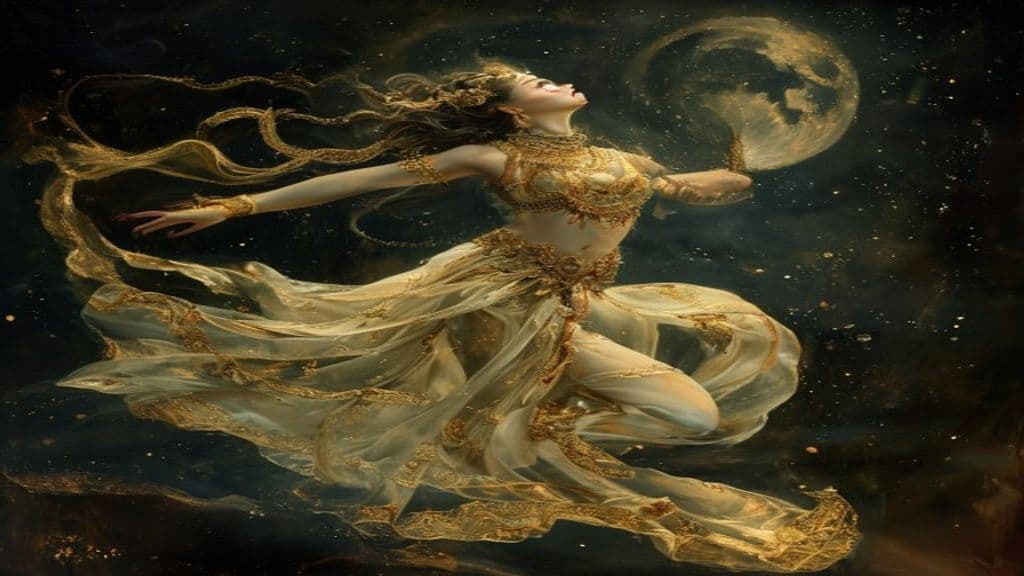
Apsara
Celestial dancers and water nymphs of Hindu cosmology — beautiful semi-divine beings who dance at the court of Indra and, by his command, descend to earth to distract sages from excessive asceticism.
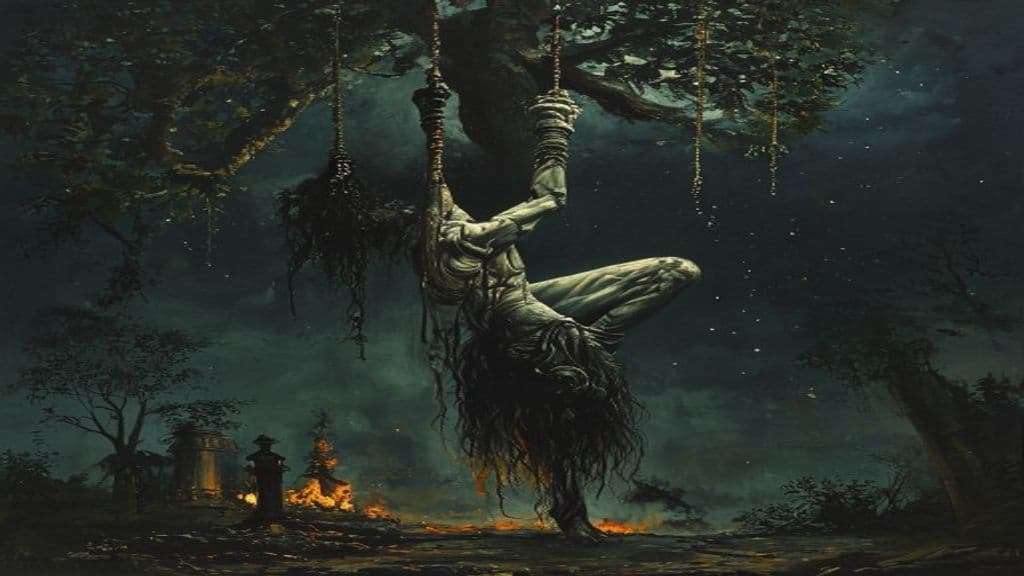
Vetala
A spirit that inhabits and reanimates corpses, possessing supernatural knowledge and the power to prophesy. One of the most feared beings in Shaiva tradition.
Nagini (Nāginī / Nāgnī / Naiṇī Devī)
Nāginī denotes a female member of the Naga, a class of semi-divine serpent beings in Indian religion and mythology. The form Nāgnī or Naiṇī Devī is recorded as the name of a serpent goddess worshipped in the valley of the Pindar river in the Indian Himalaya. The lexical form also appears in unrelated modern usages listed on the same disambiguation page.
Nagual (Maya tradition)
A human shapeshifter in Maya tradition who transforms into their tonal animal counterpart. (Note: - Power tier: Greater (not Ancient, as it's regional rather than deity-level) - Sensory cues: unknown (according to source material, not explicitly stated) - Weaknesses: no information provided - Ward)
Nahual (Nagual)
In Mesoamerican folk religion, a nahual (also spelled nagual) is a human believed able to shapeshift into a linked animal 'tonal' counterpart. Nagualism connects personal power and spiritual insight to a human's relationship with that animal aspect.
Naiad
A class of female nature-spirits in ancient Greek religion whose being is bound to particular bodies of fresh water (springs, wells, fountains, streams). Naiads are local, embodied presences venerated in community cults and invoked in rituals of purification, healing, and life-cycle events, yet they may also act harmfully toward humans.
Naimiṣāraṇya (forest)
Sacred forest in Hindu tradition, mentioned in major epics like the Ramayana and Mahabharata. (Note: 1. Summary needs clarification that it's specifically mentioned in Hindu epics, not "major epics" which could be misleading. 2. Power tier should be Primordial or Ancient, as a sacred forest mentioned)
Naka moli
A term attested in an archive discussion of Lahaina (Malu'ulu o Lele) that appears associated with the place's cultural significance; the supplied sources do not define the term or describe it as a specific supernatural being. The only direct textual evidence in the provided material is the phrase "the Naka moli" linked to Lahaina and to a statement that the place "is rich in cultural traditions and history kept alive through generations."
Nala (Ramayana)
Nala is a named vanara (monkey-like being) in the Ramayana tradition chiefly credited as the architect-engineer who designed and supervised the construction of the Rama Setu (the bridge from Rameswaram to Lanka). He also participates as a warrior in the Lanka campaign; traditions vary over whether certain miraculous properties (stones floating) belong to Nala alone, to his brother Nila, or to both.
Nale Ba
A Kannada witch-spirit that calls at your door in the voice of a dead relative; answering means death. In 1995 Karnataka, people wrote 'Nale Ba' on their doors in one of India's most documented supernatural mass panics.
Naminātha
Naminātha is the twenty-first Tīrthaṅkara of the present half time-cycle (Avsarpini) in Jain tradition. As a Tīrthaṅkara he is described in the sources as having become a siddha (a liberated, enlightened soul) and thereby exemplifying the role of a spiritual teacher who establishes the ford (tīrtha) across saṃsāra.
Nammu
Nammu is a Mesopotamian primeval mother-goddess associated with the origin of the world and with watery depths in local theology (especially Eridu). She functions as a creatrix and as an invoked deity in incantations and apotropaic rites for purification, consecration, and protection against demons, illness, and scorpions.
Namtar
The Sumerian god-demon of fate and disease, vizier of the Underworld who carries sixty diseases and acts as herald of death — he who determines the day of dying.
Nana-Ula
Hero and first King of Hawaii in Hawaiian mythology, who led his people from Tahiti to establish the royal dynasty. (Note: - Power tier should be at least Primordial given the entity's role in shaping the foundation of Hawaiian society. - Appearance: Consider adding that no physical description is mentioned, but this does)
Community Record
- [1]Nakchhong. Wikipedia, article 'Nakchhong'.wiki
- [2]Nakchhong Explained. Everything.Explained.Today mirror of Nakchhong material.other
- [3]Kirat Mundhum. Wikipedia, article 'Kirat Mundhum'.wiki
- [4]Udhauli Parva: A Festival Honoring Mother Nature. Buddha Air blog on Udhauli Parva; contextual information on seasonal festivals.other
- [5]Sakewa, Earth festival, Kirat Khambu Rai community, Sikkim, India. India Video text on Sakewa festival; contextual material on regional observance.other