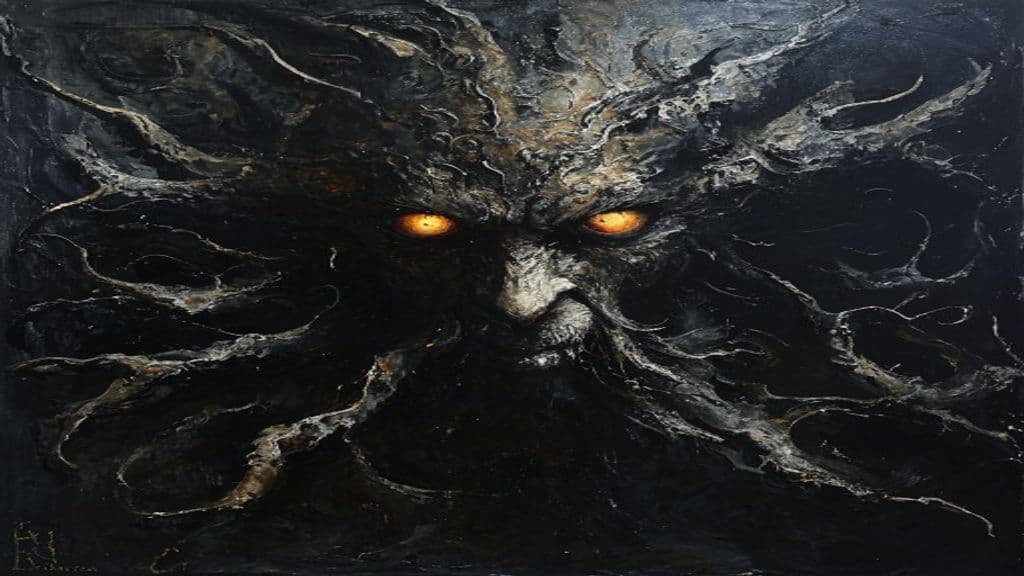
Ngaro appears in a Māori legend from the far north of the North Island. Its nature and origins are tied to the afterlife.
In Māori culture, spirits like Ngaro often have a presence or aura rather than a fixed form.
As a delicacy of the dead, Ngaro provides sustenance for the living from beyond death. Its exact nature and behavior are unknown.
Nestor (name and uses)
Nestor is presented in the supplied sources primarily as a personal and place name used across literary, geographic, maritime, scientific, and cultural contexts. While one cited headword refers to a mythological figure, the provided material contains no folkloric descriptions, supernatural attributes, or ritual traditions associated with Nestor.
Nete
Nete is a named member of a local Delphic triad described as "the three muses of the lyre" and is recorded as being worshipped at Delphi. Attestations are extremely limited: the surviving reference presents Nete as a cultic or personified musical principle associated with lyre practice at Delphi and does not equate this triad explicitly with the canonical nine Muses.
Netzach
Netzach (Hebrew: נֶצַח, Nēṣaḥ) is the seventh sephirah on the Kabbalistic Tree of Life, representing endurance, victory, perpetuity and the sustained force that brings vision into realized action. It is a metaphysical attribute/emanation rather than an independently personified spirit, employed as a conceptual node in Kabbalistic, pedagogical, and later syncretic occult mappings.
New Zealand bellbird (Anthornis melanura)
A medium-sized honeyeater endemic to Aotearoa New Zealand, valued for its melodious, bell-like song and regarded as taonga by Māori. Treated in scientific sources as Anthornis melanura, it is the only extant mainland member of its genus and an important contributor to New Zealand soundscapes and dawn chorus.
Ngake
Ngake is a tupua / taniwha figure in Māori tradition associated with the formation of Te Awa Kairangi (the Hutt River valley). In the Ngake–Whataitai story he is the vigorous sibling whose breaking free from a landlocked lake is said to have opened a channel to the sea.
Ngardi (Ngarti)
Ngardi (also spelled Ngarti) is an Aboriginal Australian ethnolinguistic group of the Northern Territory and Western Australia, identified as traditional owners of extensive territory west of the Tanami Track and participants in land-claim and modern legal/economic agreements. Scholarly sources treat Ngardi as a people and language group rather than a supernatural being.
Ngen
In Mapuche cosmology, the ngen (Mapudungun: 'owner') are spirits that manage, govern and arrange different features of nature; they are custodial proprietors of particular natural domains and are to be respected and offered to when humans seek resources from nature.
Ngā Atua
A being in the Māori spiritual framework associated with the heavens. (Note: * Power tier should be Primordial based on association with the heavens, but it's too vague; a more specific description is needed. * Summary needs to be expanded or revised for accuracy. * Appearance)
Ngā Mānawa
Ngā Mānawa is a collective name in a Māori tradition (notably attested for Ngāti Awa) for the five 'Fire Children', the sons of Mahuika and Auahitūroa. The five figures are mapped to the five fingers of the hand in regional Māori finger-naming systems, linking elemental fire, genealogy, and human anatomy.
Ngāti Ranginui
Ngāti Ranginui is a Māori iwi (tribe) based in the Tauranga / Bay of Plenty region of Aotearoa New Zealand. The iwi traces descent from the ancestor Ranginui (of the Takitimu canoe), exercises kaitiakitanga (guardianship) within a defined rohe, maintains marae and governance bodies, and has engaged in Treaty settlement and resource management processes in the contemporary period.
Ngātokimatawhaorua
An ancestral canoe in Māori tradition, symbolizing navigation expertise and cultural heritage. (Note: * Power tier: Primordial is unlikely, given the description of an ancestral canoe as a cultural symbol, rather than a cosmic entity. * Appearance: Add note that Ngātokimatawhaorua has no physical appe)
Ngātoro‑i‑rangi
Ngātoro‑i‑rangi is an ancestral ariki‑tohunga (high priest and navigator) in Māori tradition associated with the Arawa canoe migration and the central North Island of Aotearoa. His deeds—naming places, stamping springs into being, confronting hostile atua, and calling for sacred geothermal fire—serve as foundational narratives that legitimate tribal descent (notably Ngāti Tūwharetoa) and explain geothermal and volcanic features of the Taupō/Tongariro region.
Community Record
- [1]Ngarowiki