
Ngātoro‑i‑rangi is presented in the traditions as a descendant of the Hawaiki chiefly lines associated with Ngāti Ohomairangi, trained as a tohunga and navigator at Taputapuātea marae (Rangiātea/Raʻiatea). He voyages to Aotearoa aboard the Arawa canoe (being placed on that waka in one account by Tama‑te‑kapua), travels inland through Rotorua and the central plateau, and performs acts of naming and stamping to claim land for his descendants. He later is associated with journeys that include Motiti Island and a return to Hawaiki to confront the rival chief Manaia according to the supplied narratives.
Traditional oral accounts supplied do not give a descriptive physical portrait of Ngātoro‑i‑rangi. Contemporary visual commemoration exists—most notably the modern Mine Bay Māori rock carving at Lake Taupō which depicts Ngātoro‑i‑rangi—but the carving is a recent artwork and not a primary oral‑tradition physical description.
In the narratives, Ngātoro‑i‑rangi functions as a highly skilled tohunga and navigator trained at Taputapuātea and is credited with ritual acts that affect weather, landscape, and spiritual beings: he is said to have called a storm against the Arawa canoe in one episode; springs are said to have appeared where he stamped his foot; he confronted and overcame a hostile atua named Te Tama‑hoi, stamping open a chasm to bury it; and, when near death from cold on Tongariro, he called to his sisters who sent sacred fire in the form of two taniwha via subterranean passages to save him. These are traditional attributions of agency in the sources and function as mythic explanations for natural and genealogical claims.
Weaknesses
- conditionvulnerability to cold (narrative episode on Tongariro)
Wards
- ritualinvoking kin and ancestral suport (calling to Kuiwai and Haungaroa)
- ritualtohunga training at Taputapuātea
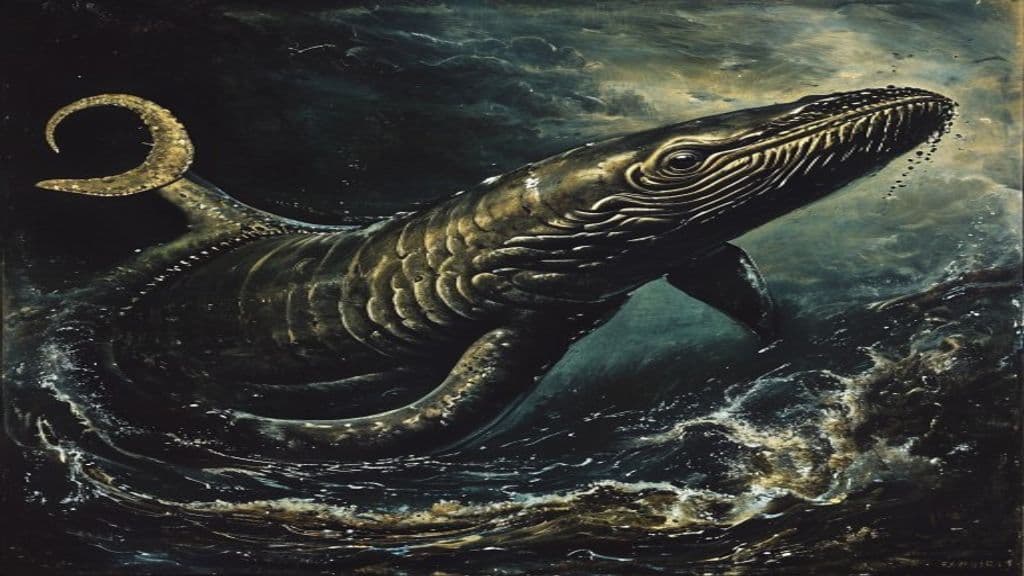
Ngaro
In Māori folklore, Ngaro is a delicacy of the dead, providing sustenance for the living from the realm of the deceased. (Note: - Power tier should be Lesser, not Primordial, as it's described as a delicacy and its nature and behavior are unknown. - Origin story needs more specific detail or sourcing to support the claim that )
Ngen
In Mapuche cosmology, the ngen (Mapudungun: 'owner') are spirits that manage, govern and arrange different features of nature; they are custodial proprietors of particular natural domains and are to be respected and offered to when humans seek resources from nature.
Ngā Atua
A being in the Māori spiritual framework associated with the heavens. (Note: * Power tier should be Primordial based on association with the heavens, but it's too vague; a more specific description is needed. * Summary needs to be expanded or revised for accuracy. * Appearance)
Ngā Mānawa
Ngā Mānawa is a collective name in a Māori tradition (notably attested for Ngāti Awa) for the five 'Fire Children', the sons of Mahuika and Auahitūroa. The five figures are mapped to the five fingers of the hand in regional Māori finger-naming systems, linking elemental fire, genealogy, and human anatomy.
Ngāti Ranginui
Ngāti Ranginui is a Māori iwi (tribe) based in the Tauranga / Bay of Plenty region of Aotearoa New Zealand. The iwi traces descent from the ancestor Ranginui (of the Takitimu canoe), exercises kaitiakitanga (guardianship) within a defined rohe, maintains marae and governance bodies, and has engaged in Treaty settlement and resource management processes in the contemporary period.
Ngātokimatawhaorua
An ancestral canoe in Māori tradition, symbolizing navigation expertise and cultural heritage. (Note: * Power tier: Primordial is unlikely, given the description of an ancestral canoe as a cultural symbol, rather than a cosmic entity. * Appearance: Add note that Ngātokimatawhaorua has no physical appe)
Ngải (research note)
The supplied sources do not document a Vietnamese earth- or plant-spirit called "ngải" used in sorcery. Materials provided instead show homographs or similar forms of the sequence 'ngai/ngài/ngāi' in unrelated cultural contexts (an East African creator deity "Ngai", the Māori tribal name "Ngāi Tahu", and Vietnamese honorific usages such as "Ngài"). This entry records only what is present in the provided sources and identifies gaps where data on a Vietnamese ngải is absent.
Nhang (Water Dragon)
Nhang, glossed in English as the "Water Dragon," is cited in English-language overviews as a water-associated monstrous figure within Armenian mythic tradition. The available sources note its classification only as a water-dragon label; no detailed native accounts, descriptions, or ritual material are provided in the supplied material.
Nian (Year Beast)
A folkloric monstrous beast in modern Chinese popular accounts that is said to emerge annually at the turn of the year to raid villages. The legend functions as an etiological explanation for many Chinese New Year customs—fireworks, red decorations, loud noises, and the lion dance—though explicit references to a named creature called nian in older textual sources are scarce.
Nibelung
A personal or clan name in Norse mythology associated with misty or ambiguous realms, also giving its name to the Middle High German epic Nibelungenlied. (Note: - Power tier: Primordial (given the ambiguous and multifaceted nature suggested by source material) - Appearance: Add a note that specific physical description does not exist, but may be implied by as)
Nicostratus
Nicostratus is attested in Greek mythographic and reference material as a son of Menelaus, variously said to be by Helen of Troy or by a slavewoman. He appears in genealogical listings and name-disambiguation contexts rather than as an active character in surviving narrative episodes.
Nidhi
Nidhi (Sanskrit: निधि, nidhi) is a Sanskrit term meaning 'treasure' and within Hindu mythological tradition denotes the set of nine treasures (navanidhi) belonging to Kubera, the god of wealth. In some tantric practice each nidhi is personified and has a guardian-spirit that may receive worship; beyond this core role their nature and characteristics are poorly explained in surviving sources.
Community Record
- [1]Ngātoro‑i‑rangi. Wikipedia, 'Ngātoro-i-rangi'wiki
- [2]The story of ariki‑tohunga Ngātoroirangi and his sisters Kuiwai and Haungaroa. Te Puia, 'The story of ariki‑tohunga Ngātoroirangi and his sisters Kuiwai and Haungaroa'other
- [3]Te Arawa. Te Ara Encyclopedia of New Zealand, 'Te Arawa'other
- [4]Manaia (legendary chief). Wikipedia, 'Manaia (legendary chief)'wiki
- [5]Ngātoroirangi Mine Bay Māori Rock Carvings on Lake Taupō, New Zealand Wallpaper. Sonurai (tourism/visual), 'Ngātoroirangi Mine Bay Māori Rock Carvings on Lake Taupō'other
- [6]Central North Island travel (Rough Guides). Rough Guides, 'Central North Island Travel Guide'other
- [7]Ngātoroirangi Mine Bay Māori Rock Carvings | Top10. Top10, 'Ngātoroirangi Mine Bay Māori Rock Carvings'other
- [8]Terrific Taupō - A Maverick Traveller. A Maverick Traveller, 'Terrific Taupō'other