
Ninazu appears in multiple and competing genealogical traditions attested in Mesopotamian sources. In some early local traditions (attested in hymnic material) he is associated with the underworld and linked to Ereshkigal; in Eshnunna an assimilatory genealogy presents him as son of Enlil and Ninlil (a local re‑assignment noted in city traditions). He is father of Ningishzida in many lists, and his wife is commonly given as Ningirida (first attested in Ur III texts). Later god lists and hymnic syncretisms sometimes equate or associate Ninazu with other underworld or warrior gods (e.g., Nergal, Ninurta) or link him to healing goddesses such as Gula, reflecting regional and chronological theological reworking.
No securely identified iconographic depiction of Ninazu is preserved in the cited sources. Texts compare him to a black dog in an Early Dynastic Zame hymn and associate him with snakes and the snake-dragon (mušḫuššu) motif. Literary descriptions from Eshnunna attribute martial accoutrements to him (he is described as armed with two maces). These attributes are textual/symbolic rather than corroborated by an identified archaeological image.
Ninazu functions primarily as a lord/steward of the underworld with overlapping roles in healing, snake-mastery, vegetation/agriculture, and in some local traditions a warrior aspect. His name is conventionally translated 'lord healer,' and he was invoked in incantations against snakebite and called 'king of the snakes.' He and related deities are credited in mythic contexts with gifts of grain and flax. In Eshnunna he acquires martial features (two maces) and astronomical associations (linked to the planet Mars / the 'Elam star' in some texts). Over time his attributes are sometimes absorbed into or equated with other major deities (e.g., Nergal, Ninurta) in later lists.
Weaknesses
None recorded.
Wards
- ritualInvocation in incantations against snakebite

Ningishzida
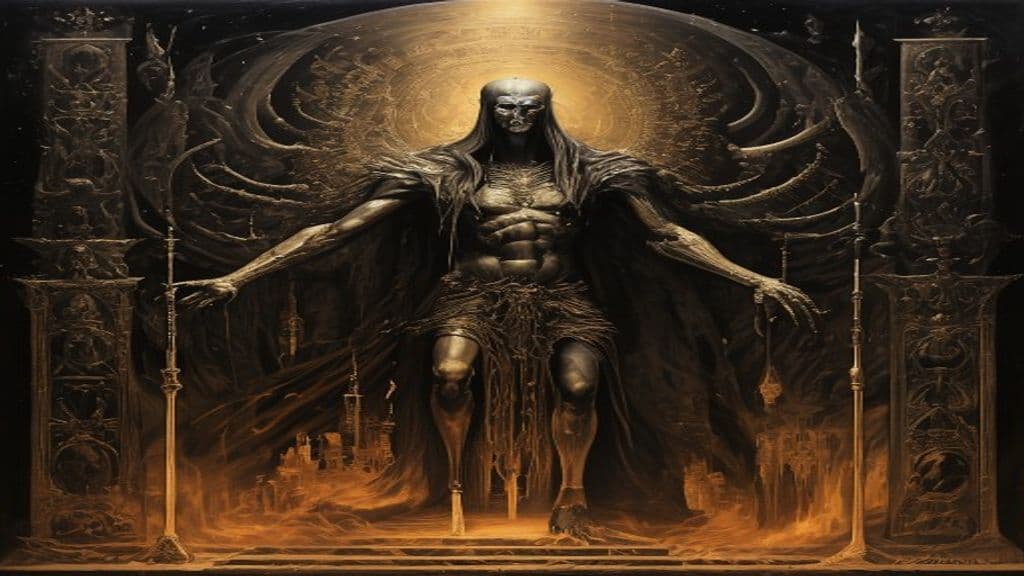
Ningishzida is an ancient Mesopotamian deity associated with vegetation (especially grass), snakes, and the underworld, attested from the Early Dynastic III period through later Mesopotamian eras. He appears in temple cults, hymns, mythic texts (including underworld contexts), and royal building inscriptions, and in some traditions has a martial/victory aspect.
Nergal
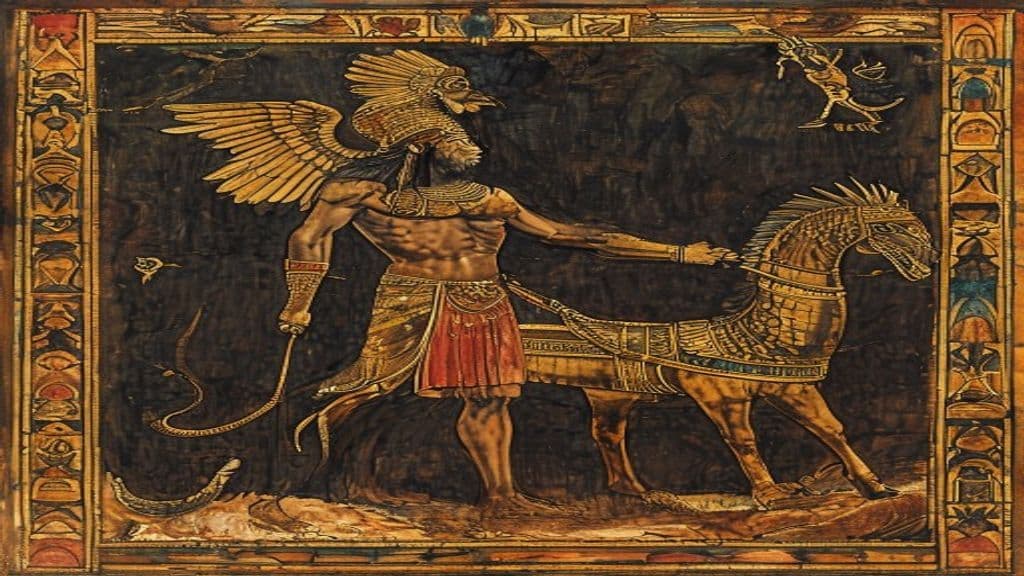
Nergal is a major Mesopotamian deity associated with war, disease, inflicted death, and rulership of the underworld. Principal cult center at Kutha (temple E‑Meslam), he appears in hymns and myths (e.g., the Epic of Erra, "Nergal and Ereshkigal") and is sometimes equated with or called Erra or Meslamtaea.
Ninurta
Ninurta is a major deity of ancient Mesopotamia (Sumerian–Akkadian–Assyrian–Babylonian) whose roles include agriculture, healing/exorcism, law and scribal authority, and martial champion of the gods. He is attested from the mid-third millennium BC onward and was venerated at city cult-centers such as Nippur (Eshumesha), Girsu/Lagash (as Ninĝirsu), and later in Assyrian Kalhu.
Community Record
- [1]Ninazu - Wikipedia. Wikipedia entry 'Ninazu' (accessed via provided research notes)wiki
- [2]Ninazu - Wikidata. Wikidata item Q301366 (referenced in research notes)other
- [3]A balbale to Ninazu (Ninazu A): translation. ETCSL translation: 'A balbale to Ninazu (Ninazu A)' (fragmentary hymn lines cited in research notes)academic
- [4]A balbale to Ninazu (Ninazu A): composite text. ETCSL composite text metadata for Ninazu balbale (referenced in research notes)academic
- [5]Ninazu - Gateways to Babylon. GatewaysToBabylon summary entry on Ninazu (used for name meaning and tradition summary)other
- [6]Ninazu (musical score archive note). Archive program note quoting modern musical text referencing Ninazu as 'son of Ereshkigal... god of the underworld' (modern reception, cited in research notes)other