
In the Sumerian-Akkadian mythic corpus Ninmah appears in primeval, cosmogonic contexts: she is present “in those days… when heaven and earth were created,” in passages that describe the birth of the Anuna/Anunnaki and the determination of fates. In the narrative poem “Enki and Ninmah” she figures as a senior mother goddess who, together with the god Enki, participates in acts of shaping human beings and assigning roles; in “Enki and the World Order” she appears among the assembly of high gods involved in allocating functions and offices in the ordered world. These compositions place her among the foundational divine actors who contribute to the creation of humankind, the ordering of society, and the establishment of fate (see “Enki and Ninmah,” “Enki and the World Order,” ETCSL introductory lines).
The supplied sources are literary and encyclopedic and do not preserve a consistent iconographic or physical description of Ninmah. The mythic texts cited focus on her actions and status rather than on visual attributes, and the provided summaries explicitly note an absence of standardized iconography in the excerpts available here. Scholarly summaries therefore emphasize her identity as a mother/mountain goddess without specifying clothing, gestures, or emblematic items in the provided material.
The textual tradition represented in the provided sources attributes to Ninmah creative and generative functions (notably involvement in the formation of human beings and association with birth and fertility), a tutelary/protective role (she is named as tutelary deity to several Sumerian rulers), and a participatory role in the ordering of the world and the allocation of fates (she is attested among the high gods/Anuna in cosmogonic narratives). These functions are attested in myths such as “Enki and Ninmah” and in compositions collected in the Electronic Text Corpus of Sumerian Literature, and are summarized in modern reference works noting her status as one of the principal Sumerian mother goddesses and a member of the “seven great deities of Sumer.” The provided materials do not list specific magical spells, miracle-lists, or narrowly defined supernatural powers beyond these theological and mythic functions.
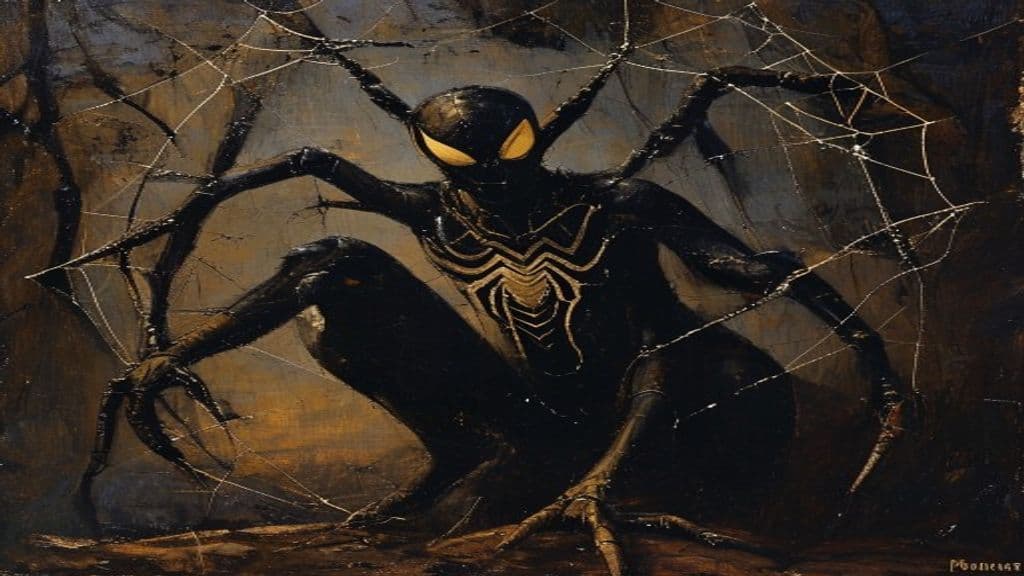
Anansi
The spider trickster god of Akan folklore — cunning, mischievous, and wise. Keeper of stories and teacher of human beings, brought through the slave trade into Caribbean and African-American tradition.

Enki (Ea)
Enki, also known by the Akkadian form Ea, is a major Mesopotamian deity associated with wisdom, crafts, magic and incantations, and the freshwater deep called the Abzû. Centered at the cult-city Eridu (temple E‑Abzû), he functions in myths as a crafty counsellor, culture‑hero and creator figure who aids humans and orders aspects of the world.
Adapa
Adapa is a mythic figure from ancient Mesopotamian (Sumerian and Akkadian) literature: a mortal fisherman and temple sage of Ea at Eridu endowed with exceptional wisdom. He appears in a fragmentary tale in which he breaks the wings of the south wind and is summoned to the divine court; his name was later invoked in exorcistic and ritual contexts as an authoritative identity.
Aga of Kish
Aga of Kish (Aga, Agga, Akka) is an Early Dynastic Mesopotamian king recorded in the Sumerian King List, the Tummal Inscription, epigraphic objects, and the Sumerian poem "Gilgamesh and Aga." He functions in texts as a historical/legendary political actor who attempted hegemonic demands on Uruk and was ultimately captured and released by Gilgamesh.
Akhkhazu
Akhkhazu (also Ahhazu; Sumerian Dimme-kur) is an Akkadian-era Mesopotamian malignant spirit described as a demon of jaundice who 'seizes' victims, brings fever and plagues, and is cited in later summaries as one member of a triad with Labasu and Labartu. Later popular summaries also describe her as preying on nursing infants while mothers slept.
Alulim
Alulim is the legendary antediluvian 'first king' of Eridu in Mesopotamian tradition, presented in king lists and mythic compositions as the initial ruler appointed by the gods. He functions etiologically to explain the origin of kingship and, in late ritual texts, is invoked in agricultural incantations associated with driving off field pests.
Alû (Alu)
A named lemma attested in modern reference lists as 'ALU / Alu', but for which the supplied research corpus contains no substantive primary- or secondary-source information about nature, appearance, powers, or rituals in Mesopotamian tradition.
Amurru (Martu)
Amurru, Sumerian Martu, is a Mesopotamian deity who functions as the divine personification of the Amorites. Originating in Mesopotamian textual practice, he is associated with the steppe and mountains, depicted with a crooked staff, portrayed in hymnography as warlike and lightning-armed, and from the Old Babylonian period acquires a prominent exorcistic cultic role.
Ancestors of Enlil (Enki-Ninki deities)
A sequence of Sumerian divine pairs (en-/nin- names) conceived as the primordial ancestors culminating in Enlil; chiefly attested in god lists and invoked as authoritative primordial names in ritual, especially in incantations and exorcisms.
Anshar
Anshar is a Mesopotamian primordial deity whose name (Cuneiform AN.ŠÁR) literally means "whole sky" or "the whole heaven." He functions as an abstract ancestral figure in theogonic genealogies (not actively worshiped as a regular cult deity) and appears in literary contexts—most notably the Enūma Eliš—and in god lists where he legitimizes later supreme gods.
Anu
Anu (Sumerian An; Akkadian Anu/Anum) is the divine personification of the sky in ancient Mesopotamian religion, traditionally ranked at the top of god‑lists as the source of heavenly authority (anûtu/anuti) and the fount of legitimate rule for gods and kings. Though supreme in genealogies and astronomical schema, many periods portray him as a relatively passive or figurehead deity whose active cultic role is limited until a late Seleucid reinvention in Uruk.
Anunnaki
A variable collective of major deities in ancient Sumerian, Akkadian, Assyrian and Babylonian religious literature, described as offspring or descendants linked to the sky god An (Anu) and an earth/mother figure (Ki/Ninhursag). Texts portray them as participants in the divine assembly, decreers of human fate, and in some traditions a group of seven underworld judges; their number, membership, and functions vary across sources.
Anzû (Imdugud)
Anzû, also called dZû or Imdugud, is a large storm-associated bird-figure in Sumerian/Akkadian/Babylonian myth. Portrayed as a hybrid (commonly a massive bird with a lion's head or as a half-human storm-bird), Anzû is credited in mythic narratives with seizing the Tablet of Destinies and thereby challenging the authority of chief gods such as Enlil.
Apkallu (Abgal)
Apkallu (Akkadian; Sumerian: Abgal) are polyvalent Mesopotamian wisdom figures attested as mythic/semi-divine sages (notably a group of seven), as professional human experts (ummânu), and as apotropaic images used in household and cultic ritual. They are closely associated with the god Ea (Nudimmud) as transmitters of secret knowledge and are represented in diverse iconography including fish-man and bird-headed types.
Community Record
- [1]Ninhursag (Wikipedia entry: Ninmah). Wikipedia, 'Ninhursag' (entry summarizing Ninmah/Ninhursag as Sumerian mother goddess and tutelary deity)wiki
- [2]Wikidata: Ninhursag. Wikidata item Q836170 for Ninhursag / Ninmahother
- [3]Enki and Ninmah (modern edition/translation). Text and translation of 'Enki and Ninmah' (mythic composition showing Ninmah's role in creation of humans)literary
- [4]Enki and Ninmah (ETCSL entry). Electronic Text Corpus of Sumerian Literature, translation and edition of 'Enki and Ninmah'literary
- [5]Electronic Text Corpus of Sumerian Literature (introductory lines). ETCSL passages and introductory formulae used in world-order and cosmogonic compositions mentioning the Anuna gods and the setting where Ninmah appearsliterary
- [6]Leyendas De La Antigua Mesopotamia. Dioses, Héroes Y Seres Fantásticos (overview). Modern overview enumerating Mesopotamian myth cycles including 'Enki and Ninhursag' and 'Enki and Ninmah'other
- [7]Archive edition: Enki and Ninmah and Enki and the World Order (1969 scans). Archive scans and editions of the myths 'Enki and Ninmah' and 'Enki and the World Order' cited in the provided notesliterary
- [8]Ninmah Corona (planetary name reference). Modern planetary feature named after the goddess (incidental, not a primary ancient source)wiki