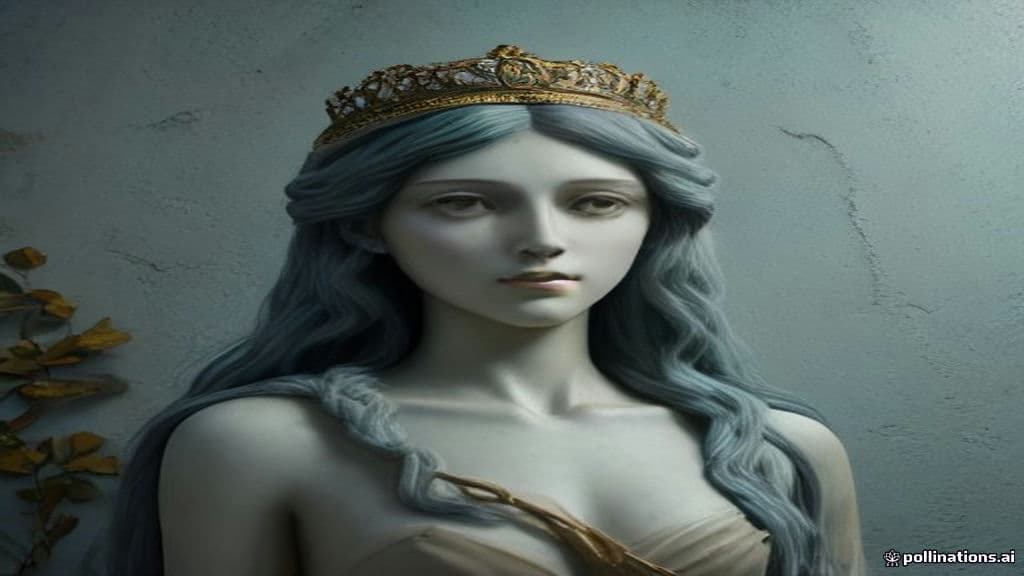
In the standard mythic frame Pasiphaë is placed in the generation of early kings and heroes: she is commonly named a daughter of the sun-god Helios and becomes wife of Minos of Crete. The best-known episode links her to Minos's failure to sacrifice the Cretan Bull and the resultant divine retaliation that produces her unnatural passion for the bull, leading to the birth of the Minotaur. Variants and later retellings differ on particulars: some traditions implicate Poseidon as the agent of the compulsion, others suggest Aphrodite or obscurely Zeus in variant lines. Different sources also vary in treating Pasiphaë as immortal/divine-born or as a mortal queen subject to human judgment.
Ancient sources supplied in the present corpus do not preserve a sustained iconographic description of Pasiphaë beyond her status as queen of Crete and daughter of Helios. Narrative detail records one striking corporeal episode: she took part in a contrivance (with the craftsman Daedalus) that concealed her inside a hollow wooden cow covered with cowskin in order to mate with the Cretan Bull; this episode is described as a method rather than an account of personal physiognomy. Other accounts emphasize her royal dress and courtly position but offer few consistent physical attributes.
The tradition as preserved links Pasiphaë to knowledge or use of magical and herbal arts: she is grouped in the same imaginative register as figures like Medea because she is said in some sources to employ charms (the Bibliotheke account attributes a fidelity charm to the narrative context). Pasiphaë is portrayed both as recipient of a god-sent madness or passion (her own defence in a surviving Euripidean fragment insists her behaviour was due to divine-induced madness) and as an active agent who commissions Daedalus to construct the hollow cow that enabled the union with the bull. Some fragmentary reports also claim she nursed the Minotaur “like an infant,” indicating maternal involvement with the monstrous offspring. The corpus shows variation and debate about where agency lies between divine compulsion and human action.
Weaknesses
- otherNarrative remedies targeting Minos's affliction rather than Pasiphaë: a protective 'circean' herb
- otherPhysical containment (goat's bladder) used in the narrative to receive harmful creatures emitted by Minos
Wards
- substanceProtective herb (described as 'circean' in the narrative involving Procris) — used so Procris could lie with Minos without harm
- otherGoat's bladder (used as a receptacle to contain the serpents/scorpions in the Bibliotheke-linked tradition)
Daedalus
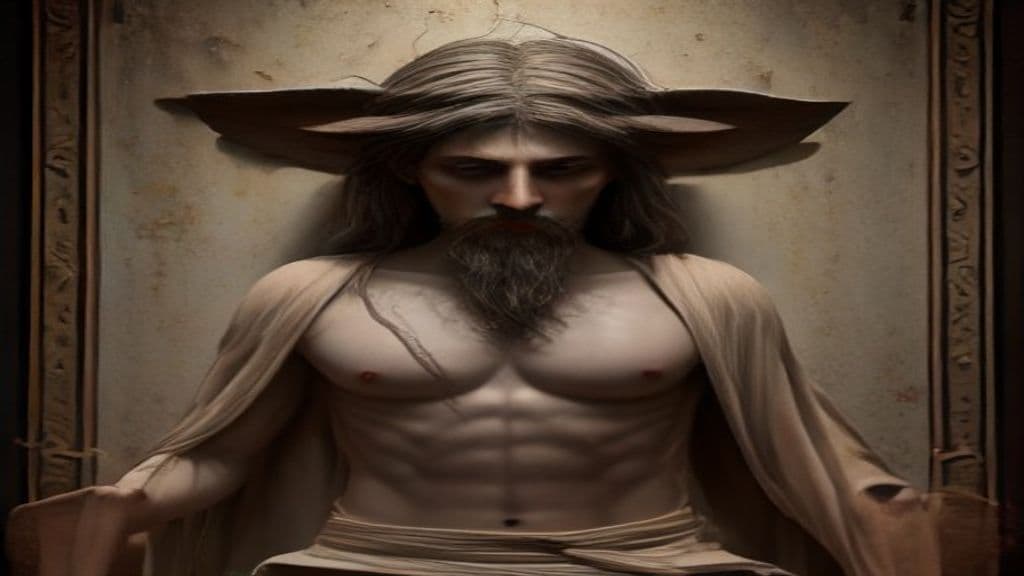
Daedalus (Greek Δαίδαλος) is a legendary master craftsman, architect, and inventor of Greek mythic tradition credited with complex constructions (the Labyrinth), ingenious devices (a wooden cow), and mechanical inventions (wings for flight). He functions as an archetypal artisan whose skill alters human affairs and whose pride produces moral and social consequences.
Minotaur
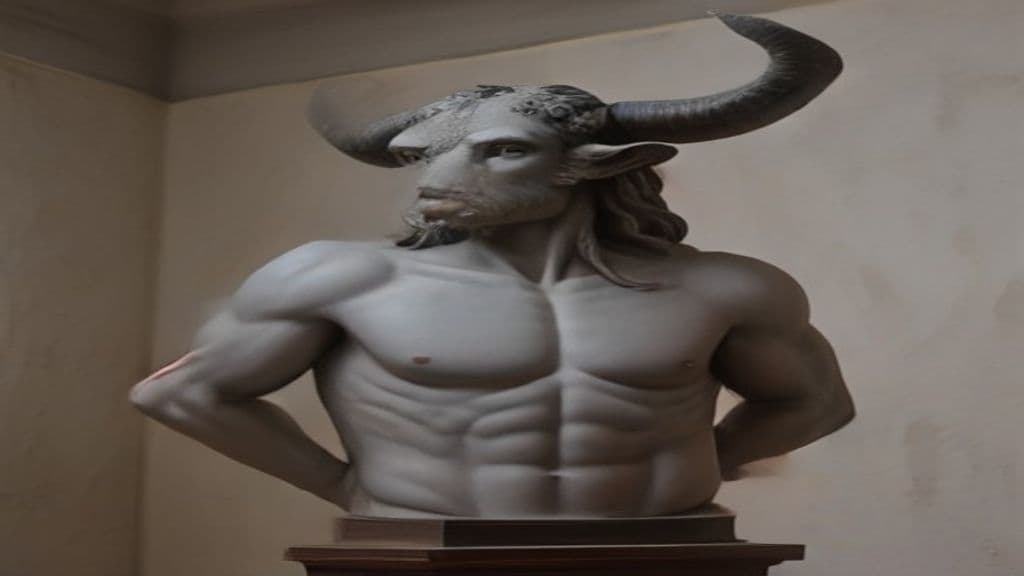
A singular monstrous offspring in classical Greek myth, born of a union between a human woman and a bull, confined at the center of Daedalus's Labyrinth at Knossos and fed on human tribute until slain by the hero Theseus with Ariadne's aid.
Poseidon
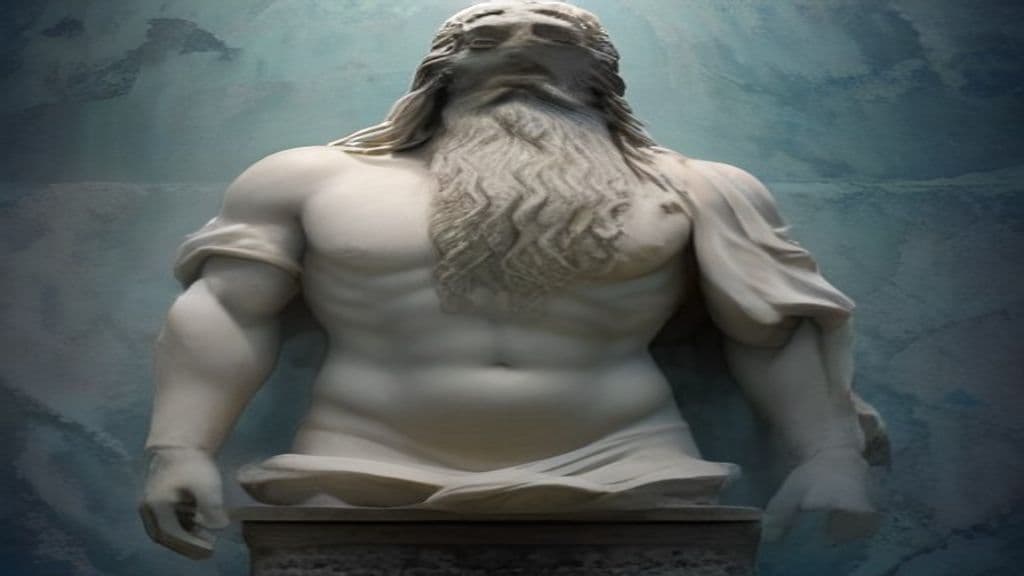
Poseidon is a principal deity of the ancient Greek pantheon, counted among the Twelve Olympians; he presides over the sea, storms, earthquakes and horses and functions as protector of seafarers and guardian of cities and colonies.

Aphrodite
Aphrodite is a major ancient Greek goddess associated with love, lust, beauty, pleasure, passion, procreation, and related social and cosmic forces. She is counted among the principal Olympian deities with major cult-centers (Cythera, Cyprus, Corinth, Athens), celebrated annually at the Aphrodisia, and syncretized with the Roman Venus.
Community Record
- [1]Pasiphaë — Wikipedia. Wikipedia entry 'Pasiphaë' (summary of ancient sources including Bibliotheke and Euripides fragments).wiki
- [2]Wikidata: Pasiphaë. Wikidata item for Pasiphaë (authority record linking variant names and identifiers).other
- [3]The Greek Myths (retellings/compilation). Graves, Robert, The Greek Myths (archive entry used as a general retelling reference listed in the supplied materials).literary