The name Polymele/Polymede is attached to several distinct mortal women in Greek mythic genealogies. In one tradition she is given as a daughter of Autolycus and cited as one possible mother of Jason by Aeson (the Iolcan/Thessalian cycle). Another Polymele is presented as daughter of King Actor of Phthia who was given in marriage to Peleus and by him (in that account) bore Polydora and a son, Achilles, situating her within the Phthian/Achillean genealogies. A different tradition names Polymele (or Polymede) as wife of Thestor and mother of the seer Calchas. In yet another account Polymele is daughter of Phylas and was loved by Hermes after he saw her performing a ritual dance in honor of Artemis; by Hermes she became mother of Eudoros. Finally, an Aeolian variant makes her a daughter of Aeolus on the island visited by Odysseus, where Odysseus secretly lay with her and later Aeolus discovered her weeping over spoils given by Odysseus. These variants illustrate the common Greek-myth practice of using the same personal name in distinct local genealogies to explain the parentage of different heroes.
Classical sources cited in the surveyed summaries do not preserve a physical description of any Polymele variant; no garments, bodily features, or consistent iconography are recorded in the provided materials. The one activity detail reported—that in one tradition she was 'performing a ritual dance in honor of Artemis'—is an attestation of an action, not of dress or physical appearance, and the sources do not describe her attire.
The provided sources ascribe no supernatural powers to Polymele herself. She is a mortal woman whose narrative significance is genealogical: she is repeatedly named as mother or consort to produce lineage links to heroes (Jason, Achilles/Polydora in one account, Patroclus in variant traditions, Calchas, Eudoros). Some of her children are extraordinary figures in myth (for example Calchas the seer), but the traditions do not attribute their gifts to any magical property of Polymele.
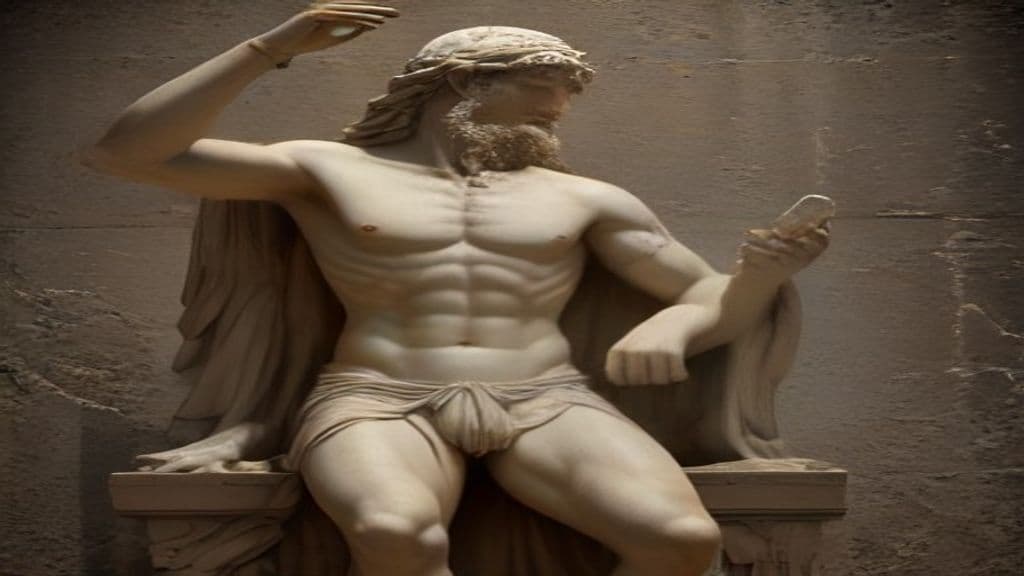
Hermes
Hermes is an Olympian god in ancient Greek religion who functions as the herald of the gods, an intermediary between mortal and divine realms, and a psychopomp guiding souls to the afterlife. He is associated with travel, boundaries, commerce, thieves, oratory, and liminality; in Hellenistic contexts he is syncretized with Egyptian Thoth as Hermes Trismegistus.
Aeson
Aeson (Ancient Greek: Αἴσων) is a legendary mortal king of Iolcus in Thessaly in Greek myth, best known as the father of the hero Jason. His fate—imprisonment by his half-brother Pelias and either suicide or a miraculous restoration performed by Medea—provides the dynastic and moral background for the Argonautic cycle.

Jason
Jason (Ancient Greek: Ἰάσων, Iásōn) is a mortal hero of Greek myth, leader of the Argonauts whose quest for the Golden Fleece establishes his place in the heroic age. He is depicted as a prince of Iolcos, son of Aeson, and husband of the sorceress Medea.
Peleus
Peleus (Ancient Greek Πηλεύς) is a mortal heroic king of the Greek heroic age—son of Aeacus and an oread, husband of the sea-nymph Thetis, and father of Achilles—figuring as a founder-ancestor and culted hero in later local practice. He is portrayed in epic narrative as a warrior-king, Argonaut, and participant in the web of marriages and purifications that link human rulership to divine beings.

Achilles
A legendary Greek heroic figure of epic poetry, son of the sea‑nymph Thetis and the mortal Peleus, celebrated as the greatest of the Greek warriors at Troy whose anger and fate shape events in the Trojan War cycle.

Calchas
Calchas is a human Argive seer (mantis, oionopólos) of the Trojan War tradition, a member of a hereditary mantic family who interprets omens and entrails on behalf of Greek commanders and declares the will of Apollo to guide ritual and military decisions.
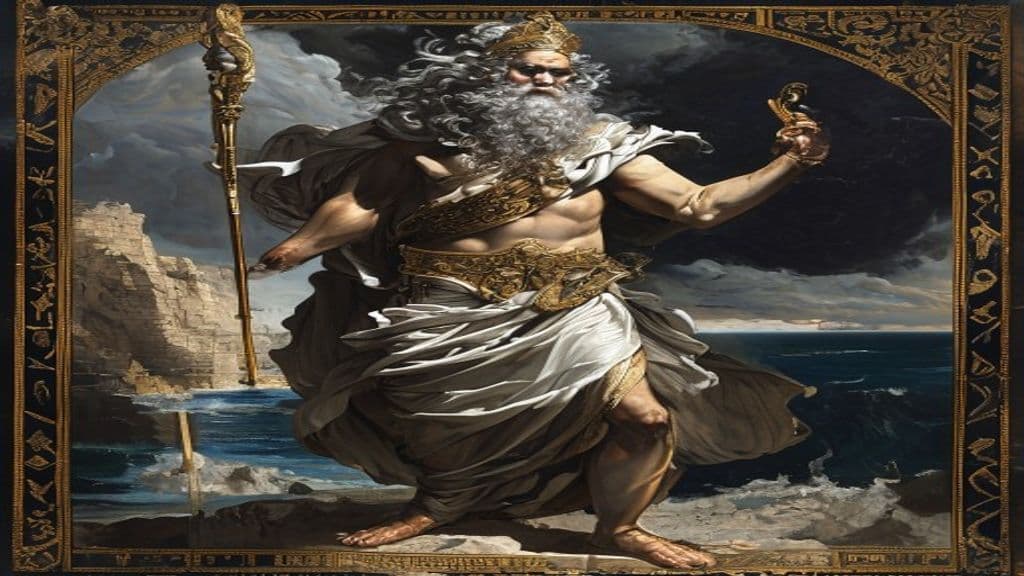
Aeolus
Aeolus is a name applied to multiple related figures in Greek myth: an eponymous son of Hellen (founder of the Aeolian people), a son of Poseidon who led colonial ventures to Tyrrhenian islands, and a son of Hippotes depicted in epic as a ruler or keeper of the winds. Ancient mythographers note confusion and overlap among these persons.

Odysseus
Odysseus is a legendary mortal king of Ithaca from ancient Greek epic tradition, best known as the protagonist of Homer's Odyssey. Celebrated for his intellect, craft (mêtis), and long nostos (homecoming), he functions as an exemplar of heroic cunning rather than a supernatural being.
Community Record
- [1]Polymele — Wikipedia. Wikipedia, 'Polymele' entry (aggregating classical sources such as Homeric tradition, Apollodorus, Hyginus, Parthenius, Tzetzes)wiki
- [2]Polymede — Wikidata. Wikidata entry for Polymedeother
- [3]15094 Polymele — Wikipedia. Astronomical naming and modern references to the mythological namewiki
- [4]NASA NTRS: Terminal Tracking for the Lucy Trojan Asteroid Mission (Archive). NASA technical report referenced in research notes regarding asteroid named after Polymeleother
- [5]Lucy Team Discovers Moon Around Asteroid Polymele - SpaceRef. Press reporting on astronomical body named for Polymele (modern usage noted in sources)other