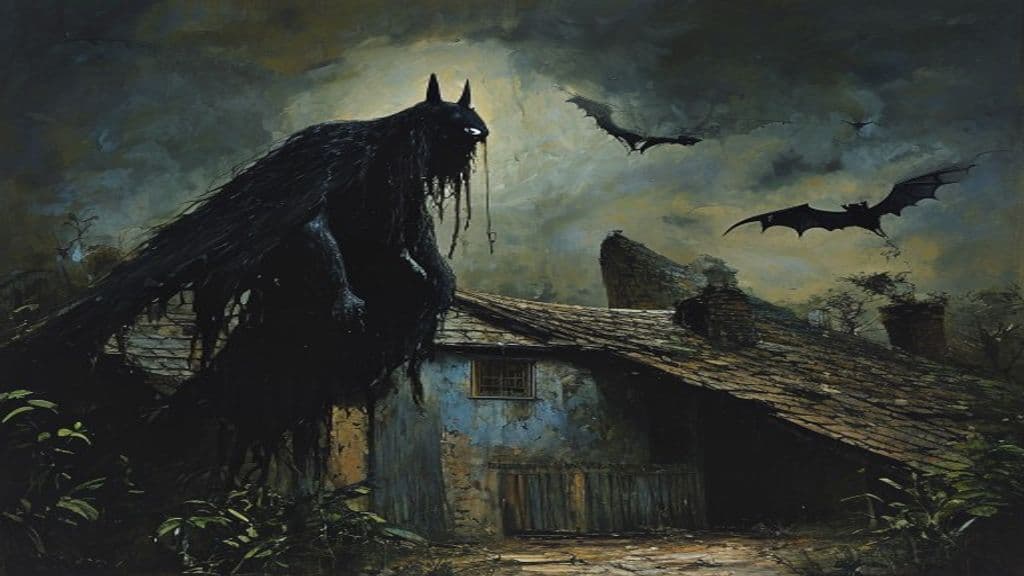
Recorded reports place Popobawa's first appearances around 1965 on Pemba, with better-known sightings in 1970, periodic resurfacings in the 1980s, a peak outbreak in 1995, and brief reappearances in 2000 and 2007. A popular local origin tale describes an angry sheikh in the 1970s who released a jinn that became demonic and uncontrollable; this story is presented in sources as a local explanatory narrative rather than a definitive historical origin. Scholars have also suggested Popobawa narratives can encode social memories (for example, of slavery) and that episodes of reporting often correlate with local political cycles (reports rising and falling with Zanzibar elections).
Popobawa is described primarily as a shapeshifter rather than a single fixed form. The Swahili name literally glosses as 'bat-wing' (popo = bat, bawa = wing), a label said to originate from the dark shadow the spirit casts during night attacks; sources emphasize the name does not mandate a bat form. Accounts report it can assume human or animal shapes and metamorphose between them. Some encounters are accompanied by a reported sulfurous odor, though that trait is not consistently present in all accounts. Anecdotal reports include unusual acoustic phenomena during episodes (for example, voices spoken through possessed persons and sounds described as like a car revving or rustling on roofs).
Reported abilities and behaviors in source accounts include nocturnal (and occasionally daytime) visitations to homesteads; physical assaults and poltergeist-like disturbances; and—most prominently—sexual assaults (sources single out reports of anal rape of men and women as a central feared aspect). Popobawa is said to attack entire households before moving on, to be able to speak through possessed people on occasion (one cited incident involved speech through a possessed girl), and to threaten repeat visits if victims do not publicly declare assaults. Socially patterned behavior is reported: episodes of sightings and panic have been correlated in sources with political events, though victims often deny any political motive. Skeptical sources compare Popobawa experiences with waking-dream/sleep-paralysis phenomena, while other commentators situate the tradition within Islamic jinn discourse and local shetani belief.
Weaknesses
- ritualexorcism (unspecified)
- ritualsacrifice of a goat (propitiation)
- otherpublic acknowledgement / telling others (believed to avert further enragement)
Wards
- ritualplacing charms at the base of fig trees
- ritualsacrificing goats
- conditioncommunal night vigils around open fires (staying awake outside houses)
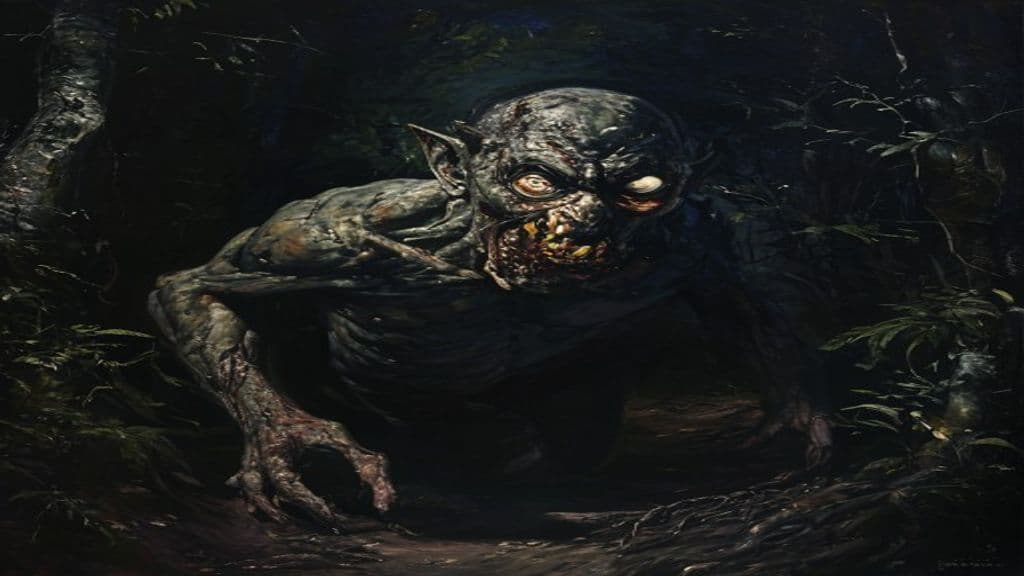
Pishacha
Flesh-eating spirits of Hindu mythology that haunt cremation grounds and are associated with disease, madness, and possession. The lowest class of demon in the Vedic hierarchy.

Jinn
A class of supernatural beings from pre-Islamic Arabian religion later integrated into Islamic theology; jinn are created, morally accountable entities distinct from humans and angels, often unseen but capable of taking visible forms and interacting with people in varied ways.
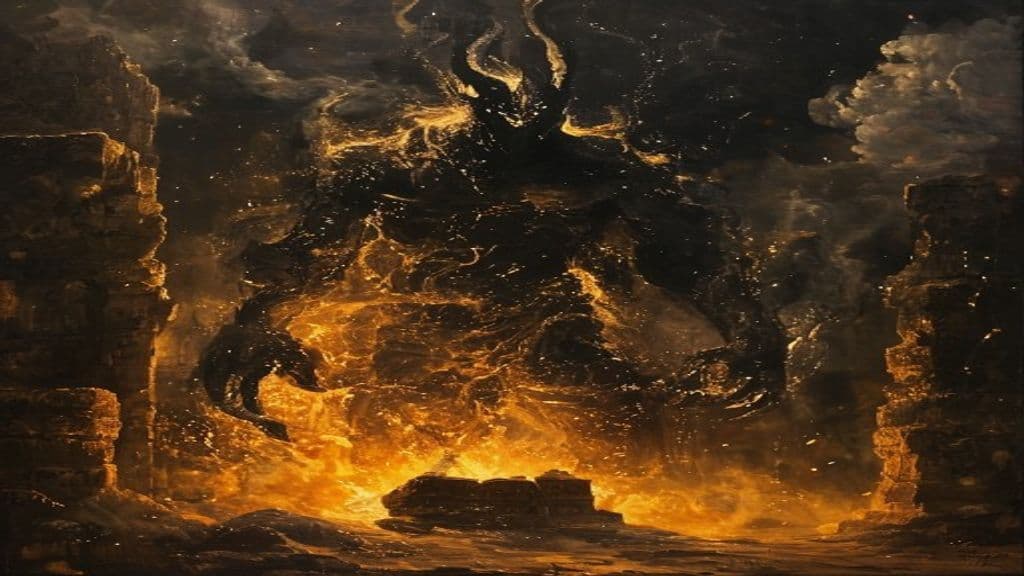
Ifrit
One of the most powerful classes of jinn in Islamic and pre-Islamic Arab tradition — a fire-born being of immense strength and cunning, capable of great works of engineering and terrible violence.
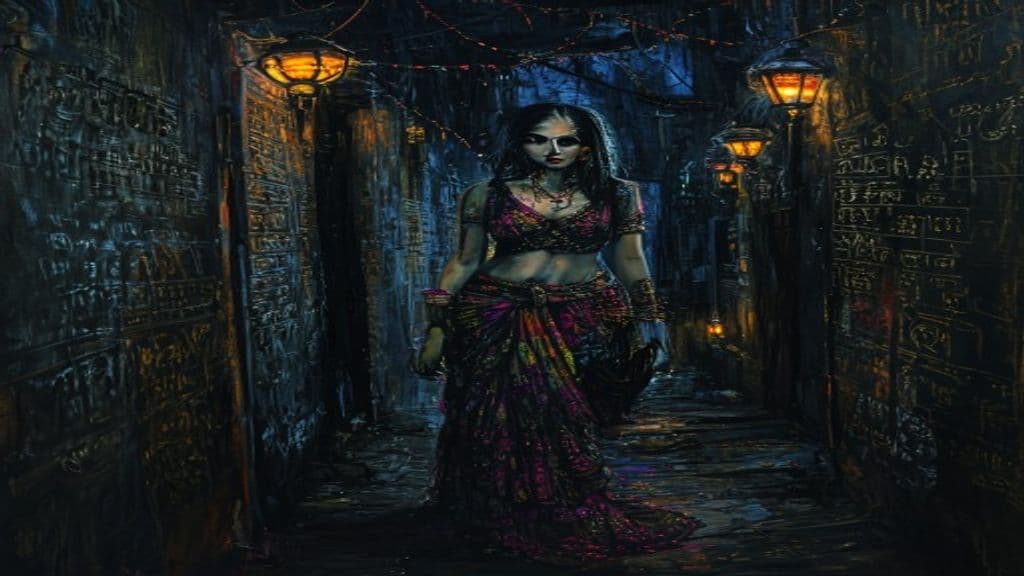
Stree
A vengeful female spirit from Chanderi who abducts men during festival nights. Warded off by the inscription 'O Stree, kal aana' — her legend, still practised on walls across Madhya Pradesh, inspired the 2018 Bollywood horror-comedy.
Bhoot (bhoota)
A bhoot (also bhoota, bhoot, bhut) is the culturally specific term across parts of the Indian subcontinent for a perturbed, restless spirit generally understood to be the ghost of a deceased person. Sources describe bhoots as arising when a person's death or post-death circumstances prevent them from moving on — for example violent death, unresolved affairs, or failures in funerary rites — and the term appears frequently in modern South Asian media and discussions.
Pomba Gira
Pomba Gira is an Afro-Brazilian female spirit invoked in Umbanda and Quimbanda who personifies feminine sexuality, desire, and liminality; she functions as a consort to Exu, is petitioned for matters of the heart, and is treated with respect because of her reputed wrath and power in ritual possession.
Pombero (Pombéro)
The Pombero is a small-statured nocturnal humanoid figure from Guaraní-derived folk belief in Paraguay and neighboring regions. Portrayed as a forest-dwelling trickster and interlocutor with domestic animals and rural households, the Pombero is blamed for mischief (loosed cattle, stolen eggs) and, in some accounts, for unexpected pregnancies; he is commonly appeased with nightly offerings.
Pontianak (Kuntilanak)
A Southeast Asian female vengeful spirit common in Malay‑language traditions, often portrayed as the restless ghost of a woman who died in traumatic circumstances; she commonly appears as a beautiful woman who may reveal a monstrous form and is associated with banana and banyan trees.
Pontus
Pontus is attested in the supplied sources primarily as a Greek theonym meaning "sea" (Πόντος, Póntos) and as a geographic/ethnic designation for the region on the southern coast of the Black Sea. The corpus does not provide evidence of Pontus functioning as a discrete, living folkloric spirit with attendant rituals or abilities.
Ponyo
Ponyo is a fictional goldfish-like child with a human face from the Studio Ghibli film Ponyo on the Cliff by the Sea. Born as Brunhilde to the underwater wizard Fujimoto and the powerful maternal figure Gran Mamare, she escapes to the human shore, bonds with a boy named Sōsuke, and uses potent magic whose release threatens the balance between sea and land.
Pop (ghost)
Pop (Thai: ปอบ, Pop or Pob) is a Thai folkloric spirit believed to inhabit or possess a living person (commonly a sorceress) and to leave the host at night to feed on human viscera, especially intestines. Village traditions describe types, hereditary or transmissible lines, face-switching deception, and a hierarchical superior spirit (Ha Gom) that commands lesser Pops.
Poroniec
A hostile supernatural being in Slavic folklore believed to arise from stillborn fetuses or improperly buried infant remains; considered especially dangerous because of the unrealized potential of the life lost and connected to taboos and household burial practices.
Porphyrion
Porphyrion (Ancient Greek: Πορφυρίων) is a Giant (one of the Gigantes) in ancient Greek myth who is repeatedly marked as one of the greatest of his kind and a principal combatant against the Olympian gods in the Gigantomachy. Ancient authors variously describe him as attacking gods (notably Hera and Heracles) and as being slain by divine force or a hero.
Portunes
Portunes are a group of small, nocturnal household beings attested in Gervase of Tilbury's Otia Imperialia (medieval Latin). Gervase lists them among uncanny creatures—calling them 'demons' while also allowing they 'might instead be a mysterious ghost'—and describes them as performing heavy domestic work for peasants, warming themselves at hearths, roasting small frogs from their pockets, and sometimes playing malicious pranks on travellers.
Poseidon
Poseidon is a principal deity of the ancient Greek pantheon, counted among the Twelve Olympians; he presides over the sea, storms, earthquakes and horses and functions as protector of seafarers and guardian of cities and colonies.
Pothi Amma (unattested in supplied sources)
The supplied source set does not contain a folkloric, ethnographic, or lexical attestation of a supernatural figure named 'Pothi Amma' or 'Poṟi Amman'. The available excerpts only record occurrences of the lexical element 'pothi' in Tamil song texts and commentary on rural musical repertoire; no information about a spirit or goddess by this name is present.
Poutini
Poutini is a taniwha (water spirit) in Ngāi Tahu oral tradition associated with the West Coast (Te Tai o Poutini) of New Zealand's South Island. In the cited sources Poutini is described primarily as a guardian or kaitiaki of the people and of valued resources such as pounamu (greenstone).
Community Record
- [1]Popobawa. Wikipedia article 'Popobawa' (main descriptive source, chronology, ritual mentions, and interpretive notes).wiki
- [2]Popobawa (Wikidata). Wikidata entry classifying Popobawa (supplementary cataloging).wiki
- [3]Popobawa & Pegasus Fusion (art by Mel Cabre). Archive item indicating contemporary cultural circulation of the Popobawa motif.other
- [4]Zappodcast #69 (reference to Popobawa). Archive podcast listing that includes an episode referencing Popobawa, evidencing modern/popular cultural presence.other